The story
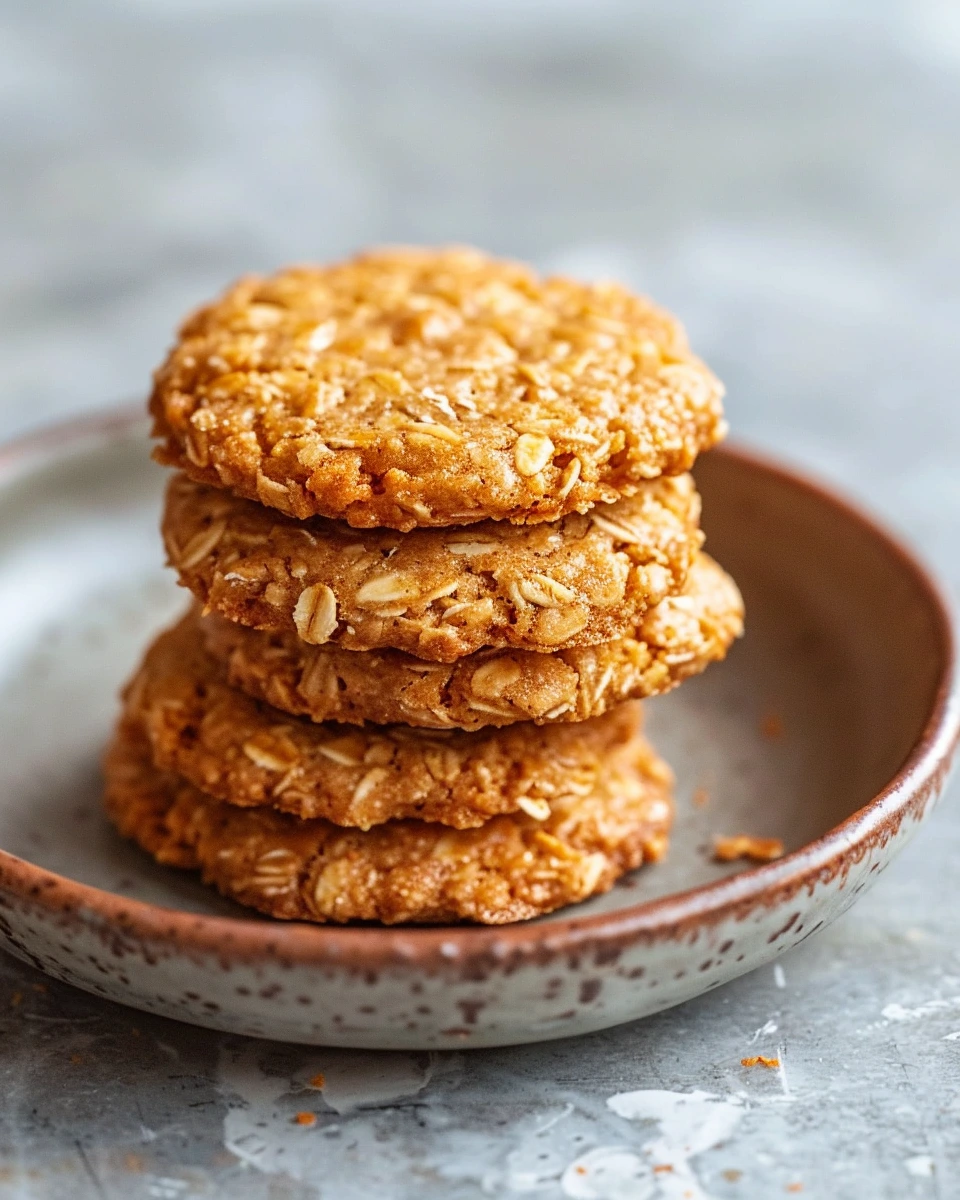
Anzac biscuits developed during the First World War from durable oat biscuits associated with fundraising and care parcels. The name is protected in Australia, reflecting its connection to the Australian and New Zealand Army Corps. They are distinctive for oats, coconut and golden syrup, with bicarbonate of soda creating spread and a caramelised edge. Texture ranges from crisp to chewy according to bake time. They are baked especially around Anzac Day and sold for commemorative fundraising. The biscuit carries emotional weight, so respectful naming and traditional ingredients matter.
Ingredients
- Main ingredients
- 90 g rolled oats
- 75 g plain flour
- 60 g Desiccated coconut
- 45 g golden syrup
- 65 g butter
- 70 g caster sugar
- 0.5 tsp bicarbonate of soda
Method
Prepare the ingredients
Mix oats, flour, coconut and sugar. Measure everything before you start so the recipe scales cleanly from the dynamic ingredient quantities. Cut vegetables evenly so they soften at the same rate and the final texture is balanced.
Look for: The outside should be golden and the centre should be cooked through without looking wet or raw. Tip: Keep the plating relaxed and generous, with a clean sauce or relish to balance richer elements. Avoid: Do not overmix once flour is added or the texture can become tough.Build the flavour
Melt butter with golden syrup. Work steadily and check texture rather than relying only on the clock.
Look for: The outside should be golden and the centre should be cooked through without looking wet or raw. Tip: Keep the plating relaxed and generous, with a clean sauce or relish to balance richer elements. Avoid: Do not overmix once flour is added or the texture can become tough.Cook the dish
Dissolve bicarbonate in a little hot water. Work steadily and check texture rather than relying only on the clock.
Look for: The outside should be golden and the centre should be cooked through without looking wet or raw. Tip: Keep the plating relaxed and generous, with a clean sauce or relish to balance richer elements. Avoid: Do not overmix once flour is added or the texture can become tough.Check the texture
Combine wet and dry ingredients. Work steadily and check texture rather than relying only on the clock.
Look for: The outside should be golden and the centre should be cooked through without looking wet or raw. Tip: Keep the plating relaxed and generous, with a clean sauce or relish to balance richer elements. Avoid: Do not overmix once flour is added or the texture can become tough.Finish the seasoning
Shape into rounds. Work steadily and check texture rather than relying only on the clock.
Look for: The outside should be golden and the centre should be cooked through without looking wet or raw. Tip: Keep the plating relaxed and generous, with a clean sauce or relish to balance richer elements. Avoid: Do not overmix once flour is added or the texture can become tough.Bake or roast
Bake until golden. Preheat the oven to 170°C / 340°F and use the middle shelf unless the recipe needs strong top browning. Taste at the end for salt, acidity and richness; traditional versions should feel generous but balanced.
Look for: The outside should be golden and the centre should be cooked through without looking wet or raw. Tip: Keep the plating relaxed and generous, with a clean sauce or relish to balance richer elements. Avoid: Do not overmix once flour is added or the texture can become tough.
Nutrition
per serving
Estimated from the upgraded serves-2 metric ingredient list; verify with a nutrition calculator before making health claims.