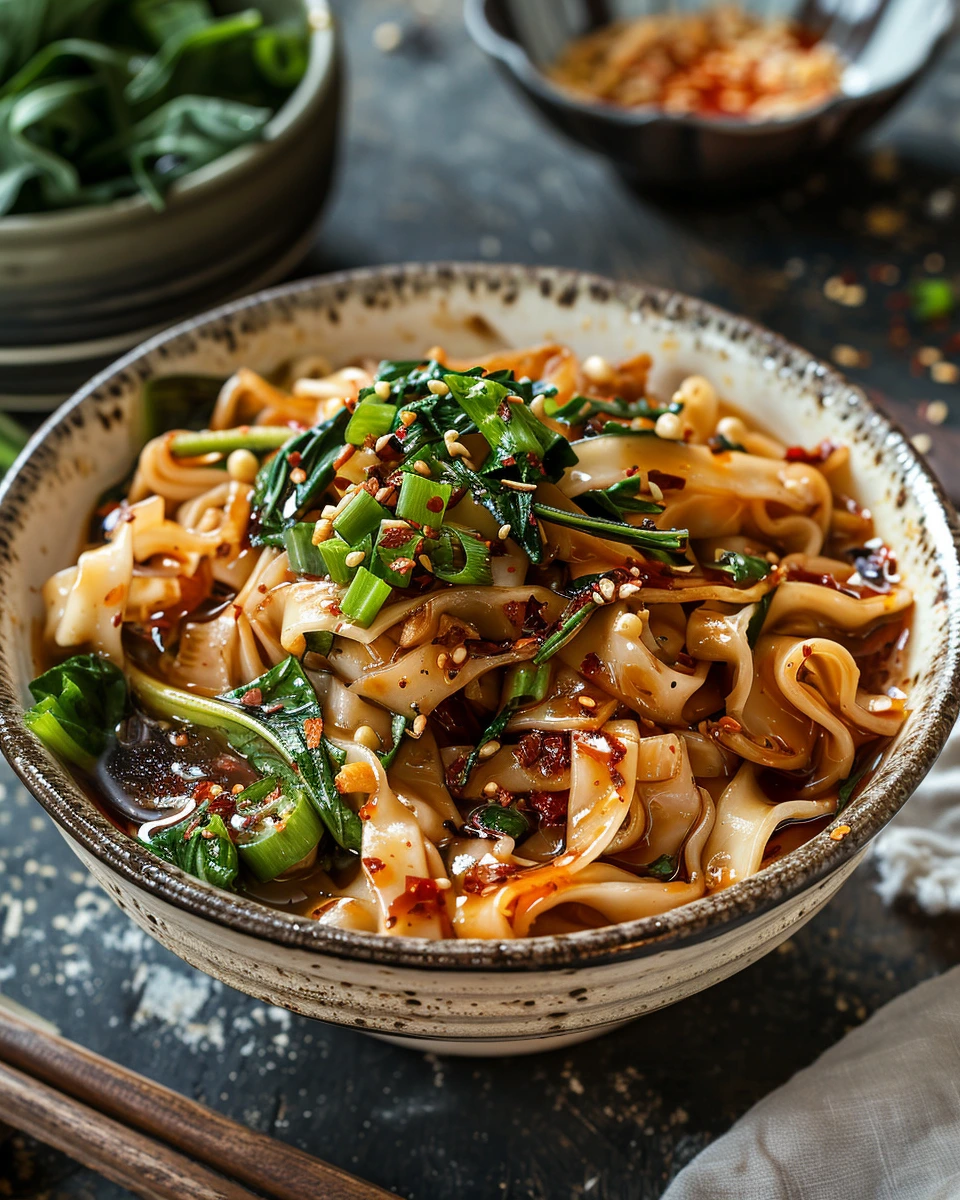
The story
Generations of cooks shaped Biang Biang Noodles around a recognisable combination of technique and local ingredients. It comes from a regional Chinese cooking tradition in which texture, heat, aroma and balance are treated as carefully as the principal ingredient. Its reputation rests on extra-wide hand-pulled noodles dressed with chilli, garlic and aromatic hot oil. The dish is immediately recognisable when the key ingredient and finishing texture are handled correctly. Biang Biang Noodles connects the plate to a wider social setting, whether informal, festive or regional. It may belong to breakfast stalls, family banquets, festival tables, teahouses or regional restaurants, depending on its origin.
Ingredients
- Main
- 130 gram wide wheat noodles260 g wide wheat noodles
- 0.5 tablespoon chilli flakes1 tbsp chilli flakes
- 1.5 piece garlic cloves3 piece garlic cloves
- 1 tablespoon soy sauce2 tbsp soy sauce
- 0.5 tablespoon Chinkiang vinegar1 tbsp Chinkiang vinegar
- 75 gram pak choi150 g pak choi
Method
Prep the toppings
Slice cucumbers, spring onions and greens into fine matchsticks so they mix easily through the noodles.
Look for: Toppings are thin and even. Tip: Cold crunchy toppings are part of the contrast. Avoid: Large chunks make the bowl hard to eat.Build the sauce
Combine soy, vinegar, chilli oil, sesame paste or bean sauce as the recipe requires, tasting for salty, sour, hot and nutty balance.
Look for: Sauce tastes bold before the noodles go in. Tip: Use Chinese black vinegar where possible. Avoid: Do not make the sauce flat; noodles dilute flavour.Cook the noodles
Boil noodles in plenty of water at 100°C / 212°F until just tender, then rinse or toss straight into sauce depending on the dish.
Look for: Noodles are springy, not mushy. Tip: For cold noodles, rinse well to remove starch. Avoid: Overcooking ruins the texture.Finish quickly
Toss noodles with sauce while warm or chilled as appropriate, loosening with a splash of noodle water if needed.
Look for: Every strand is coated and glossy. Tip: Add chilli oil at the end for aroma. Avoid: Do not drown the bowl in sauce.Serve with texture
Top with herbs, peanuts, sesame, crisp vegetables or minced sauce and serve straight away.
Look for: The bowl has chew, crunch and gloss. Tip: Keep toppings separate until serving for the freshest texture. Avoid: Do not let dressed noodles sit too long.
Nutrition
per serving
Estimated from the upgraded serves-2 metric ingredient list; verify with a calculator before making health claims.