The story
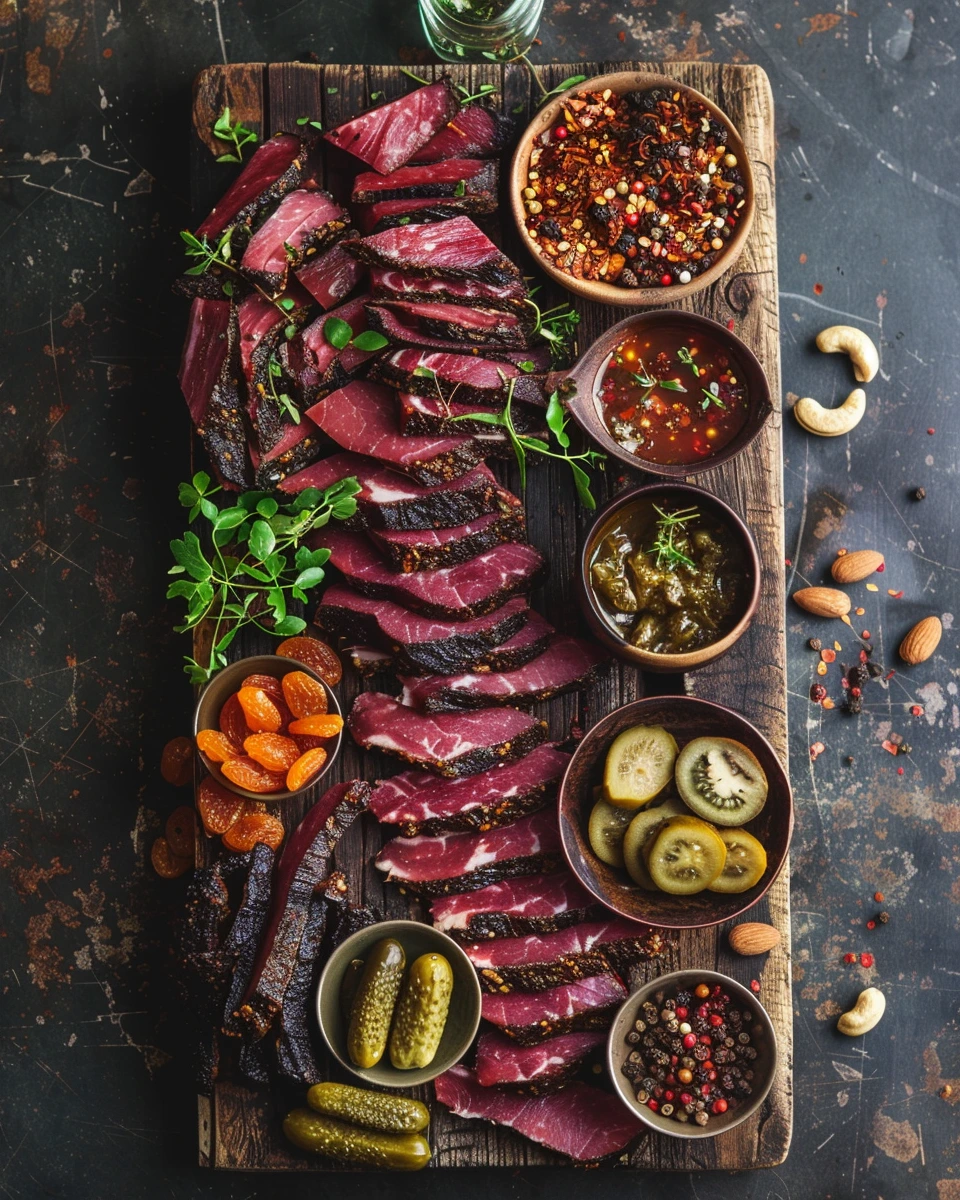
Biltong grew from southern African meat-curing traditions using salt, vinegar, coriander and dry air to preserve beef or game. The dish is recognised for cured beef platter. Its success depends on preserving the intended contrast of texture, seasoning and temperature, so the defining ingredient remains clear rather than being buried by garnish or sauce. It is everyday snack food, road-trip food and sporting food, sold by specialist cutters and made in many households.
Ingredients
- Board
- 80 g roasted nuts80 g roasted nuts
- 80 g dried apricots80 g dried apricots
- 90 g pickled onions90 g pickled onions
- Dip
- 60 g fruit chutney60 g fruit chutney
- Main
- 280 g sliced biltongthinly sliced · 280 g sliced biltong, thinly sliced
- 120 g droeworsoptional · 120 g droewors, optional
- Serve
- 160 g crackers or breadoptional · 160 g crackers or bread, optional
Method
Slice and check texture
Slice biltong across the grain into thin pieces. Keep fattier pieces separate so guests can choose lean or rich slices.
Look for: Slices bend slightly but are not wet Tip: Room temperature gives better flavour. Avoid: Do not serve fridge-cold biltong.Build the board
Arrange biltong, droewors, nuts, dried apricots and pickles in small clusters rather than one flat pile.
Look for: Clear sections with colour contrast Tip: Keep wet items in small bowls. Avoid: Do not bury the biltong under wet pickles.Add condiments
Spoon chutney or mustard into a bowl and add crackers or bread only just before serving.
Look for: Crisp crackers and tidy dip Tip: Use a sharp chutney to cut through the cured meat. Avoid: Do not add bread too early if the board is humid.Serve
Serve as a braai starter or drinks board.
Look for: Meat is at room temperature Tip: Cover leftovers and chill promptly. Avoid: Do not leave uncovered for hours.
Nutrition
per serving
Approximate values for recipe content display; will vary by exact brands, fat level, serving size and accompaniments.