The story
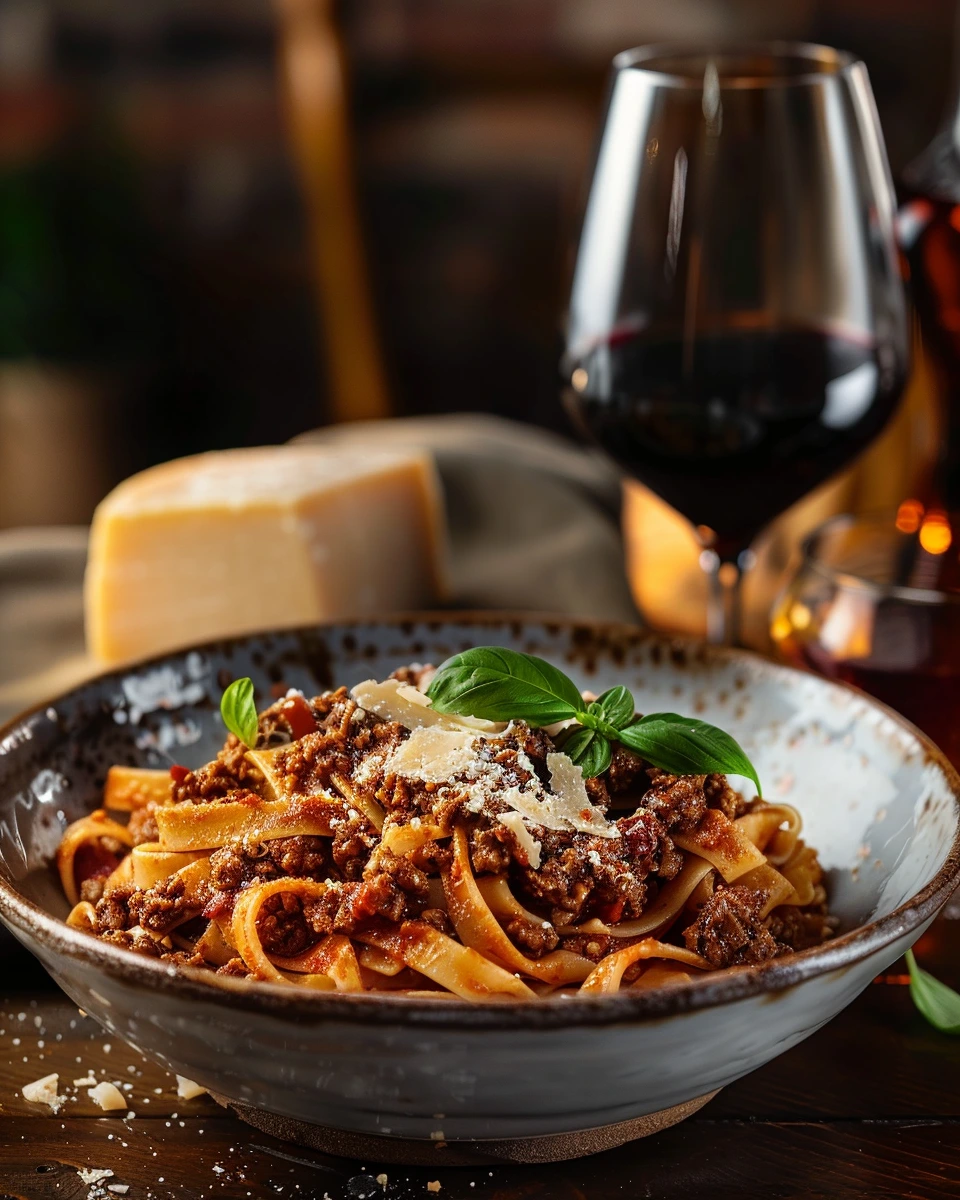
Bolognese is rooted in Bologna and Emilia-Romagna. Ragù alla bolognese belongs to the meat-sauce traditions of Bologna and Emilia-Romagna. Recipes evolved over time, but the defining approach is a slowly cooked ragù built from meat, aromatic vegetables and modest amounts of tomato rather than the heavily tomato-based sauce often served internationally as 'spaghetti Bolognese'. It is famous for depth created through patient cooking: browned meat, soffritto and gentle simmering produce a sauce that clings to pasta instead of sitting on top of it. In Bologna it is classically associated with tagliatelle and is also fundamental to lasagne alla bolognese. The dish represents the rich culinary identity of Emilia-Romagna, a region celebrated for fresh egg pasta, cured meats and long-cooked sauces. Serving ragù with the right pasta shape is part of the cultural story, because broad ribbons hold the sauce far better than thin spaghetti.
Ingredients
- Main
- 1 tbsp olive oil2 tbsp olive oil
- 20 g butter40 g butter
- 0.5 piece onion1 onion, finely diced
- 0.5 piece carrot1 carrot, finely diced
- 0.5 piece celery stick1 celery stick, finely diced
- 250 g beef mince500 g beef mince
- 125 g pork mince250 g pork mince
- 75 ml dry white wine150 ml dry white wine
- 125 ml whole milk250 ml whole milk
- 1 tbsp tomato paste2 tbsp tomato paste
- 200 ml passata400 ml passata
- 0.5 piece bay leaf1 bay leaf
- 0.25 tsp sea salt1/2 tsp fine sea salt
- 200 g tagliatelle to serve400 g tagliatelle to serve
Method
Prepare ingredients
Measure all ingredients for Bolognese; trim, slice, grate or rinse as listed before heating the pan.
Look for: Everything should be ready before cooking starts. Tip: Keep grated cheese, herbs and pasta water within reach. Avoid: Italian dishes often fail when timing is improvised after the pan is hot.Start the base
Cook the aromatics, main fat or first ingredient over controlled heat so the flavour base develops without scorching.
Look for: The base should smell rounded and savoury. Tip: Use medium heat unless the recipe specifically needs frying. Avoid: High heat can burn garlic, onions, butter or cured pork.Cook the main element
Add the principal ingredient and cook according to its texture: pasta until al dente, meat until tender, rice until creamy, or vegetables until soft but defined.
Look for: The central ingredient should be cooked but still have character. Tip: Taste as you go; texture matters more than the clock. Avoid: Do not overcook pasta, seafood, liver or rice.Build the sauce or finish
Use stock, wine, tomato, cheese, pasta water or cooking juices to create a coating sauce rather than a watery pool.
Look for: The sauce should cling to the food. Tip: Reduce, emulsify or fold gently depending on the dish. Avoid: Adding too much liquid at once makes the dish flat.Rest or bake if needed
Let the dish settle briefly, or bake until bubbling and set where the recipe is layered or braised.
Look for: Flavours should taste integrated. Tip: A short rest improves braises, bakes and stews. Avoid: Serving immediately from violent heat can make sauces split.Serve traditionally
Serve Bolognese warm with simple garnishes and sides that match its region.
Look for: The plate should look generous but not overloaded. Tip: Finish with good olive oil, herbs, pepper or cheese only where appropriate. Avoid: Avoid adding non-traditional extras that hide the core flavours.
Nutrition
per serving
Estimated from the exact ingredient measures in the recipe text. Validate with your preferred nutrition calculator before publishing.