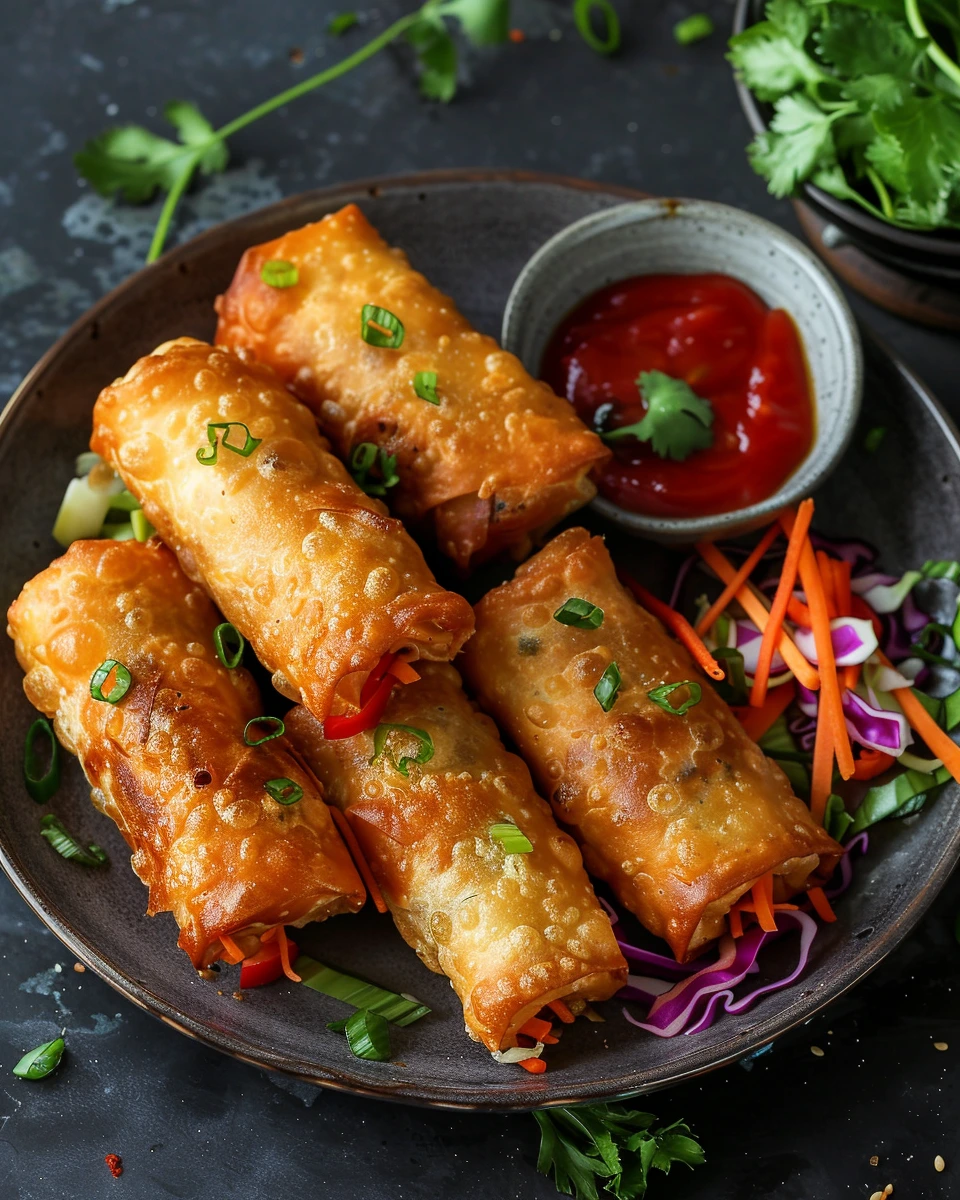
The story
The Chiko Roll was developed in Australia in the early 1950s as a robust, one-handed snack inspired by Chinese spring rolls but designed for outdoor events. Its thick wrapper and cabbage-heavy filling became fixtures at fish-and-chip shops and agricultural shows. This version captures the original’s crisp shell and dense, peppery vegetable filling without pretending to be a delicate spring roll. Barley gives the centre its characteristic chew and substance. The roll belongs to Australian takeaway nostalgia, showgrounds and sporting culture. A homemade version can celebrate that history while using fresher vegetables and controlled frying.
Ingredients
- Main ingredients
- 6 piece spring roll wrappers
- 200 g cabbageshredded
- 100 g carrotgrated
- 60 g celeryfinely sliced
- 150 g beef minceoptional traditional-style filling
- 50 g pearl barleycooked
- 1 tbsp soy sauce
- 500 ml neutral oilfor frying
Method
Prepare the ingredients
Cook barley until tender. Measure everything before you start so the recipe scales cleanly from the dynamic ingredient quantities. Cut vegetables evenly so they soften at the same rate and the final texture is balanced.
Look for: The outside should be golden and the centre should be cooked through without looking wet or raw. Tip: Keep the plating relaxed and generous, with a clean sauce or relish to balance richer elements. Avoid: Do not rush the seasoning; small adjustments at the end make the dish taste finished.Build the flavour
Brown mince with cabbage, carrot and celery. Work steadily and check texture rather than relying only on the clock.
Look for: The outside should be golden and the centre should be cooked through without looking wet or raw. Tip: Keep the plating relaxed and generous, with a clean sauce or relish to balance richer elements. Avoid: Do not rush the seasoning; small adjustments at the end make the dish taste finished.Season properly
Season with soy sauce and pepper. Work steadily and check texture rather than relying only on the clock.
Look for: The outside should be golden and the centre should be cooked through without looking wet or raw. Tip: Keep the plating relaxed and generous, with a clean sauce or relish to balance richer elements. Avoid: Do not rush the seasoning; small adjustments at the end make the dish taste finished.Check the texture
Cool the filling. Work steadily and check texture rather than relying only on the clock.
Look for: The outside should be golden and the centre should be cooked through without looking wet or raw. Tip: Keep the plating relaxed and generous, with a clean sauce or relish to balance richer elements. Avoid: Do not rush the seasoning; small adjustments at the end make the dish taste finished.Finish the seasoning
Roll tightly in wrappers. Work steadily and check texture rather than relying only on the clock.
Look for: The outside should be golden and the centre should be cooked through without looking wet or raw. Tip: Keep the plating relaxed and generous, with a clean sauce or relish to balance richer elements. Avoid: Do not rush the seasoning; small adjustments at the end make the dish taste finished.Bake or roast
Fry or bake until crisp and golden. Heat oil to about 180°C / 355°F; if it is too cool the food turns greasy, and if too hot the outside browns before the centre cooks. Preheat the oven to 200°C / 390°F and use the middle shelf unless the recipe needs strong top browning. Taste at the end for salt, acidity and richness; traditional versions should feel generous but balanced.
Look for: The outside should be golden and the centre should be cooked through without looking wet or raw. Tip: Keep the plating relaxed and generous, with a clean sauce or relish to balance richer elements. Avoid: Do not overcrowd the pan because the oil temperature drops and the food absorbs oil.
Nutrition
per serving
Estimated from the upgraded serves-2 metric ingredient list; verify with a nutrition calculator before making health claims.