The story
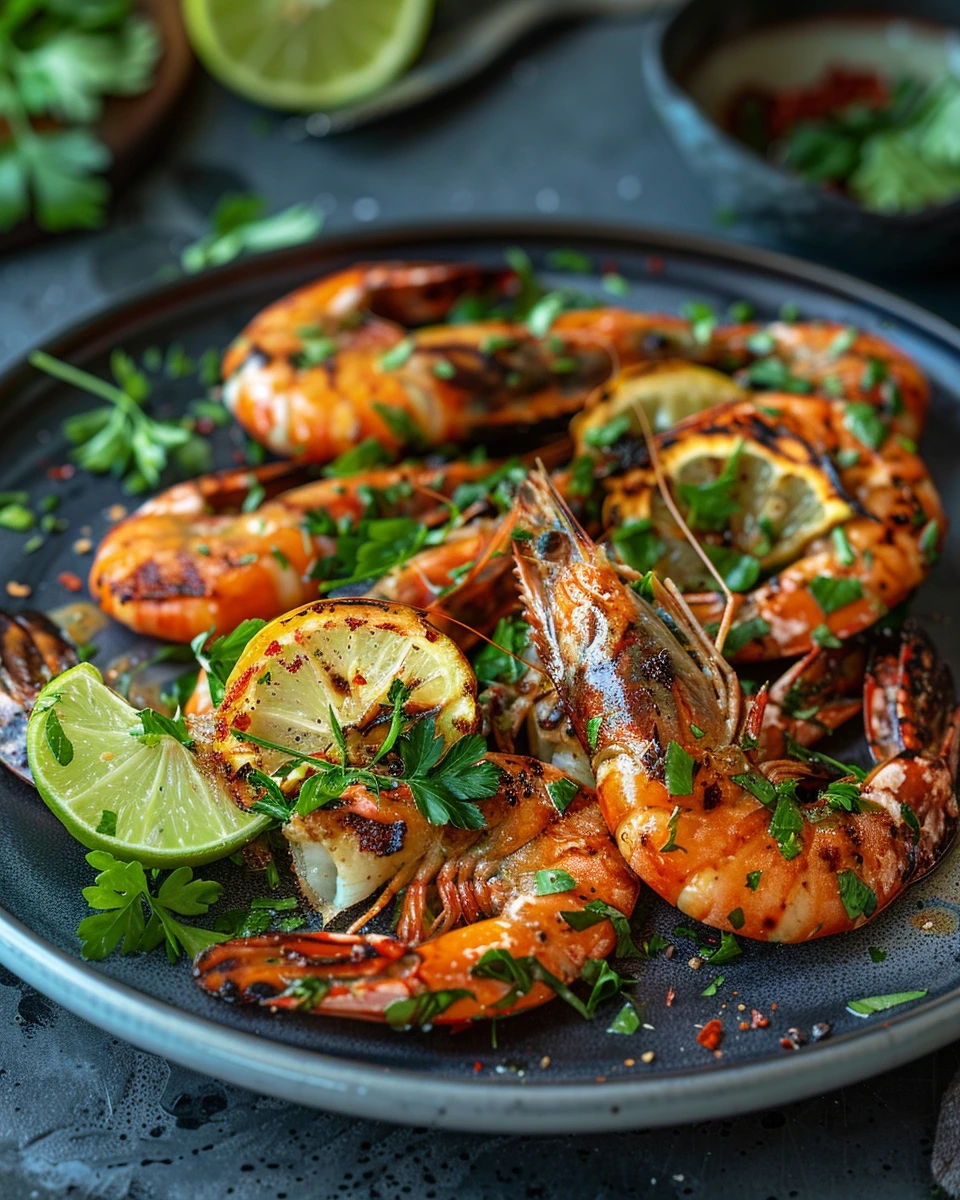
Grilled prawns are central to Australia’s summer seafood culture. Pairing them with native bush lime or finger lime brings a local citrus note to a familiar barbecue technique. High heat caramelises the shell and concentrates the prawn’s sweetness, while native lime provides fragrant acidity. Cooking in the shell protects the flesh and adds flavour. The dish fits Christmas lunches, coastal barbecues and outdoor entertaining. Its simplicity lets the quality of Australian prawns and native citrus remain visible.
Ingredients
- Main ingredients
- 400 g large prawnsshell on
- 1.5 tbsp bush lime juiceor regular lime
- 2 piece garlic clovescrushed
- 2 tbsp olive oil
- 0.5 piece red chillisliced
- 10 g parsleychopped
- 150 g riceuncooked
Method
Prepare the ingredients
Marinate prawns with garlic, chilli, oil and lime. Measure everything before you start so the recipe scales cleanly from the dynamic ingredient quantities. Keep seafood chilled until cooking or serving, and cut vegetables into even bite-sized pieces.
Look for: The outside should be golden and the centre should be cooked through without looking wet or raw. Tip: Keep the plating relaxed and generous, with a clean sauce or relish to balance richer elements. Avoid: Do not overcook seafood; it should stay juicy and just cooked through.Cook with colour
Heat a grill or barbecue. Use a hot grill or barbecue, roughly 220°C / 430°F at the grate, so the outside browns quickly without drying out.
Look for: Look for deep browning, light charring and juices resting back into the meat before slicing. Tip: Keep the plating relaxed and generous, with a clean sauce or relish to balance richer elements. Avoid: Do not overcook seafood; it should stay juicy and just cooked through.Cook the dish
Cook prawns quickly until pink and lightly charred. Work steadily and check texture rather than relying only on the clock.
Look for: Look for deep browning, light charring and juices resting back into the meat before slicing. Tip: Keep the plating relaxed and generous, with a clean sauce or relish to balance richer elements. Avoid: Do not overcook seafood; it should stay juicy and just cooked through.Season properly
Season with salt. Work steadily and check texture rather than relying only on the clock.
Look for: Look for deep browning, light charring and juices resting back into the meat before slicing. Tip: Keep the plating relaxed and generous, with a clean sauce or relish to balance richer elements. Avoid: Do not overcook seafood; it should stay juicy and just cooked through.Finish and serve
Finish with more lime. Work steadily and check texture rather than relying only on the clock.
Look for: Look for deep browning, light charring and juices resting back into the meat before slicing. Tip: Keep the plating relaxed and generous, with a clean sauce or relish to balance richer elements. Avoid: Do not overcook seafood; it should stay juicy and just cooked through.Finish and serve
Serve with rice or salad. Taste at the end for salt, acidity and richness; traditional versions should feel generous but balanced.
Look for: Look for deep browning, light charring and juices resting back into the meat before slicing. Tip: Keep the plating relaxed and generous, with a clean sauce or relish to balance richer elements. Avoid: Do not overcook seafood; it should stay juicy and just cooked through.
Nutrition
per serving
Estimated from the upgraded serves-2 metric ingredient list; verify with a nutrition calculator before making health claims.