The story
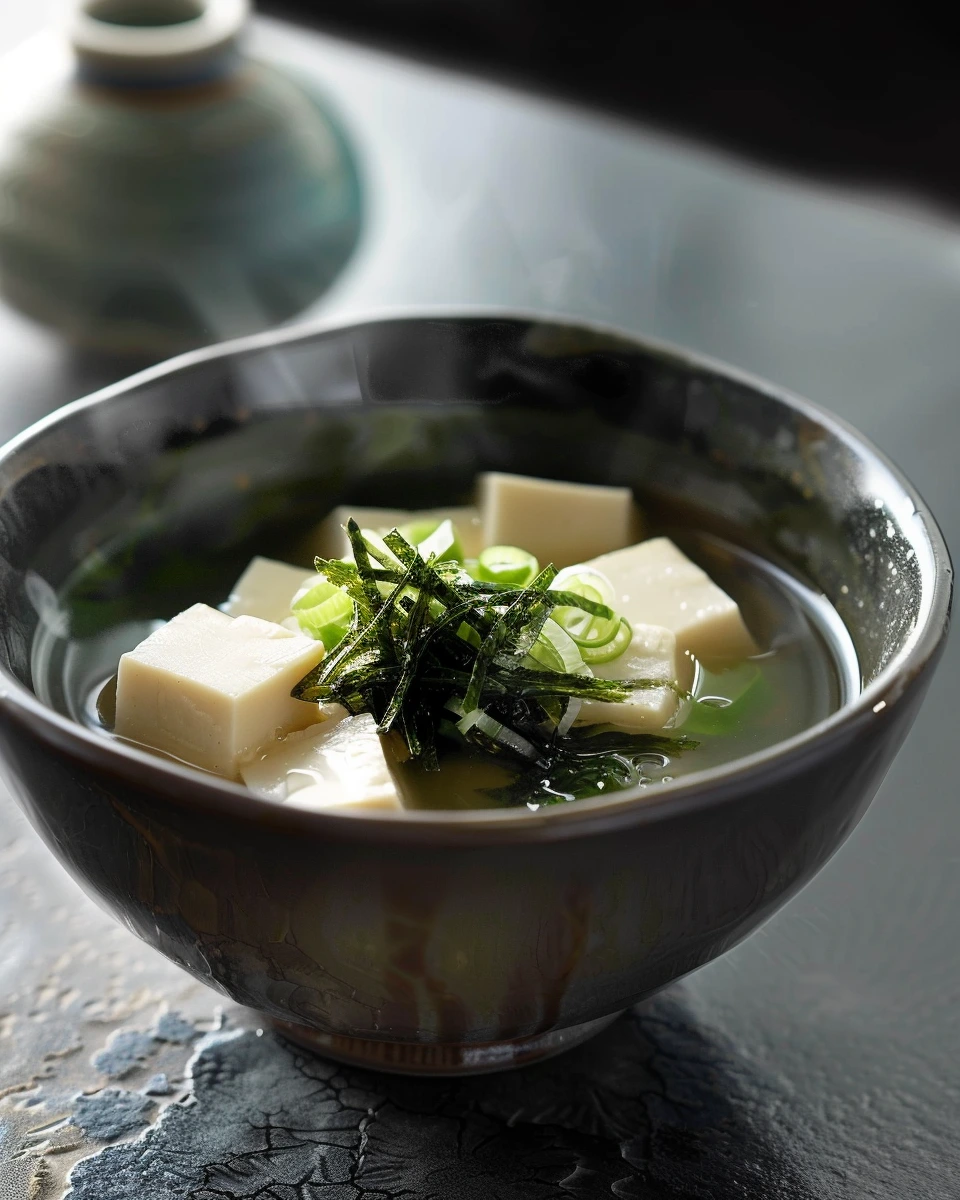
Associated with Japanese household and temple food traditions, Miso Soup has endured because the preparation gives familiar ingredients a very specific regional identity. It is recognised for dashi, miso, tofu, wakame and spring onion. Careful timing and seasoning are essential to produce the texture and flavour expected of the dish. Miso Soup is particularly associated with breakfast and as part of a rice-centred meal. That setting is central to understanding the dish: it explains when it is eaten, what accompanies it and why it continues to matter within Japanese food culture.
Ingredients
- Main ingredients
- 0.5 litre dashi stock
- 1.5 tablespoon awase miso
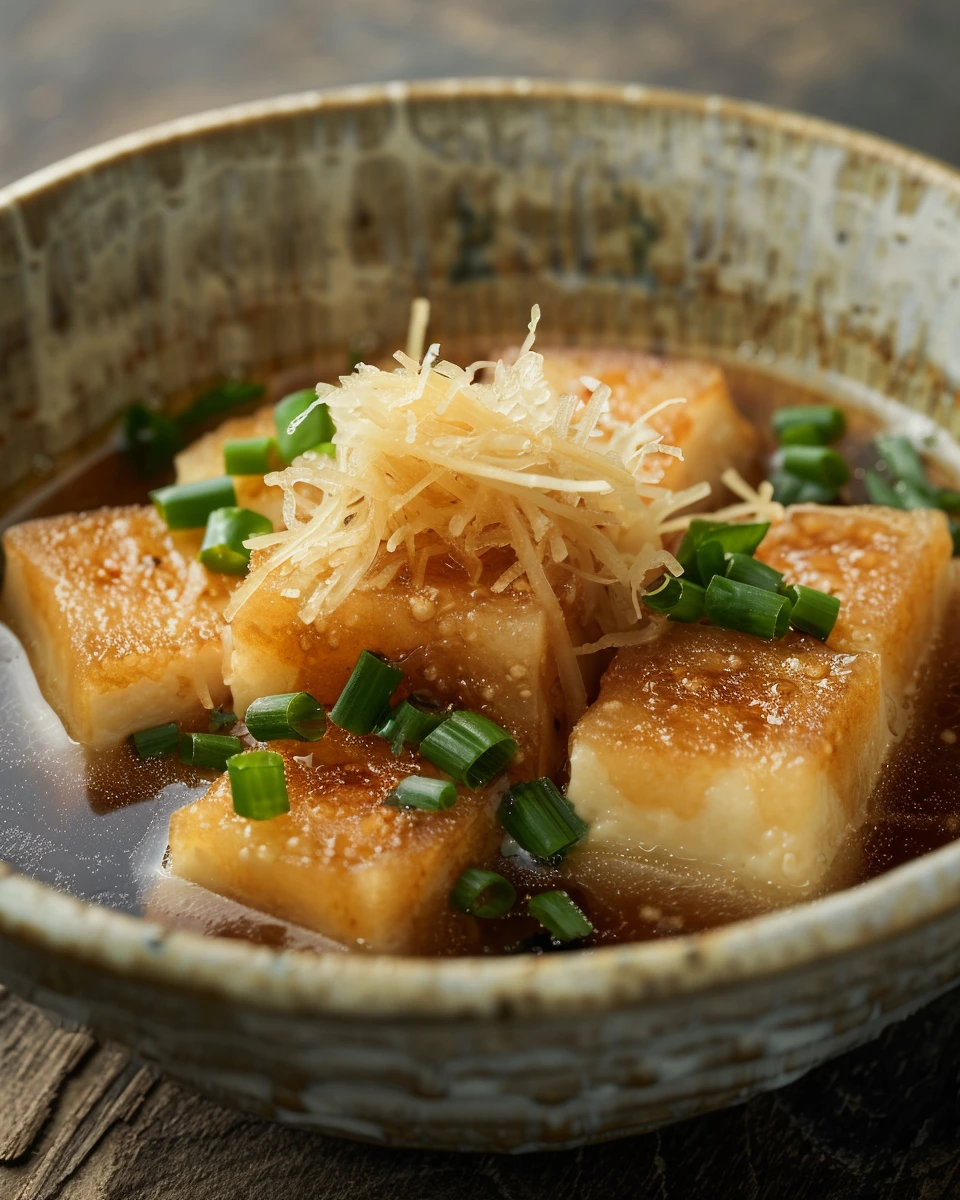
- 75 gram silken tofu
- 2.5 gram dried wakame
- 1 piece Spring onions
Method
Prepare the dashi
Warm the dashi gently and cut tofu into neat 1.5 cm cubes; finely slice spring onions on the diagonal.
Look for: Dashi is hot but not boiling; tofu pieces are even. Tip: Use kombu-katsuobushi dashi if possible for a more traditional flavour. Avoid: Boiling miso makes it taste harsh and dull.Add tofu and wakame
Add tofu and soaked wakame to the hot dashi and warm through gently at about 80–85°C / 176–185°F.
Look for: Tofu is warmed but still delicate. Tip: Keep the soup below a boil from this point. Avoid: Do not stir roughly or the tofu breaks apart.Dissolve the miso
Put miso in a ladle, loosen it with hot dashi, then stir it back into the pan until smooth.
Look for: The soup looks cloudy and even with no lumps. Tip: Blend red and white miso for a rounded awase-style flavour. Avoid: Never drop miso straight into the pot in a clump.Taste and balance
Taste before seasoning; miso varies in saltiness, so add only a little extra soy if needed.
Look for: The soup tastes savoury and balanced, not salty. Tip: Miso soup should be served in small bowls, not as a heavy stew. Avoid: Adding salt before tasting can ruin the balance.Serve immediately
Ladle into bowls and finish with fine spring onion slices.
Look for: Spring onion stays bright and fresh. Tip: Make it last-minute so the aroma stays lively. Avoid: Do not leave miso soup simmering on the hob.
Nutrition
per serving
Estimated nutrition for Miso Soup; use as editorial/testing data and refine from exact ingredient weights if needed.