The story
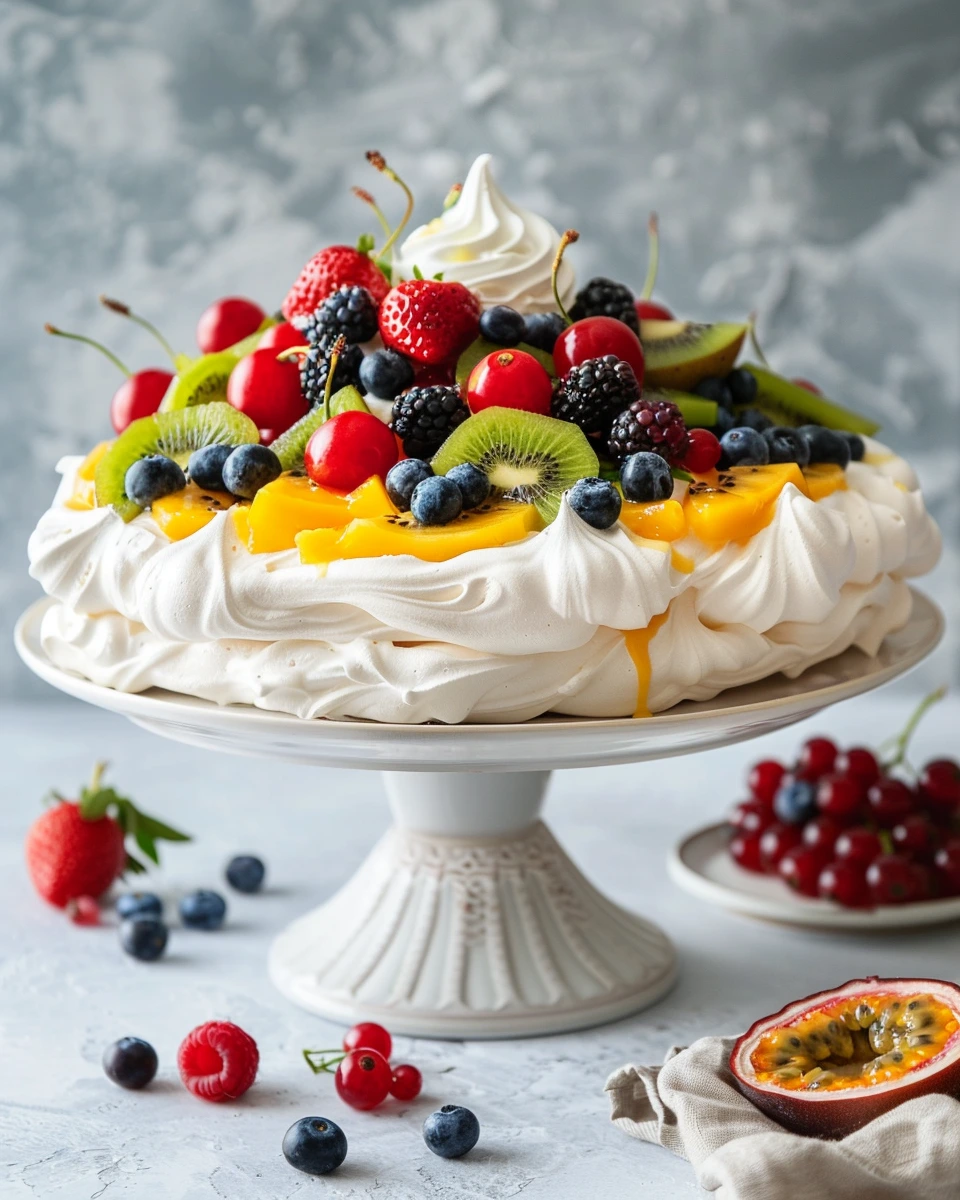
Pavlova emerged in Australia and New Zealand during the early twentieth century and was named after ballerina Anna Pavlova. The exact national origin remains contested, but the dessert became deeply established in both countries. It is famous for its textural contrast: brittle outer meringue, soft centre, cool cream and acidic fruit. A little cornflour and vinegar help create the characteristic marshmallow interior. In Australia, pavlova is a Christmas, barbecue and celebration dessert, especially suited to summer fruit. The friendly argument over its origin is now part of its cultural life.
Ingredients
- Main ingredients
- 3 piece whites
- 170 g caster sugar
- 1 tsp cornflour
- 1 tsp white vinegar
- 200 ml double cream
- 60 g passionfruit pulp
- 150 g mixed berries
Method
Prepare the ingredients
Whisk egg whites to soft peaks. Measure everything before you start so the recipe scales cleanly from the dynamic ingredient quantities. Cut vegetables evenly so they soften at the same rate and the final texture is balanced.
Look for: The mixture should look even, seasoned and ready for the next stage. Tip: Keep the plating relaxed and generous, with a clean sauce or relish to balance richer elements. Avoid: Do not overmix once flour is added or the texture can become tough.Build the flavour
Add sugar gradually until glossy. Work steadily and check texture rather than relying only on the clock.
Look for: The mixture should look even, seasoned and ready for the next stage. Tip: Keep the plating relaxed and generous, with a clean sauce or relish to balance richer elements. Avoid: Do not overmix once flour is added or the texture can become tough.Cook the dish
Fold in cornflour and vinegar. Work steadily and check texture rather than relying only on the clock.
Look for: The mixture should look even, seasoned and ready for the next stage. Tip: Keep the plating relaxed and generous, with a clean sauce or relish to balance richer elements. Avoid: Do not overmix once flour is added or the texture can become tough.Check the texture
Shape into a meringue nest. Work steadily and check texture rather than relying only on the clock.
Look for: The mixture should look even, seasoned and ready for the next stage. Tip: Keep the plating relaxed and generous, with a clean sauce or relish to balance richer elements. Avoid: Do not overmix once flour is added or the texture can become tough.Bake or roast
Bake low and slow, then cool completely. Preheat the oven to 120°C / 250°F and use the middle shelf unless the recipe needs strong top browning.
Look for: The outside should be golden and the centre should be cooked through without looking wet or raw. Tip: Keep the plating relaxed and generous, with a clean sauce or relish to balance richer elements. Avoid: Do not overmix once flour is added or the texture can become tough.Serve traditionally
Top with cream, passionfruit and berries. Taste at the end for salt, acidity and richness; traditional versions should feel generous but balanced.
Look for: The mixture should look even, seasoned and ready for the next stage. Tip: Keep the plating relaxed and generous, with a clean sauce or relish to balance richer elements. Avoid: Do not overmix once flour is added or the texture can become tough.
Nutrition
per serving
Estimated from the upgraded serves-2 metric ingredient list; verify with a nutrition calculator before making health claims.