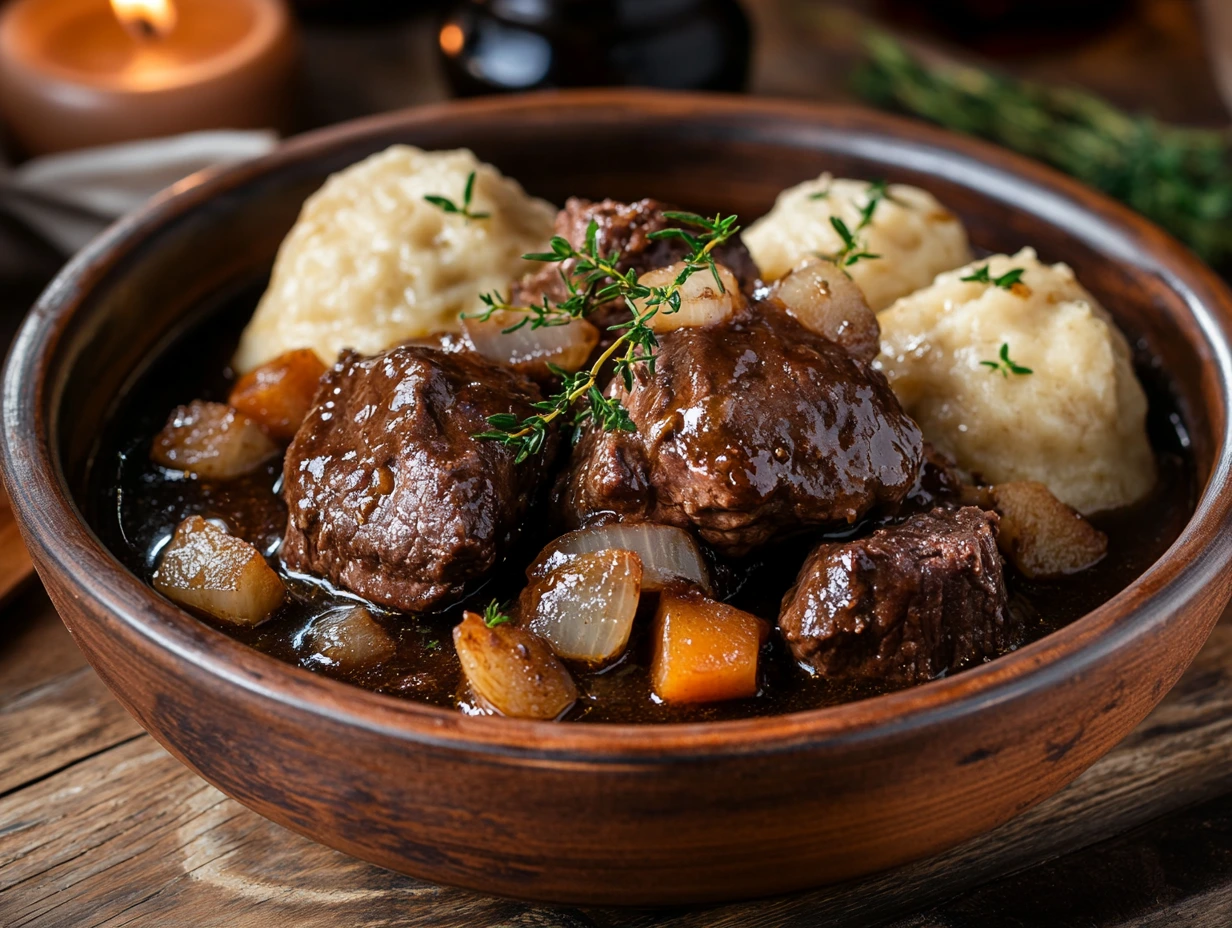
The story
Bierfleisch reflects Salzburg’s strong brewing culture and the Central European practice of braising tougher meat in beer. It is a hearty regional inn dish rather than a refined court preparation. Beer contributes malt, bitterness and colour while slow cooking tenderises beef and collapses onion into the sauce. Careful reduction prevents harshness. The dish suits Salzburg beer halls, rural inns and winter tables, linking local brewing with substantial meat cookery.
Ingredients
- Main ingredients
- 600 g beef chucktrimmed and cut into even 3 cm pieces · Measured for a four-serving recipe.
- 100 g dark beerprepared as described · Measured for a four-serving recipe.
- 2 medium onionspeeled and diced into 5 mm pieces · Measured for a four-serving recipe.
- 100 g root vegetablesprepared as described · Measured for a four-serving recipe.
- 100 g mustardprepared as described · Measured for a four-serving recipe.
- 750 ml stockMeasured for a four-serving recipe.
Method
Set up and weigh everything
Read the full method before heating anything. Weigh every ingredient for Salzburger Bierfleisch. Put raw meat or seafood on a separate board. Peel onions and cut them into uniform 5 mm dice; mince garlic to roughly 2 mm; cut firm vegetables into equal 2 cm pieces so they cook at the same rate. Pat meat, fish or wet vegetables dry with kitchen paper before seasoning.
Look for: All ingredients are measured, evenly cut and arranged in cooking order. Tip: Keep salt, oil and the finishing garnish beside the hob so the final seasoning is not rushed. Avoid: Uneven pieces cook at different speeds; never use the raw-meat board for ready-to-eat garnish.Season and start the flavour base
Season the main ingredient for Salzburger Bierfleisch lightly with salt 10 minutes before cooking. Heat a heavy pan over medium heat for 2 minutes, add the cooking fat, then add onion or other aromatics. Fry at about 160–170°C for 6–8 minutes, stirring every 30 seconds, until softened and lightly golden. Add garlic and ground spices for the final 30–60 seconds only.
Look for: Onions are translucent with pale golden edges; spices smell fragrant but are not dark. Tip: If the pan colours too fast, lower the heat and add 1 tablespoon of water. Avoid: Garlic and paprika burn quickly and become bitter. Do not add them at the beginning.Brown the main ingredient in batches
Raise the pan to medium-high. Add the prepared protein in a single uncrowded layer and leave it untouched for 2–3 minutes before turning. Brown a second side for 2 minutes. Work in batches so the pan stays hot; return everything to the pan only when the surface has developed colour.
Look for: The protein releases naturally from the pan and has a deep golden surface. Tip: Reserve any resting juices and return them to the sauce for flavour. Avoid: Crowding traps steam and prevents browning. Do not force food from the pan before a crust forms.Add liquid and cook gently
Pour in the measured stock, water, milk or sauce ingredients, scraping the base of the pan to release browned flavour. Bring to a full simmer, then reduce immediately to 90–95°C. Cover partially and cook until tender: about 20 minutes for small vegetables or rice, 35–45 minutes for chicken pieces, or 90–120 minutes for tougher meat. Stir every 10–15 minutes and add a splash of hot water if the pan becomes dry.
Look for: The liquid bubbles gently rather than boiling violently; the main ingredient is tender throughout. Tip: Use a probe: poultry should reach 75°C; whole cuts of pork 70°C with a rest; fish 63°C or opaque and just flaking. Avoid: A hard boil can toughen meat, split dairy and make sauces greasy.Reduce and balance the sauce
Remove the lid for the final 5–10 minutes if the sauce is thin. Simmer until it coats the back of a spoon. Taste in this order: salt, acidity, sweetness, then chilli or pepper. Add fresh citrus juice, herbs or dairy off the strongest heat to preserve aroma and prevent splitting.
Look for: A spoon drawn through the sauce leaves a clear trail for 1–2 seconds. Tip: If the sauce is too salty, dilute with unsalted liquid rather than masking it with sugar. Avoid: Do not reduce before the main ingredient is tender; it can leave too little liquid to finish cooking.Rest, garnish and serve safely
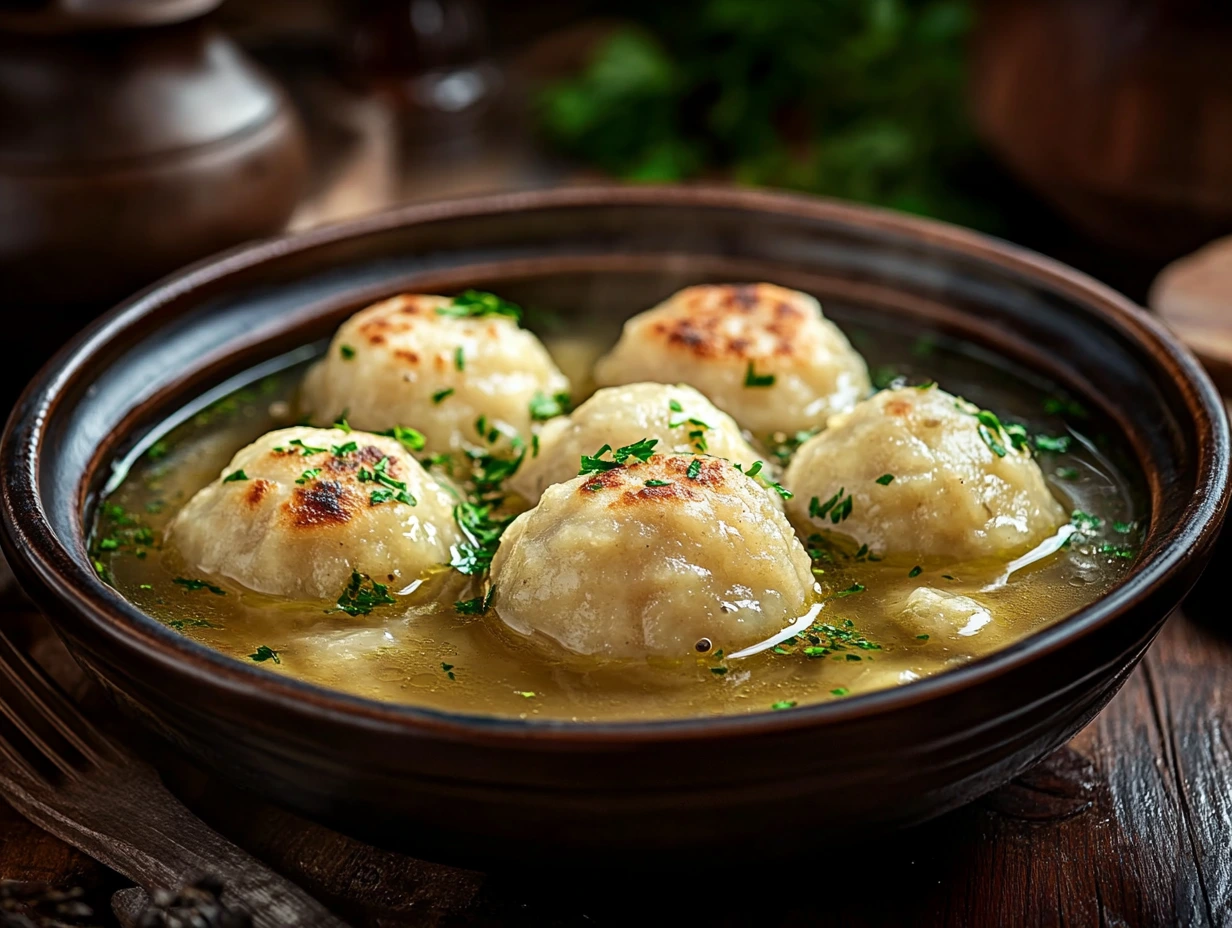
Rest Salzburger Bierfleisch for 5 minutes where appropriate. Warm plates or bowls, portion evenly, then add the specified fresh herbs, zest, crisp garnish or sauce. Serve hot food above 63°C. Refrigerate leftovers within 2 hours in shallow containers and use within 2–3 days.
Look for: The final dish is glossy, evenly seasoned and served at the intended temperature. Tip: Keep crisp elements separate until the moment of serving. Avoid: Do not garnish before checking the final seasoning.
Nutrition
per serving
Estimated from standard ingredient values; actual nutrition varies by brands, trimming, absorption and serving size.