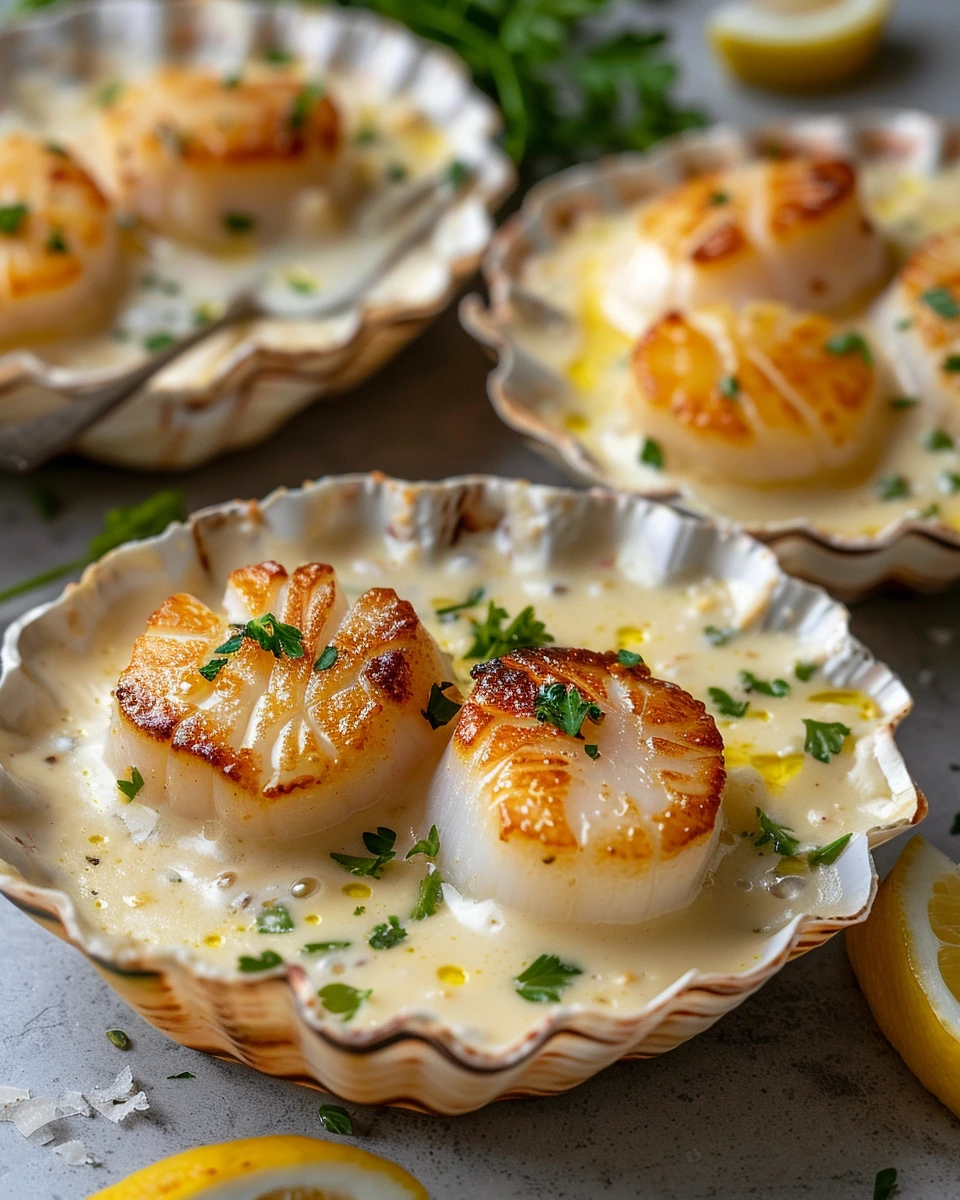
The story
Mornay sauce belongs to French culinary tradition, but scallops Mornay became a familiar Australian club, pub and home-entertaining dish during the twentieth century. It reflects the period when continental sauces were adapted to abundant local seafood. The dish is loved for its combination of sweet scallops, creamy sauce and browned cheese. The technical challenge is heating the shellfish through without turning it firm or watery. Scallops Mornay is strongly linked with retro seafood restaurants, RSL clubs and special-occasion dining. Its return on modern menus is often affectionate and quality-led rather than ironic.
Ingredients
- Main ingredients
- 250 g scallops
- 30 g butter
- 25 g plain flour
- 250 ml milk
- 60 g cheddar cheesegrated
- 25 g breadcrumbs
- 5 g parsleychopped
- 0.5 lemonwedges
Method
Prepare the ingredients
Make a smooth white sauce with butter, flour and milk. Measure everything before you start so the recipe scales cleanly from the dynamic ingredient quantities. Cut vegetables evenly so they soften at the same rate and the final texture is balanced.
Look for: The mixture should look even, seasoned and ready for the next stage. Tip: Keep the plating relaxed and generous, with a clean sauce or relish to balance richer elements. Avoid: Do not rush the seasoning; small adjustments at the end make the dish taste finished.Build the flavour
Stir in cheddar until melted. Work steadily and check texture rather than relying only on the clock.
Look for: The mixture should look even, seasoned and ready for the next stage. Tip: Keep the plating relaxed and generous, with a clean sauce or relish to balance richer elements. Avoid: Do not rush the seasoning; small adjustments at the end make the dish taste finished.Cook the dish
Place scallops in shells or ramekins. Work steadily and check texture rather than relying only on the clock.
Look for: The mixture should look even, seasoned and ready for the next stage. Tip: Keep the plating relaxed and generous, with a clean sauce or relish to balance richer elements. Avoid: Do not rush the seasoning; small adjustments at the end make the dish taste finished.Check the texture
Spoon over sauce and scatter breadcrumbs. Work steadily and check texture rather than relying only on the clock.
Look for: The mixture should look even, seasoned and ready for the next stage. Tip: Keep the plating relaxed and generous, with a clean sauce or relish to balance richer elements. Avoid: Do not overmix once flour is added or the texture can become tough.Bake or roast
Grill or bake until bubbling and golden. Preheat the oven to 180°C / 355°F and use the middle shelf unless the recipe needs strong top browning. Use a hot grill or barbecue, roughly 220°C / 430°F at the grate, so the outside browns quickly without drying out.
Look for: The outside should be golden and the centre should be cooked through without looking wet or raw. Tip: Keep the plating relaxed and generous, with a clean sauce or relish to balance richer elements. Avoid: Do not rush the seasoning; small adjustments at the end make the dish taste finished.Finish and serve
Finish with parsley and lemon. Taste at the end for salt, acidity and richness; traditional versions should feel generous but balanced.
Look for: The mixture should look even, seasoned and ready for the next stage. Tip: Keep the plating relaxed and generous, with a clean sauce or relish to balance richer elements. Avoid: Do not rush the seasoning; small adjustments at the end make the dish taste finished.
Nutrition
per serving
Estimated from the upgraded serves-2 metric ingredient list; verify with a nutrition calculator before making health claims.