The story
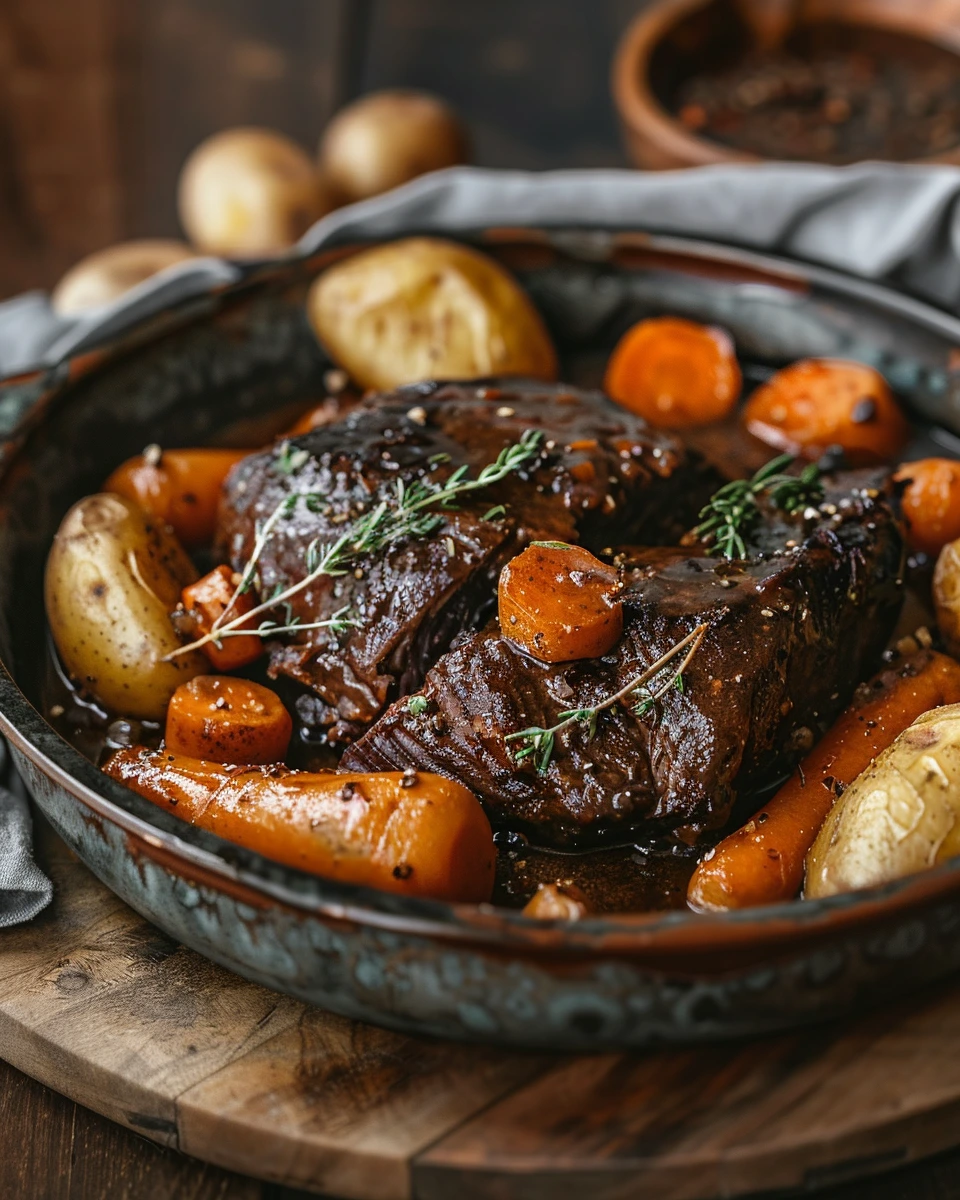
Pot roasting came through European and British household traditions and suited Australian families using large, economical beef cuts. Slow cookers later reinforced its place in weeknight and Sunday cooking. Low heat converts collagen into a silky sauce while vegetables absorb beef juices. The meat should slice or pull apart without becoming dry. It remains a dependable family meal and a way to turn an inexpensive cut into something generous. Leftovers are useful in sandwiches and pies.
Ingredients
- Main ingredients
- 750 g beef chuck roast
- 250 g carrotschunked
- 400 g potatoeschunked
- 1 piece onionsliced
- 350 ml beef stock
- 1 tbsp tomato paste
- 1 tbsp plain flour
- 1 tbsp olive oil
Method
Prepare the ingredients
Brown the beef deeply on all sides. Measure everything before you start so the recipe scales cleanly from the dynamic ingredient quantities. Slice meat across the grain where it will be served sliced, and keep steaks even in thickness so they cook at the same speed. Heat oil to about 180°C / 355°F; if it is too cool the food turns greasy, and if too hot the outside browns before the centre cooks.
Look for: The outside should be golden and the centre should be cooked through without looking wet or raw. Tip: Keep the plating relaxed and generous, with a clean sauce or relish to balance richer elements. Avoid: Do not slice meat with the grain; cutting across the grain keeps it tender.Build the flavour
Soften onions, then stir in flour and tomato paste. Work steadily and check texture rather than relying only on the clock.
Look for: The outside should be golden and the centre should be cooked through without looking wet or raw. Tip: Keep the plating relaxed and generous, with a clean sauce or relish to balance richer elements. Avoid: Do not rush the seasoning; small adjustments at the end make the dish taste finished.Cook the dish
Add stock, carrots and potatoes. Work steadily and check texture rather than relying only on the clock.
Look for: The outside should be golden and the centre should be cooked through without looking wet or raw. Tip: Keep the plating relaxed and generous, with a clean sauce or relish to balance richer elements. Avoid: Do not rush the seasoning; small adjustments at the end make the dish taste finished.Check the texture
Cover and cook slowly until the beef is fork tender. Work steadily and check texture rather than relying only on the clock.
Look for: The outside should be golden and the centre should be cooked through without looking wet or raw. Tip: Keep the plating relaxed and generous, with a clean sauce or relish to balance richer elements. Avoid: Do not rush the seasoning; small adjustments at the end make the dish taste finished.Cut and prepare
Slice and serve with the reduced gravy. Taste at the end for salt, acidity and richness; traditional versions should feel generous but balanced.
Look for: The outside should be golden and the centre should be cooked through without looking wet or raw. Tip: Keep the plating relaxed and generous, with a clean sauce or relish to balance richer elements. Avoid: Do not rush the seasoning; small adjustments at the end make the dish taste finished.
Nutrition
per serving
Estimated from the upgraded serves-2 metric ingredient list; verify with a nutrition calculator before making health claims.