The story
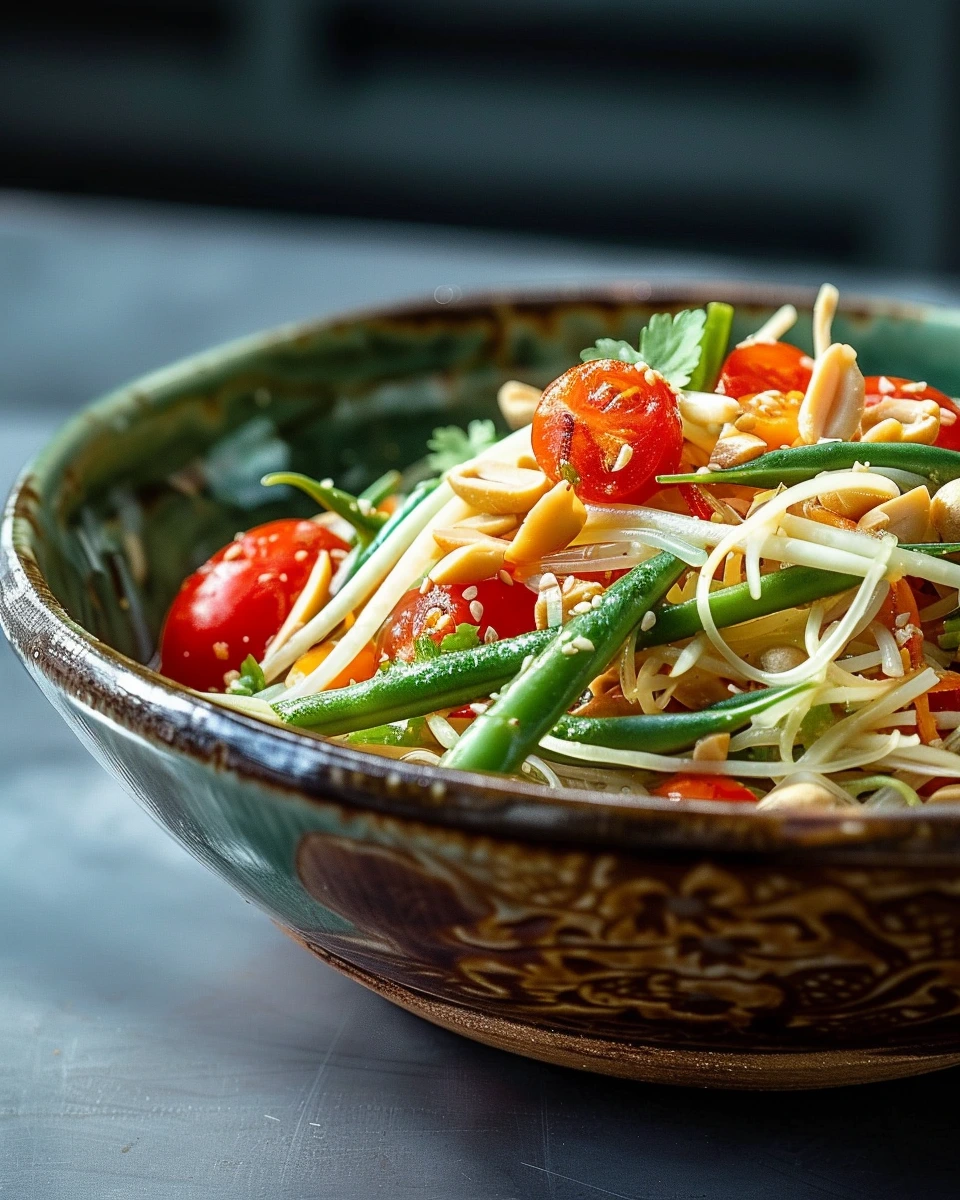
Som Tam Thai is a pounded green-papaya salad balancing lime, fish sauce, palm sugar, chilli and peanuts. Som Tam Thai belongs to north-eastern and street-food traditions, where pounding, grilling, herbs and toasted rice create direct, vivid flavours. The dish developed around the ingredients and cooking methods available in that setting, which is why its defining texture and seasoning remain more important than elaborate presentation. The reputation of Som Tam Thai rests on a pounded green-papaya salad balancing lime, fish sauce, palm sugar, chilli and peanuts. A successful version tastes immediate and recognisable, with the main ingredient supported rather than obscured. Som Tam Thai is commonly eaten as an opening dish, snack or shared plate. It introduces the cuisine through contrast and freshness, and is often served with sauces, herbs or pickles that diners adjust at the table.
Ingredients
- Main ingredients
- 500 gram shredded green papaya500 g shredded green papaya
- 8 piece cherry tomatoeshalved · 8 cherry tomatoes, halved
- 80 gram long beanscut into 4 cm pieces · 80 g long beans, cut into 4 cm pieces
- 2 piece garlic cloves2 garlic cloves
- 2 piece thai chillies2 Thai chillies
- 2 tablespoon fish sauce2 tbsp fish sauce
- 2 tablespoon lime juice2 tbsp lime juice
- 1 tablespoon palm sugar1 tbsp palm sugar
- 2 tablespoon peanuts2 tbsp roasted peanuts
- 1 tablespoon dried shrimpoptional · 1 tbsp dried shrimp, optionaloptional
Method
Prepare the fresh ingredients
Slice vegetables, herbs and aromatics very evenly. For salads, shred papaya or vegetables into long thin strands; for grilled meat salads, slice meat across the grain while still warm.
Look for: The ingredients should be bite-size and easy to toss. Tip: Keep herbs chilled until the final toss. Avoid: Do not crush soft herbs too early.Make the dressing
Combine lime, fish sauce, palm sugar and chilli gradually, stirring or pounding until the sugar dissolves. Taste for a clear balance of sour, salty, sweet and heat.
Look for: The dressing should taste bright and slightly intense. Tip: Thai salad dressing should be vivid because vegetables dilute it. Avoid: Do not add all the chilli at once.Bruise or toss
Use a mortar for papaya salad or a bowl for delicate salads. Bruise firm vegetables lightly to absorb flavour, but toss herbs gently so they stay fresh.
Look for: Firm pieces should soften slightly while herbs stay green. Tip: Add roasted rice powder or nuts near the end so texture remains lively. Avoid: Do not pound tomatoes or herbs into a paste.Add protein or toppings
Fold in prawns, pork, chicken, peanuts, coconut or crispy elements once the dressing is balanced.
Look for: Every bite should have dressing and texture. Tip: Warm protein makes the herbs more aromatic. Avoid: Do not let seafood or cooked meat sit too long in acidic dressing.Rest briefly
Let robust salads stand for 2 minutes; serve delicate herb salads immediately.
Look for: Juices should collect lightly at the bottom without flooding the dish. Tip: Taste again just before serving. Avoid: Do not leave papaya salad for too long or it turns watery.Serve with contrast
Serve with cabbage, cucumber, sticky rice or extra herbs to balance heat and acidity.
Look for: The finished salad should be fresh, sharp and crunchy. Tip: A little extra lime at the table lets people tune the flavour. Avoid: Do not over-garnish; the salad should stay easy to eat.
Nutrition
per serving
Estimated from typical Thai recipe portions; verify against exact brands and serving sizes before publishing formal nutrition claims.