The story
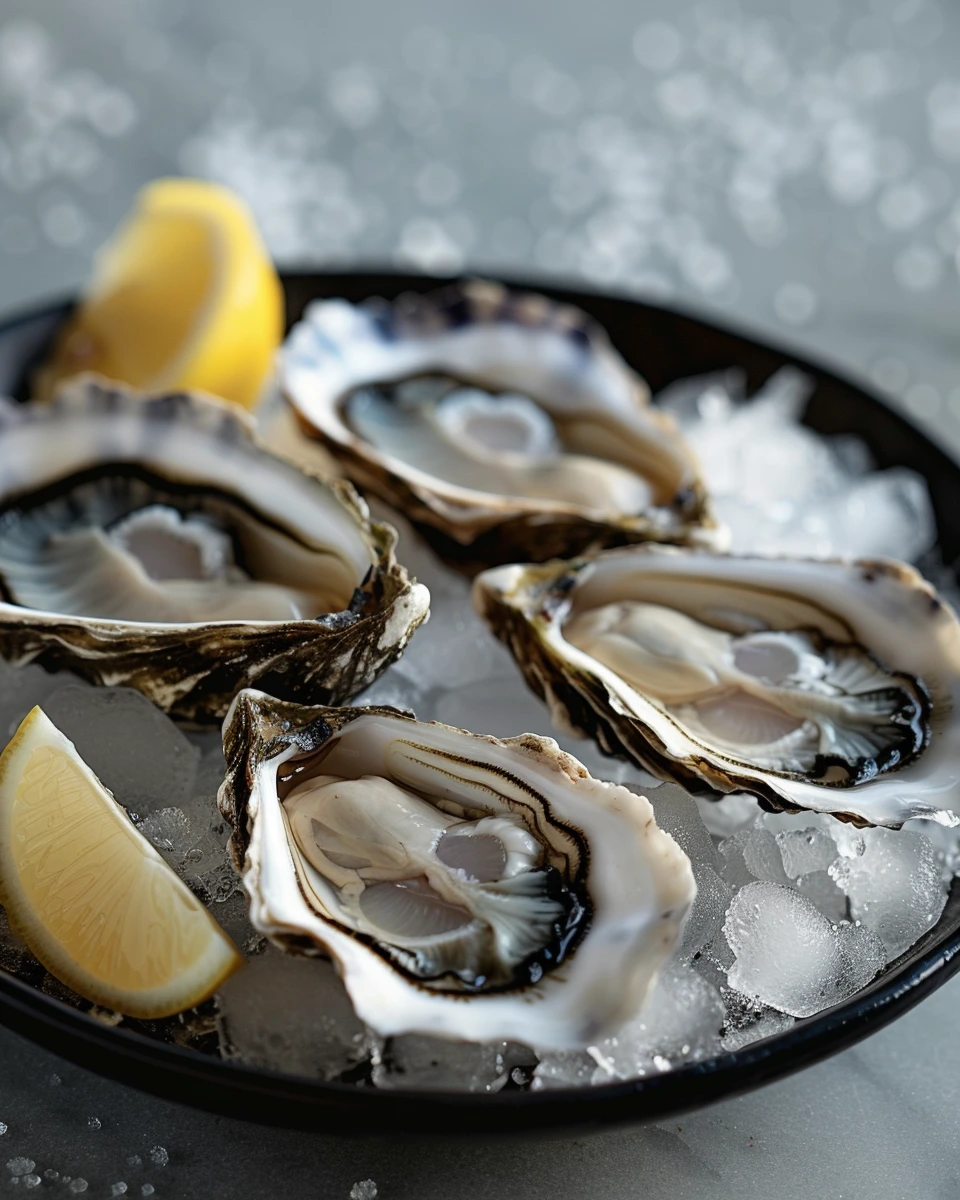
Sydney rock oysters are native to Australia’s eastern coastline and have been harvested for thousands of years by Aboriginal coastal communities. Modern farming in New South Wales estuaries made them one of the country’s defining premium seafoods. They are valued for a firm texture, lingering mineral salinity and a flavour that varies by estuary. Finger lime sharpens the oyster while its individual vesicles preserve a clean, elegant presentation. Oysters are central to Australian summer entertaining, seafood platters and coastal restaurant culture. Pairing them with finger lime places two native ingredients together rather than covering the shellfish with a heavy dressing.
Ingredients
- Main ingredients
- 6 piece Sydney rock oystersshucked
- 20 g finger lime pearls
- 0.5 piece shallotfinely diced
- 1 tbsp white wine vinegar
- 0.5 lemoncut into wedges
- 1 pinch sea saltfor serving on ice
Method
Prepare the ingredients
Open the oysters carefully and keep them chilled. Measure everything before you start so the recipe scales cleanly from the dynamic ingredient quantities. Keep seafood chilled until cooking or serving, and cut vegetables into even bite-sized pieces.
Look for: The outside should be golden and the centre should be cooked through without looking wet or raw. Tip: Keep the plating relaxed and generous, with a clean sauce or relish to balance richer elements. Avoid: Do not overcook seafood; it should stay juicy and just cooked through.Cut and prepare
Finely dice shallot. Work steadily and check texture rather than relying only on the clock.
Look for: The finished plate should look fresh, chilled and neatly dressed rather than wet. Tip: Keep the plating relaxed and generous, with a clean sauce or relish to balance richer elements. Avoid: Do not overcook seafood; it should stay juicy and just cooked through.Cook the dish
Mix shallot with vinegar, lemon juice and a pinch of salt. Work steadily and check texture rather than relying only on the clock.
Look for: The finished plate should look fresh, chilled and neatly dressed rather than wet. Tip: Keep the plating relaxed and generous, with a clean sauce or relish to balance richer elements. Avoid: Do not overcook seafood; it should stay juicy and just cooked through.Check the texture
Spoon a little dressing over each oyster. Work steadily and check texture rather than relying only on the clock.
Look for: The finished plate should look fresh, chilled and neatly dressed rather than wet. Tip: Keep the plating relaxed and generous, with a clean sauce or relish to balance richer elements. Avoid: Do not overcook seafood; it should stay juicy and just cooked through.Finish the seasoning
Scatter finger lime pearls over the top. Work steadily and check texture rather than relying only on the clock.
Look for: The finished plate should look fresh, chilled and neatly dressed rather than wet. Tip: Keep the plating relaxed and generous, with a clean sauce or relish to balance richer elements. Avoid: Do not overcook seafood; it should stay juicy and just cooked through.Finish and serve
Serve immediately on crushed ice. Taste at the end for salt, acidity and richness; traditional versions should feel generous but balanced.
Look for: The finished plate should look fresh, chilled and neatly dressed rather than wet. Tip: Keep the plating relaxed and generous, with a clean sauce or relish to balance richer elements. Avoid: Do not overcook seafood; it should stay juicy and just cooked through.
Nutrition
per serving
Estimated from the upgraded serves-2 metric ingredient list; verify with a nutrition calculator before making health claims.