The story
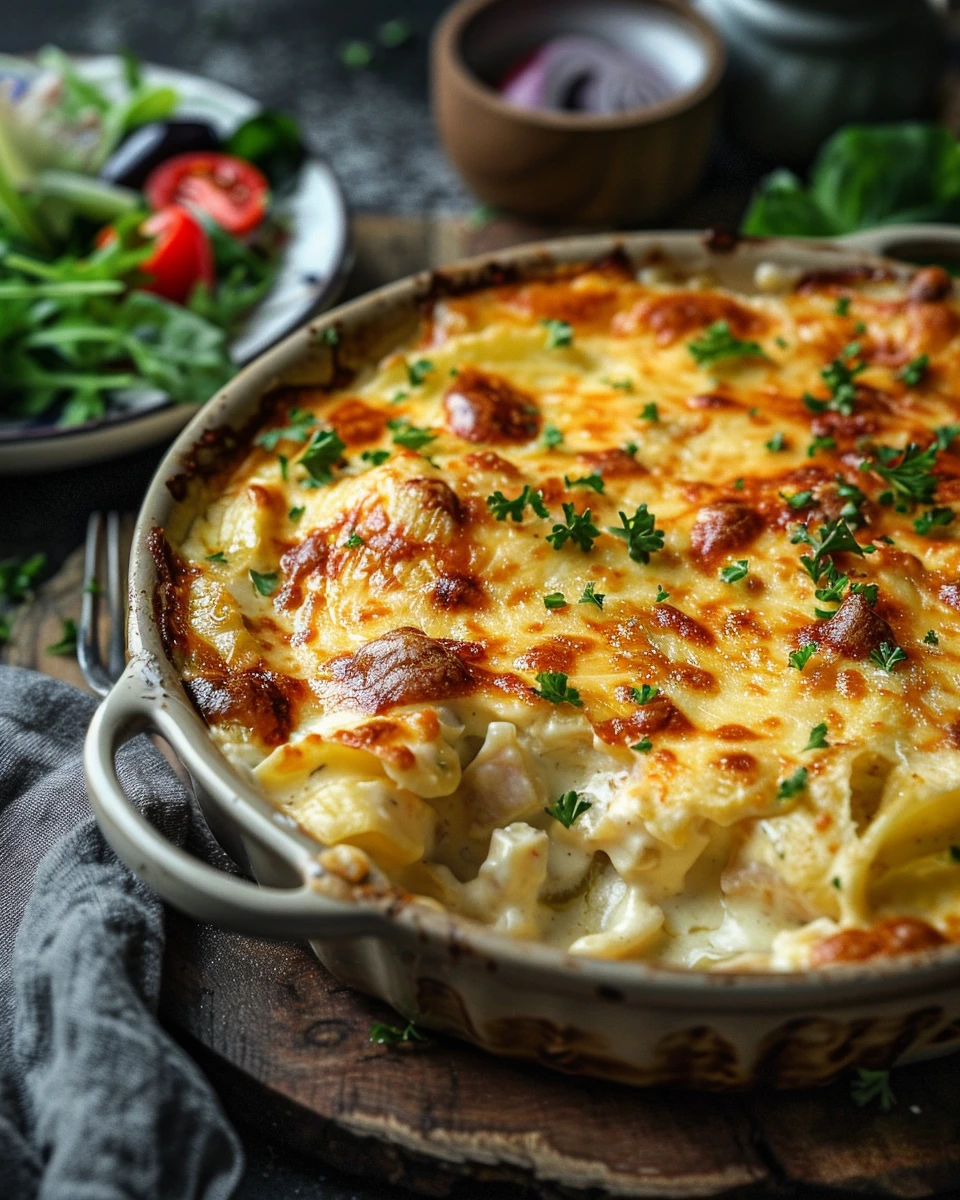
Tuna mornay became a post-war Australian household staple through canned tuna, packet pasta and the popularity of white sauces. It made an affordable pantry protein into a family casserole. The dish is comforting through creamy sauce, soft pasta and crisp topping, while peas or corn add sweetness. Good seasoning and acidity prevent blandness. It remains a nostalgic weeknight dinner and freezer-friendly bake. Many Australians recognise it from childhood even if modern versions use fresher herbs and better cheese.
Ingredients
- Main ingredients
- 215 g canned tunadrained
- 150 g pastacooked
- 25 g butter
- 25 g plain flour
- 300 ml milk
- 80 g cheddar cheesegrated
- 75 g peas
- 40 g breadcrumbs
Method
Prepare the ingredients
Cook pasta until just tender. Measure everything before you start so the recipe scales cleanly from the dynamic ingredient quantities. Cut vegetables evenly so they soften at the same rate and the final texture is balanced.
Look for: The mixture should look even, seasoned and ready for the next stage. Tip: Keep the plating relaxed and generous, with a clean sauce or relish to balance richer elements. Avoid: Do not rush the seasoning; small adjustments at the end make the dish taste finished.Build the flavour
Make a white sauce with butter, flour and milk. Work steadily and check texture rather than relying only on the clock.
Look for: The mixture should look even, seasoned and ready for the next stage. Tip: Keep the plating relaxed and generous, with a clean sauce or relish to balance richer elements. Avoid: Do not rush the seasoning; small adjustments at the end make the dish taste finished.Cook the dish
Stir in tuna, peas, pasta and half the cheese. Work steadily and check texture rather than relying only on the clock.
Look for: The mixture should look even, seasoned and ready for the next stage. Tip: Keep the plating relaxed and generous, with a clean sauce or relish to balance richer elements. Avoid: Do not rush the seasoning; small adjustments at the end make the dish taste finished.Check the texture
Transfer to a baking dish and top with breadcrumbs and remaining cheese. Work steadily and check texture rather than relying only on the clock.
Look for: The mixture should look even, seasoned and ready for the next stage. Tip: Keep the plating relaxed and generous, with a clean sauce or relish to balance richer elements. Avoid: Do not overmix once flour is added or the texture can become tough.Bake or roast
Bake until golden and bubbling. Preheat the oven to 180°C / 355°F and use the middle shelf unless the recipe needs strong top browning. Taste at the end for salt, acidity and richness; traditional versions should feel generous but balanced.
Look for: The outside should be golden and the centre should be cooked through without looking wet or raw. Tip: Keep the plating relaxed and generous, with a clean sauce or relish to balance richer elements. Avoid: Do not rush the seasoning; small adjustments at the end make the dish taste finished.
Nutrition
per serving
Estimated from the upgraded serves-2 metric ingredient list; verify with a nutrition calculator before making health claims.