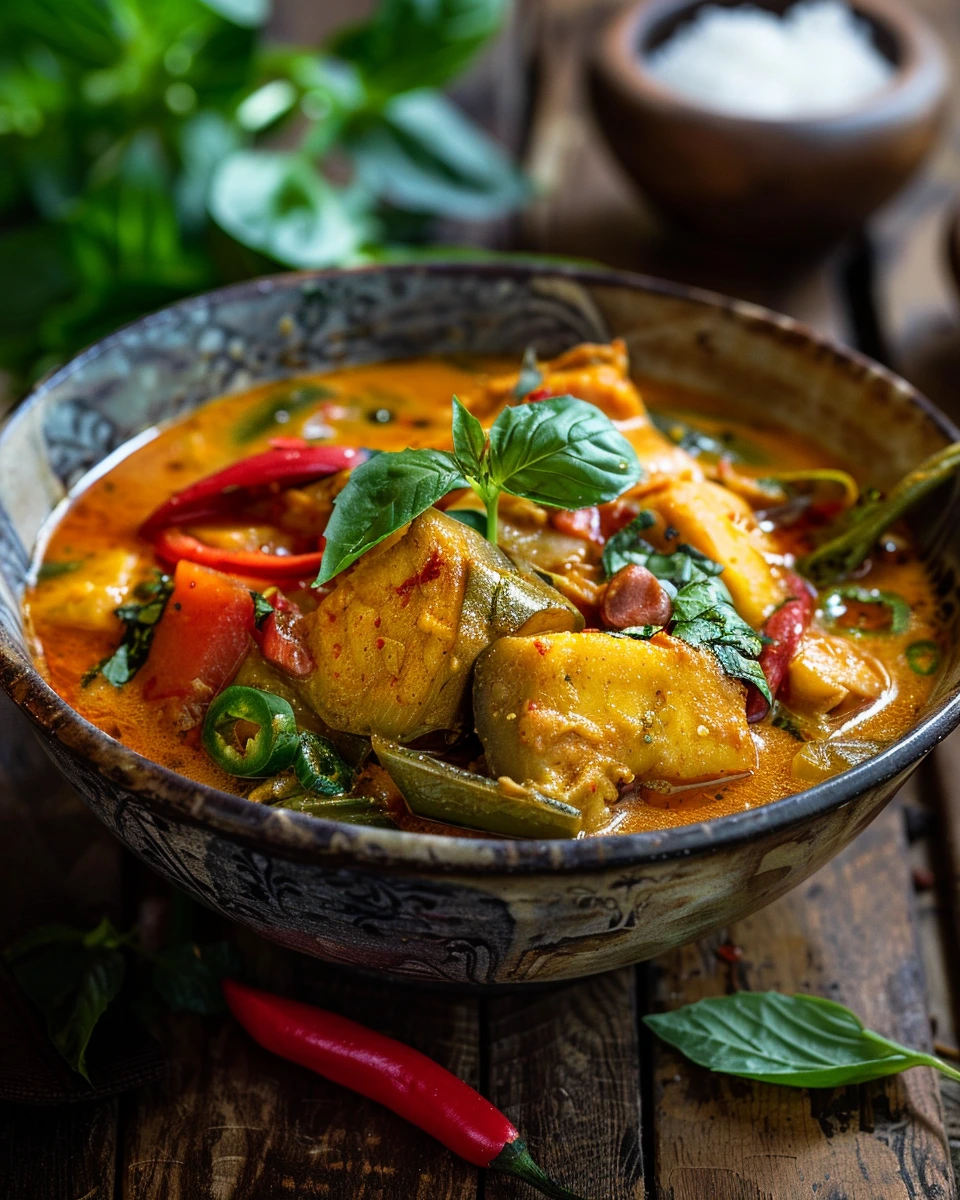
The story
Gaeng Tai Pla is an intensely savoury southern curry made with fermented fish innards, chilli and vegetables. Gaeng Tai Pla belongs to southern Thailand, where intense chilli, turmeric, seafood and fermented flavours reflect the peninsula’s coastal food culture. The dish developed around the ingredients and cooking methods available in that setting, which is why its defining texture and seasoning remain more important than elaborate presentation. What makes Gaeng Tai Pla memorable is its combination of an intensely savoury southern curry made with fermented fish innards, chilli and vegetables. It rewards careful heat control and balanced seasoning rather than unnecessary garnish. Gaeng Tai Pla belongs to everyday meals as well as restaurant and family cooking. It is usually served with the starches, herbs, salads, pickles or sauces traditional to its region, so the complete plate matters as much as the central component.
Ingredients
- Main ingredients
- 600 gram fish600 g firm fish
- 2 tablespoon tai pla fermented fish sauce2 tbsp tai pla fermented fish sauce
- 3 tablespoon southern curry paste3 tbsp southern curry paste
- 800 millilitre water800 ml water
- 150 gram bamboo shoots150 g bamboo shoots
- 150 gram pumpkin150 g pumpkin
- 100 gram Thai aubergine100 g Thai aubergine
- 100 gram long beans100 g long beans
- 4 piece makrut lime leaves4 makrut lime leaves
- 1 portion Fresh turmeric if availableFresh turmeric if available · Fresh turmeric if available
Method
Prepare the aromatics
Slice fibrous aromatics finely or bruise them firmly so they release flavour into the sauce. Cut meat into even bite-size pieces; slice pork across the grain about 3-5 mm thick for quick curries, and keep braising cuts larger for slow curries.
Look for: Aromatics should smell bright before they hit the pan. Tip: Have fish sauce, sugar and lime ready before you start seasoning. Avoid: Do not leave lemongrass, galangal or lime leaves in large tough pieces unless they are for infusion only.Bloom the curry base
Warm the thick coconut cream or a spoonful of oil in a saucepan over medium heat, about 160-170°C, then fry the curry paste or aromatics for 2-4 minutes until fragrant and slightly darker.
Look for: Oil should lightly separate at the edge and the paste should smell rounded rather than raw. Tip: If the paste catches, lower the heat and add a spoonful of coconut milk. Avoid: Do not rush this stage; raw paste gives a flat curry.Build the sauce
Add the remaining coconut milk, stock or water gradually, stirring until smooth. Add firm vegetables first and simmer gently rather than boiling hard.
Look for: The sauce should move with small bubbles around the edge. Tip: Taste before adding salt because curry paste and fish sauce vary a lot. Avoid: A fierce boil can split coconut milk and toughen meat.Cook the main ingredient
Add the meat, seafood, tofu or vegetables according to cooking time. Simmer chicken or pork gently until just cooked; simmer beef or belly cuts until tender; add seafood near the end so it stays delicate.
Look for: Meat should be tender and seafood just opaque. Tip: For braises, keep the pan partly covered and top up with water if the sauce reduces too far. Avoid: Do not overcook prawns or fish; remove from heat as soon as they are done.Balance the seasoning
Season with fish sauce for saltiness, palm sugar for roundness, tamarind or lime for sourness and fresh chilli for heat. Adjust in small amounts, tasting after each addition.
Look for: The final flavour should be salty, sweet, sour and aromatic in balance. Tip: Thai curries should taste slightly more intense in the pan because rice softens the flavour. Avoid: Do not add lime while the curry is boiling hard; it can taste bitter.Finish and serve
Fold in delicate herbs such as Thai basil, coriander, shredded lime leaf or spring onion just before serving. Rest for 2 minutes, then serve with jasmine rice or noodles.
Look for: Herbs should look fresh and bright. Tip: A final spoon of coconut cream gives a restaurant-style finish. Avoid: Do not simmer fresh herbs for long or their flavour fades.
Nutrition
per serving
Estimated from typical Thai recipe portions; verify against exact brands and serving sizes before publishing formal nutrition claims.