The story
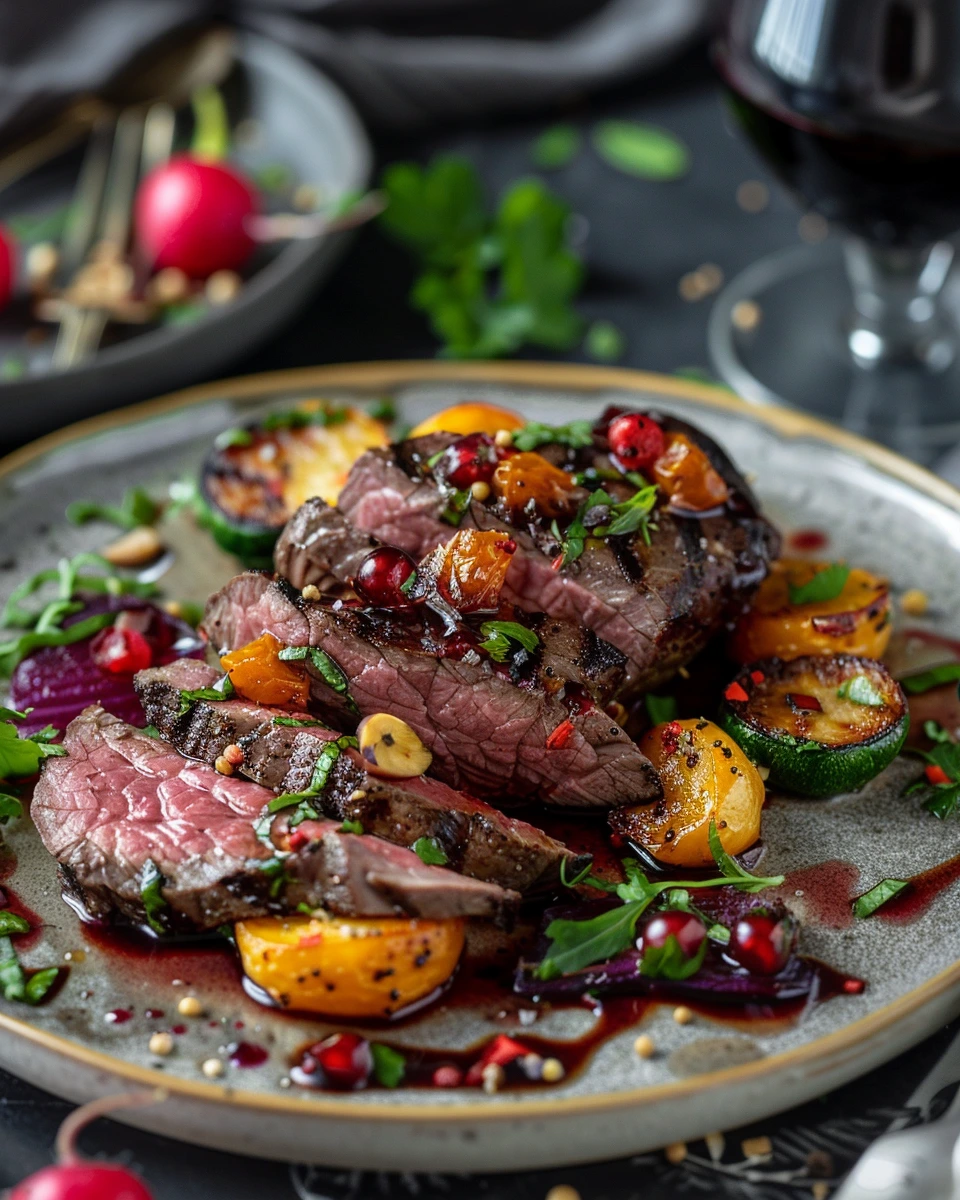
Kangaroo is an ancient Australian food, while pepperberry comes from native shrubs of south-eastern Australia and Tasmania. Bringing them together reflects modern interest in native ingredients and lean game cookery. The meat has a deep mineral flavour and almost no internal fat, so it must remain rare or medium-rare. Pepperberry adds warmth, fruit and a slight numbing quality that suits the strong meat. The dish is common in restaurants seeking a recognisably Australian main course. Its best versions acknowledge native food heritage and avoid treating Indigenous ingredients as novelty decoration.
Ingredients
- Main ingredients
- 350 g kangaroo steaks
- 1 tsp Tasmanian pepperberrycrushed
- 100 ml red wine
- 150 ml beef stock
- 25 g butter
- 400 g potatoesfor mash
- 150 g greenssteamed
Method
Prepare the ingredients
Season kangaroo steaks. Measure everything before you start so the recipe scales cleanly from the dynamic ingredient quantities. Slice meat across the grain where it will be served sliced, and keep steaks even in thickness so they cook at the same speed.
Look for: Look for deep browning, light charring and juices resting back into the meat before slicing. Tip: Kangaroo is lean, so cook it quickly and rest it well; medium-rare keeps it tender. Avoid: Do not slice meat with the grain; cutting across the grain keeps it tender.Build the flavour
Sear quickly over high heat. Work steadily and check texture rather than relying only on the clock.
Look for: Look for deep browning, light charring and juices resting back into the meat before slicing. Tip: Kangaroo is lean, so cook it quickly and rest it well; medium-rare keeps it tender. Avoid: Do not slice meat with the grain; cutting across the grain keeps it tender.Cook the dish
Rest the meat so it stays tender. Work steadily and check texture rather than relying only on the clock.
Look for: Look for deep browning, light charring and juices resting back into the meat before slicing. Tip: Kangaroo is lean, so cook it quickly and rest it well; medium-rare keeps it tender. Avoid: Do not slice meat with the grain; cutting across the grain keeps it tender.Check the texture
Deglaze the pan with red wine and stock. Work steadily and check texture rather than relying only on the clock.
Look for: Look for deep browning, light charring and juices resting back into the meat before slicing. Tip: Kangaroo is lean, so cook it quickly and rest it well; medium-rare keeps it tender. Avoid: Do not slice meat with the grain; cutting across the grain keeps it tender.Finish the seasoning
Whisk in butter and pepperberry. Work steadily and check texture rather than relying only on the clock.
Look for: Look for deep browning, light charring and juices resting back into the meat before slicing. Tip: Kangaroo is lean, so cook it quickly and rest it well; medium-rare keeps it tender. Avoid: Do not slice meat with the grain; cutting across the grain keeps it tender.Cut and prepare
Serve sliced with sauce, potatoes and greens. Taste at the end for salt, acidity and richness; traditional versions should feel generous but balanced.
Look for: Look for deep browning, light charring and juices resting back into the meat before slicing. Tip: Kangaroo is lean, so cook it quickly and rest it well; medium-rare keeps it tender. Avoid: Do not slice meat with the grain; cutting across the grain keeps it tender.
Nutrition
per serving
Estimated from the upgraded serves-2 metric ingredient list; verify with a nutrition calculator before making health claims.