The story
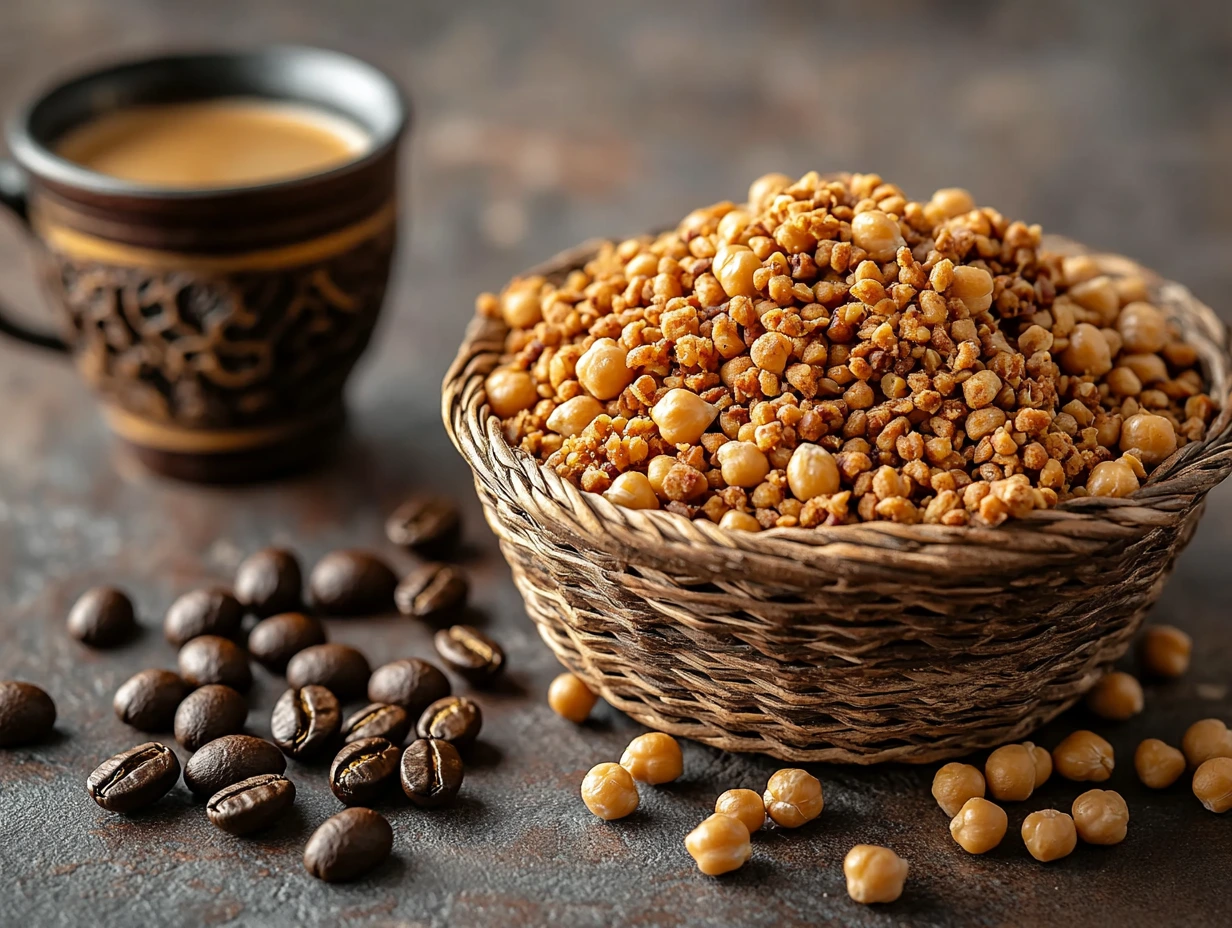
Kolo is a Ethiopian dessert with a clear sense of place. Kolo refers to roasted grains, seeds or legumes eaten as a snack in Ethiopia. Combinations vary widely and may include barley, chickpeas, peanuts and other local staples. The recipe below keeps the defining ingredients and technique intact while giving practical metric quantities and enough detail for a home cook to judge texture, seasoning and doneness rather than simply follow a timer.
Ingredients
- 250 g pearl barley
- 240 g cooked chickpeaswell drained and dried
- 120 g peanuts
- 15 ml sunflower oil
- 1 tsp fine salt
- 0.5 tsp berbereoptional
Method
If using cooked chickpeas, dry them extremely
If using cooked chickpeas, dry them extremely well with a towel and leave uncovered for 20 minutes. Surface moisture slows roasting and can make the mixture steam.
Tip: Stagger ingredients by moisture and size, and judge crispness after a brief cooling because hot grains can feel softer. Avoid: Wet chickpeas stay soft, mixed ingredients added all at once roast unevenly and burnt barley becomes bitter quickly.Toss chickpeas and barley separately with a
Toss chickpeas and barley separately with a little oil. Roast the chickpeas at 190°C for 20 minutes before adding barley because they contain more moisture.
Add barley to the tray, stir and
Add barley to the tray, stir and roast another 15 minutes, stirring once. Add peanuts for the final 8–10 minutes.
Watch closely near the end
Watch closely near the end: grains should smell deeply toasted but not burnt. Test a few barley grains after cooling for a minute; they should be crunchy.
Toss the hot mixture with salt and
Toss the hot mixture with salt and optional berbere, then spread out to cool completely.
Serve at room temperature and store airtight
Serve at room temperature and store airtight only once fully cool.
Look for: Every component is dry and crunchy with a toasted aroma and no leathery chickpea centres.
Nutrition
per serving
Estimated from the listed ingredients and default serving size. Actual values vary with brands, trimming, absorption and cooking losses.