The story
Misir Wat is a Ethiopian main with a clear sense of place. Misir wat is a staple Ethiopian lentil dish and one of the most familiar components of a fasting or mixed platter. The recipe below keeps the defining ingredients and technique intact while giving practical metric quantities and enough detail for a home cook to judge texture, seasoning and doneness rather than simply follow a timer.
Ingredients
- 400 g red lentils
- 400 g red onionsfinely chopped
- 70 g niter kibbeh or sunflower oil
- 35 g berbere
- 15 g Garlicgrated
- 12 g gingergrated
- 30 g tomato paste
- 1200 ml water or vegetable stock
- 1.5 tsp fine salt
Method
Rinse the lentils until the water runs
Rinse the lentils until the water runs mostly clear. Drain while the onions cook.
Look for: the water runs mostly clear Tip: Keep hot water beside the stove and add it in stages as the lentils swell. Avoid: Adding all water at once can leave the stew soupy; burnt berbere tastes harsh; insufficient onion cooking gives a flat base.Cook onions in a heavy pot without
Cook onions in a heavy pot without fat for 12–15 minutes, stirring and adding tiny splashes of water as they soften. Add niter kibbeh or oil and cook another 5 minutes.
Stir in berbere, garlic, ginger and tomato
Stir in berbere, garlic, ginger and tomato paste. Fry gently for 2 minutes, keeping the mixture moving so the chilli does not scorch.
Add lentils and 900 ml water
Add lentils and 900 ml water. Bring to a simmer and cook 25–30 minutes, stirring more often as the lentils break down.
Add remaining water only as needed
Add remaining water only as needed. Misir wat should finish as a thick stew, not a thin lentil soup. Season with salt near the end.
Rest 5 minutes before serving
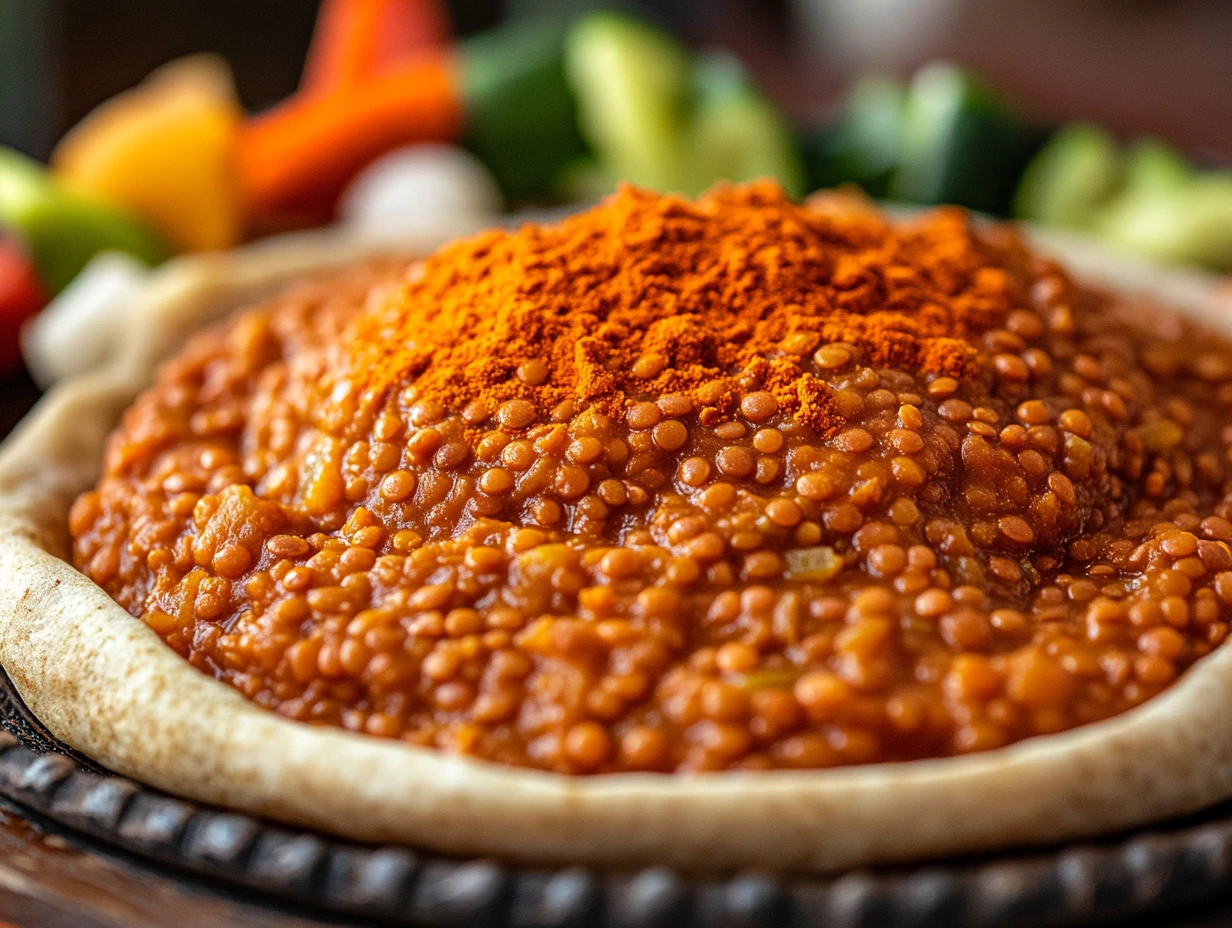
Rest 5 minutes before serving; the lentils continue thickening off the heat. Spoon in a mound on injera.
Look for: The stew holds a soft mound on injera and no individual lentil has a hard centre.
Nutrition
per serving
Estimated from the listed ingredients and default serving size. Actual values vary with brands, trimming, absorption and cooking losses.