The story
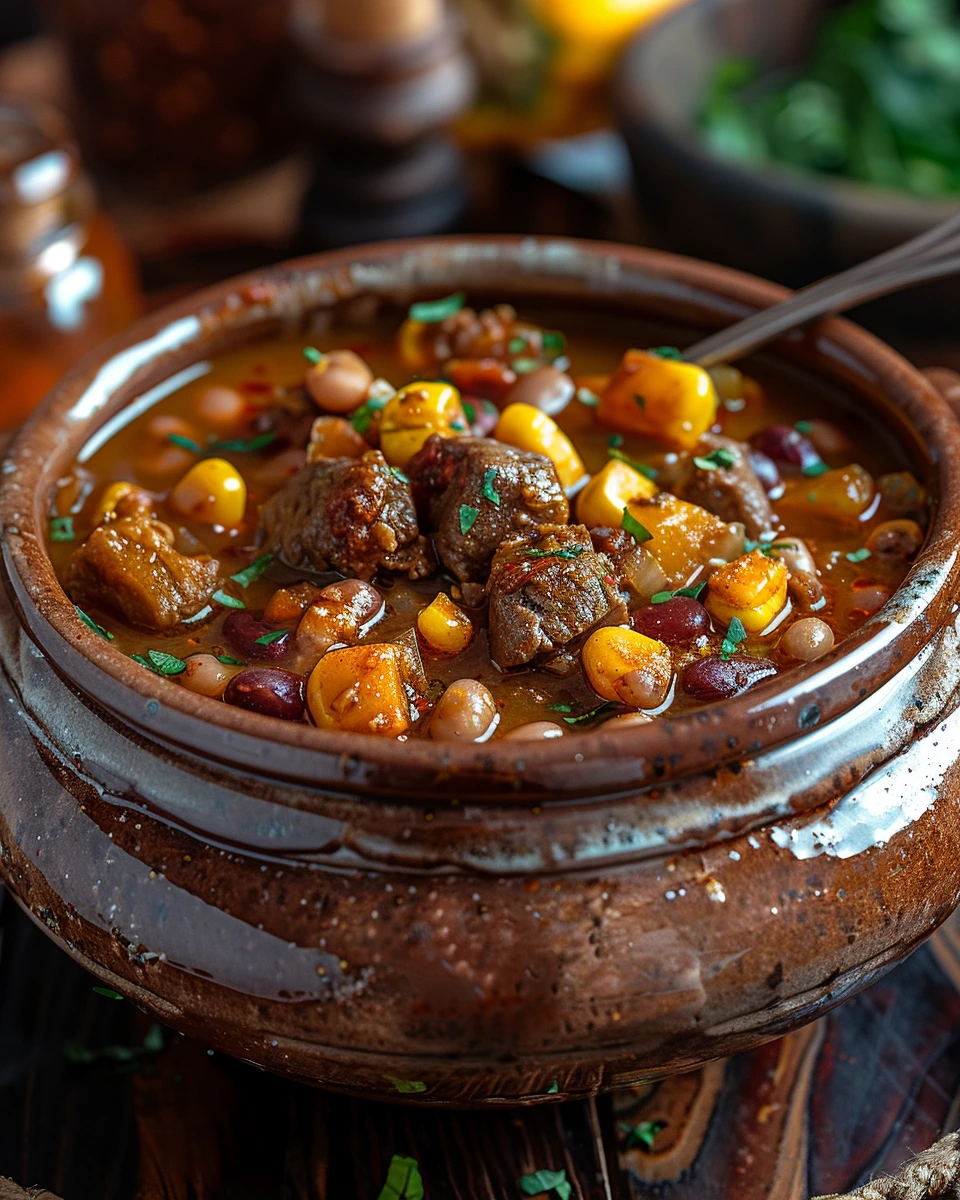
Locro has deep Andean roots and predates the creation of Argentina. Indigenous maize and squash were later combined with European livestock and sausages, producing the rich criollo stew now associated with the country’s north-west and national history. It is famous for its dense, almost creamy body created as squash and starches break down around whole grains, beans and pieces of meat. A spoonful of paprika and chilli oil adds colour and heat at serving. Locro is strongly linked with the national holidays of 25 May and 9 July. Large pots are cooked for families, schools, clubs and community events, turning the stew into both a regional dish and a symbol of Argentine identity.
Ingredients
- Main
- 250 gram white hominy cornsoaked
- 150 gram white beanssoaked
- 250 gram beef shin
- 150 gram pork belly
- 1 piece chorizo sausages
- 250 gram pumpkin
- 1 piece onions
- 1 teaspoon paprika
- 0.5 teaspoon cumin
- as needed Lard or oil
- to taste to taste salt
Method
Cut evenly
Dice onions and peppers finely, cut meat into even bite-sized pieces, and keep potatoes, squash, lentils, corn or seafood in separate bowls according to cooking time.
Look for: Pieces should be similar size so the stew cooks evenly. Tip: Brown meats first, then build the sauce around them. Avoid: Adding everything at once can make delicate ingredients collapse.Build the sofrito
Cook onion, pepper and garlic over medium heat until soft, then add paprika, herbs or tomato and cook until the raw aroma disappears.
Look for: The base should look glossy and smell sweet. Tip: This slow base is where much of the Argentinian home-cooking flavour develops. Avoid: Do not add liquid before the vegetables have softened.Simmer gently
Add stock, wine, tomato or water as appropriate and simmer gently until the main ingredients are tender.
Look for: Liquid should bubble gently, not boil violently. Tip: Skim excess fat and stir from the bottom so pulses do not catch. Avoid: Hard boiling can toughen meat and break up potatoes or squash.Adjust body and seasoning
Reduce if watery, loosen if too thick, and adjust salt, pepper, paprika and acidity before serving.
Look for: The sauce should coat a spoon without feeling heavy. Tip: A final splash of vinegar, wine or lemon can lift rich dishes. Avoid: Do not season only at the beginning; stews change as they reduce.Rest and serve
Rest covered for 5-10 minutes, then serve with bread, parsley, chilli oil or grated cheese depending on the recipe.
Look for: Flavour should taste rounded and settled. Tip: Many Argentinian stews taste even better the next day. Avoid: Serving immediately from a hard boil can taste harsh.
Nutrition
per serving
Estimated from recipe type and ingredient list; review before publishing formal nutritional claims.