The story
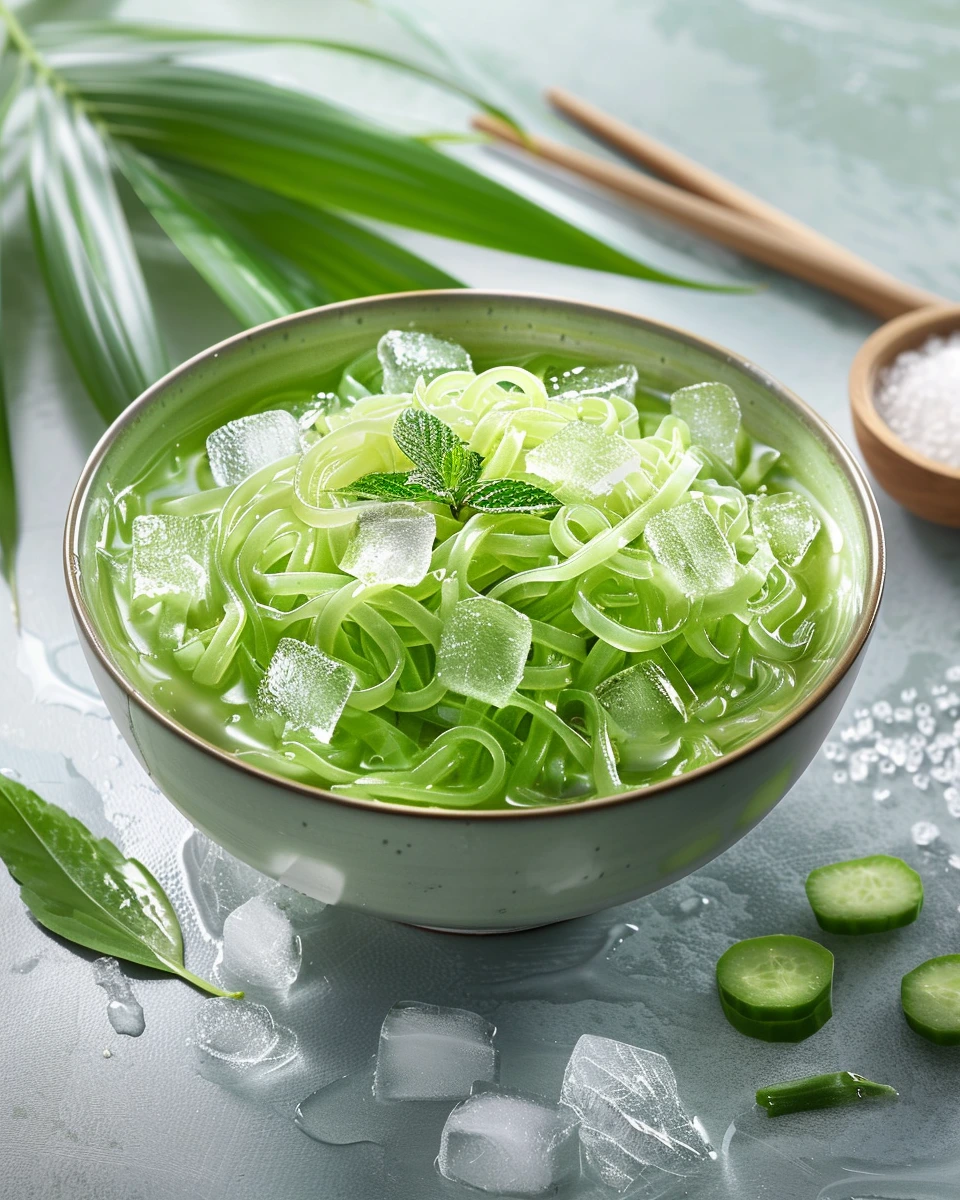
Lod Chong Nam Kati is pandan rice-flour noodles served cold with coconut milk and palm sugar. Lod Chong Nam Kati belongs to Thailand’s market, home and street-food traditions, where aromatic herbs, balanced seasoning and precise texture are central. The dish developed around the ingredients and cooking methods available in that setting, which is why its defining texture and seasoning remain more important than elaborate presentation. Lod Chong Nam Kati is famous for pandan rice-flour noodles served cold with coconut milk and palm sugar. The appeal comes from a clear contrast of aroma, texture and seasoning, with each element remaining distinct. Lod Chong Nam Kati is served as a recognisable sweet finish, at home, in bakeries or in cafés depending on the region. Its familiar texture and aroma make it part of the cuisine’s everyday memory rather than merely a restaurant decoration.
Ingredients
- Main ingredients
- 80 gram rice flour80 g rice flour
- 40 gram tapioca starch40 g tapioca starch
- 500 millilitre pandan water500 ml pandan water
- 400 millilitre coconut milk400 ml coconut milk
- 120 gram palm sugar120 g palm sugar
- 1 portion 1/2 tsp salt1/2 tsp salt · 1/2 tsp salt
- 1 portion Crushed iceCrushed ice · Crushed ice
Method
Prepare the base
Measure ingredients accurately before heating. Rinse rice, flour or starches as needed, and keep coconut milk separate from acidic or strongly coloured ingredients until the method calls for it.
Look for: The base should look clean and evenly mixed. Tip: Use good coconut milk because it carries much of the flavour. Avoid: Do not guess starch quantities; Thai desserts rely on texture.Cook gently
Cook over low to medium heat, usually 85-95°C, stirring often so coconut milk, syrup or batter does not catch on the base of the pan.
Look for: Small bubbles are enough; the mixture should not boil violently. Tip: A silicone spatula helps you feel thickening at the bottom. Avoid: High heat can split coconut milk or make starches rubbery.Control texture
For sticky rice, steam until tender; for jellies or custards, cook until set but still glossy; for pancakes, cook until edges crisp and centres stay soft.
Look for: The texture should be distinct: tender, glossy, bouncy or creamy depending on the dessert. Tip: Resting time is part of the recipe, not optional. Avoid: Do not overcook until dry.Sweeten and season
Balance sweetness with a small pinch of salt in coconut cream or syrup. Add pandan, palm sugar or fruit in a way that keeps the flavour clean.
Look for: Sweetness should feel rounded, not flat. Tip: Taste syrups warm, then remember they taste slightly less sweet when chilled. Avoid: Do not skip salt in coconut desserts; it makes the coconut taste fuller.Assemble neatly
Plate or portion while components are still workable. Keep sauces separate until serving if the dessert needs contrast.
Look for: Layers, pieces or toppings should be tidy and glossy. Tip: Warm knife blades make cleaner cuts for layered desserts. Avoid: Do not flood the plate with sauce.Serve at the right temperature
Serve warm, room temperature or chilled according to the dessert. Add toasted toppings, fruit or coconut cream at the last moment.
Look for: The dessert should look fresh and hold its shape. Tip: Thai desserts are often best with a contrast of creamy, chewy and crisp textures. Avoid: Do not add crunchy toppings too early.
Nutrition
per serving
Estimated from typical Thai recipe portions; verify against exact brands and serving sizes before publishing formal nutrition claims.