The story
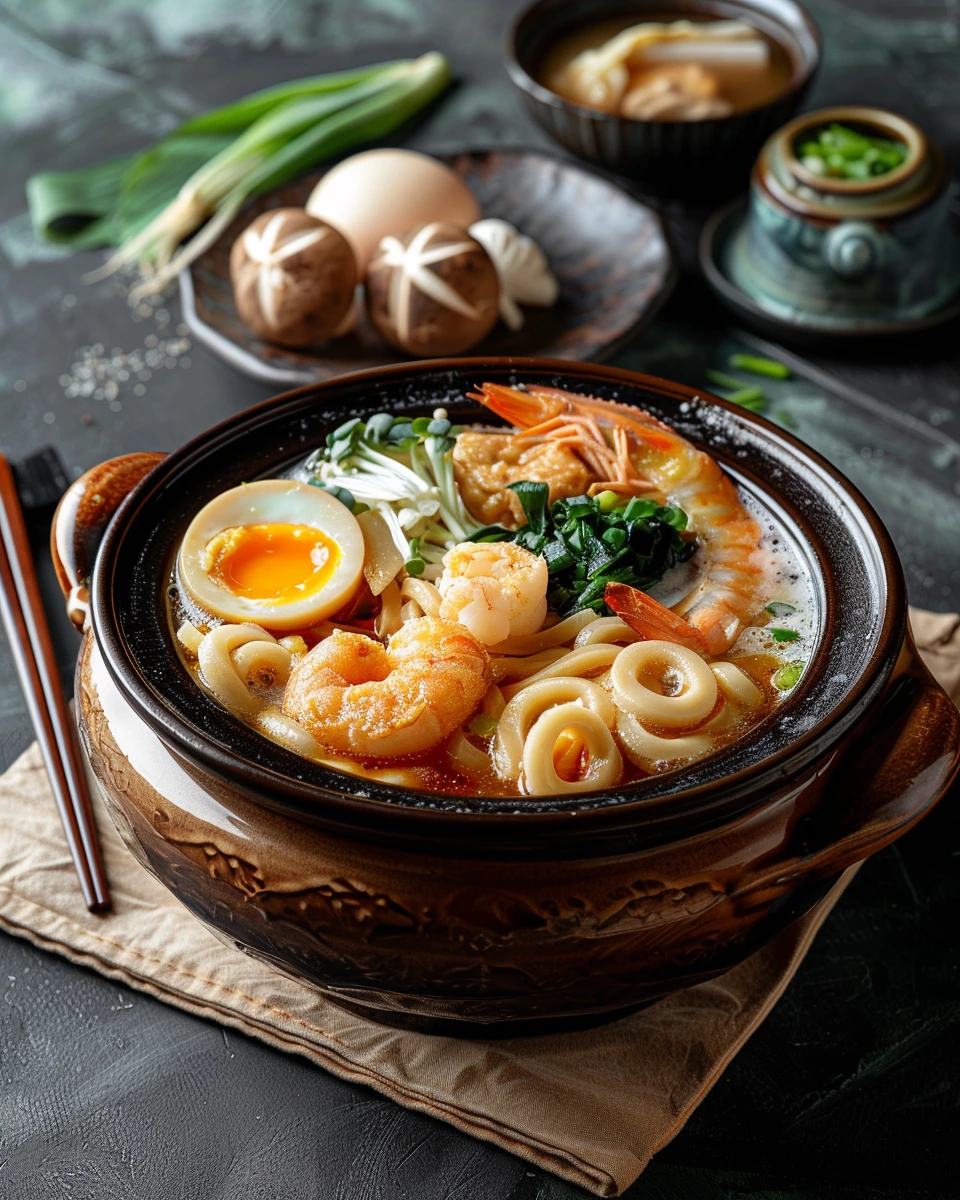
Associated with Japanese clay-pot noodle culture, Nabeyaki Udon has endured because the preparation gives familiar ingredients a very specific regional identity. It is recognised for udon, dashi, egg, tempura and vegetables. Careful timing and seasoning are essential to produce the texture and flavour expected of the dish. Nabeyaki Udon is particularly associated with cold-weather restaurant meals. That setting is central to understanding the dish: it explains when it is eaten, what accompanies it and why it continues to matter within Japanese food culture.
Ingredients
- Main ingredients
- 1 portion udon noodles4 portions udon noodles
- 0.6 litre dashi
- 1.5 tablespoon soy sauce
- 1 tablespoon mirin
- 125 gram chicken thigh
- 2 piece eggs
- 2 piece cooked prawn tempura
- 60 gram shiitake mushrooms
Method
Prepare toppings first
Slice spring onions thinly, halve eggs cleanly and warm or slice meat toppings before cooking noodles.
Look for: Toppings are ready before the noodles go in. Tip: A ramen bowl should be assembled quickly and served immediately. Avoid: Noodles suffer while you rush toppings at the end.Heat the broth or dipping sauce
Warm broth gently or chill dipping sauce as required, tasting for soy, dashi, mirin and salt balance.
Look for: Broth is hot and aromatic, not violently boiling. Tip: Warm the serving bowls for hot noodles. Avoid: Boiling delicate dashi can flatten its flavour.Cook noodles last
Cook noodles in plenty of boiling water at 100°C / 212°F until springy, then drain very well.
Look for: Noodles are elastic and not mushy. Tip: For cold soba, rinse under cold water until the surface starch is gone. Avoid: Overcooked noodles ruin the whole bowl.Assemble quickly
Add tare and broth first, then noodles, then toppings in clear sections.
Look for: The bowl looks organised and hot. Tip: Lift noodles once with chopsticks to loosen them in the soup. Avoid: Letting noodles sit in broth too long softens them.Serve immediately
Serve with nori, sesame, chilli oil, wasabi or extra spring onion as appropriate.
Look for: Aroma is fresh and noodles still have bounce. Tip: Noodles are best eaten straight away. Avoid: Do not wait for everyone before serving noodle bowls.
Nutrition
per serving
Estimated nutrition for Nabeyaki Udon; use as editorial/testing data and refine from exact ingredient weights if needed.