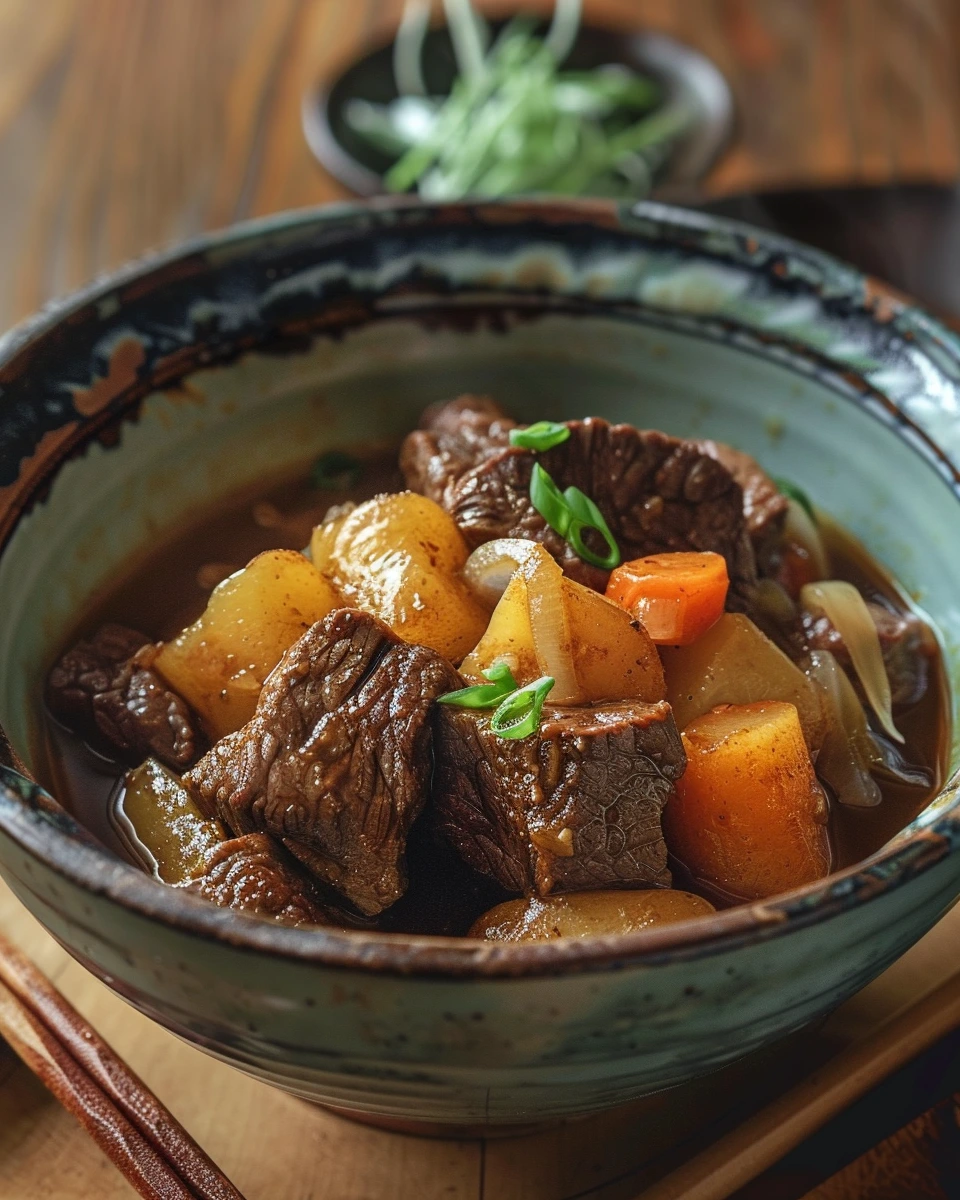
The story
The history of Nikujaga is closely tied to Meiji-era naval and household cooking. The recipe developed as a recognisable local preparation rather than a generic example of Japanese cooking. Its individual character comes from beef or pork, potatoes, onion and sweet soy broth. Good versions are balanced, accurately seasoned and simmered until the broth or sauce is fully developed. Nikujaga is particularly associated with nostalgic family dinners. That setting is central to understanding the dish: it explains when it is eaten, what accompanies it and why it continues to matter within Japanese food culture.
Ingredients
- Main ingredients
- 150 gram thinly sliced beef
- 300 gram potatoes
- 1 piece onions
- 1 portion carrot1 carrot, chunks
- 100 gram shirataki noodles
- 250 millilitre dashi
- 2 tablespoon soy sauce
- 1.5 tablespoon mirin
Method
Cut evenly
Slice onions thinly and cut meat, vegetables or tofu into even bite-sized pieces so everything cooks at the same pace.
Look for: Pieces are uniform and easy to eat with rice. Tip: Cut across the grain for beef and chicken where possible. Avoid: Large chunks make donburi and simmered dishes clumsy.Build the base
Cook aromatics gently, then add dashi, soy, mirin, sake, curry roux or stock depending on the dish.
Look for: The base smells savoury and slightly sweet. Tip: Japanese simmered dishes rely on a balanced sweet-salty broth. Avoid: Burning curry roux or sugar gives bitterness.Simmer gently
Simmer at 90–95°C / 195–203°F until vegetables are tender and meat is just cooked.
Look for: Bubbles are gentle and ingredients remain intact. Tip: Use an otoshibuta or parchment lid for even simmering. Avoid: A hard boil breaks delicate ingredients.Finish carefully
For egg dishes, pour beaten egg in two stages and cook until softly set; for rice dishes, keep grains fluffy and separate.
Look for: Egg is just set and glossy, or rice remains distinct. Tip: Residual heat will finish the final texture. Avoid: Overcooked egg becomes rubbery.Serve over rice
Spoon over hot rice or serve in a shallow bowl with pickles and simple greens.
Look for: Sauce lightly coats the rice without flooding it. Tip: A small garnish of mitsuba, spring onion or sesame makes it feel more authentic. Avoid: Too much liquid makes rice soupy.
Nutrition
per serving
Estimated nutrition for Nikujaga; use as editorial/testing data and refine from exact ingredient weights if needed.