The story
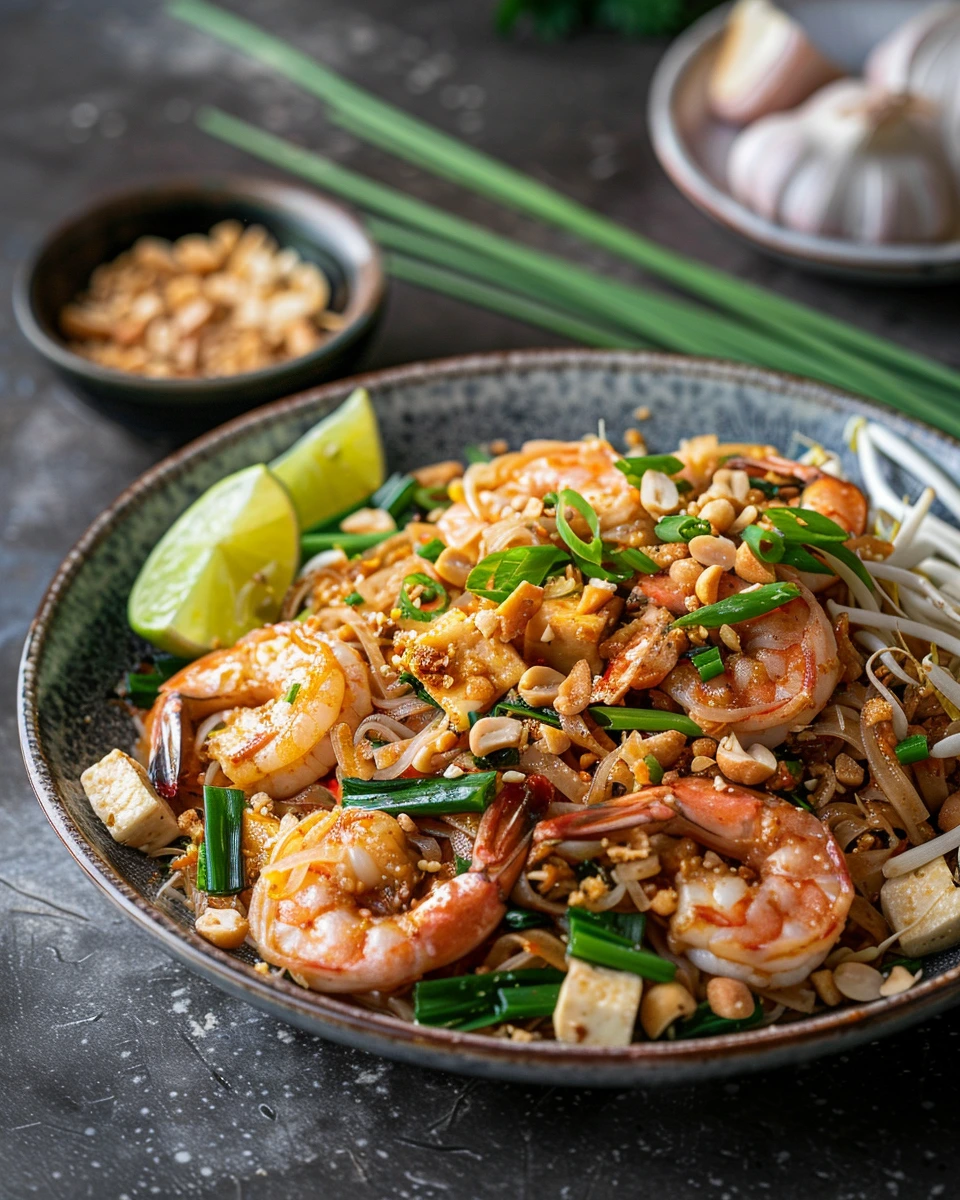
Pad Thai Goong is stir-fried rice noodles with prawns, tamarind, fish sauce, egg, beansprouts and peanuts. Pad Thai became strongly associated with Thai national identity during the twentieth century, when rice-noodle dishes were promoted as economical, modern street food. Its flavour still depends on older regional ingredients such as tamarind and fish sauce. Pad Thai Goong is famous for stir-fried rice noodles with prawns, tamarind, fish sauce, egg, beansprouts and peanuts. The appeal comes from a clear contrast of aroma, texture and seasoning, with each element remaining distinct. Pad Thai Goong is closely tied to informal eating, where speed, freshness and personal choice of condiments are part of the experience. It is commonly bought from vendors or simple restaurants rather than treated as formal plated food.
Ingredients
- Main ingredients
- 220 gram dried rice noodles220 g dried rice noodles
- 300 gram prawns300 g prawns
- 2 piece 2 eggs2 eggs
- 120 gram tofucubes · 120 g firm tofu, cubes
- 2 tablespoon tamarind paste2 tbsp tamarind paste
- 2 tablespoon fish sauce2 tbsp fish sauce
- 1.5 tablespoon palm sugar1.5 tbsp palm sugar
- 80 gram beansprouts80 g beansprouts
- 40 gram garlic chives40 g garlic chives
- 3 tablespoon peanuts3 tbsp roasted peanuts
- 1 portion Lime wedgesLime wedges · Lime wedges
Method
Prepare before heating
Cut every ingredient before the wok goes on. Slice meat across the grain into thin 3-5 mm pieces, keep vegetables dry, and mix sauces in a small bowl so the stir-fry moves quickly.
Look for: Everything should be ready in separate piles. Tip: Dry noodles or vegetables give better wok flavour than wet ingredients. Avoid: Do not start cooking then pause to chop; the wok will lose heat.Heat the wok
Heat a wok or wide frying pan over high heat until very hot, about 230-250°C surface heat. Add oil and swirl until shimmering.
Look for: The oil should move quickly and look glossy. Tip: A hot wok gives aroma without needing a long cooking time. Avoid: Do not overload a small pan; cook in batches if needed.Cook the protein
Add garlic, chilli or aromatics briefly, then add the protein in a single layer. Stir-fry for 1-3 minutes until almost cooked, keeping it moving only after it has had a few seconds to sear.
Look for: Edges should colour lightly while the centre stays juicy. Tip: For prawns, stop when they are just opaque and finish them with residual heat. Avoid: Do not crowd the pan or the meat will steam.Add noodles or vegetables
Add noodles, rice or vegetables and toss firmly from the base of the wok. Let the noodles sit for 20-30 seconds at a time so they pick up light caramelisation.
Look for: Noodles should be glossy and vegetables bright. Tip: If noodles clump, add a teaspoon of water rather than more oil. Avoid: Do not stir constantly if you want wok-charred edges.Season and finish
Pour sauce around the hot side of the wok so it sizzles, then toss until everything is coated. Add herbs or bean sprouts right at the end.
Look for: The sauce should cling rather than pool. Tip: Taste once off the heat and adjust with lime, fish sauce or sugar. Avoid: Do not add delicate herbs too early.Serve immediately
Transfer to warm plates straight away. Add lime, herbs, crushed peanuts or fried egg depending on the dish.
Look for: The dish should arrive glossy and hot. Tip: Thai stir-fries are best eaten immediately. Avoid: Do not leave stir-fries sitting in the wok; they continue cooking.
Nutrition
per serving
Estimated from typical Thai recipe portions; verify against exact brands and serving sizes before publishing formal nutrition claims.