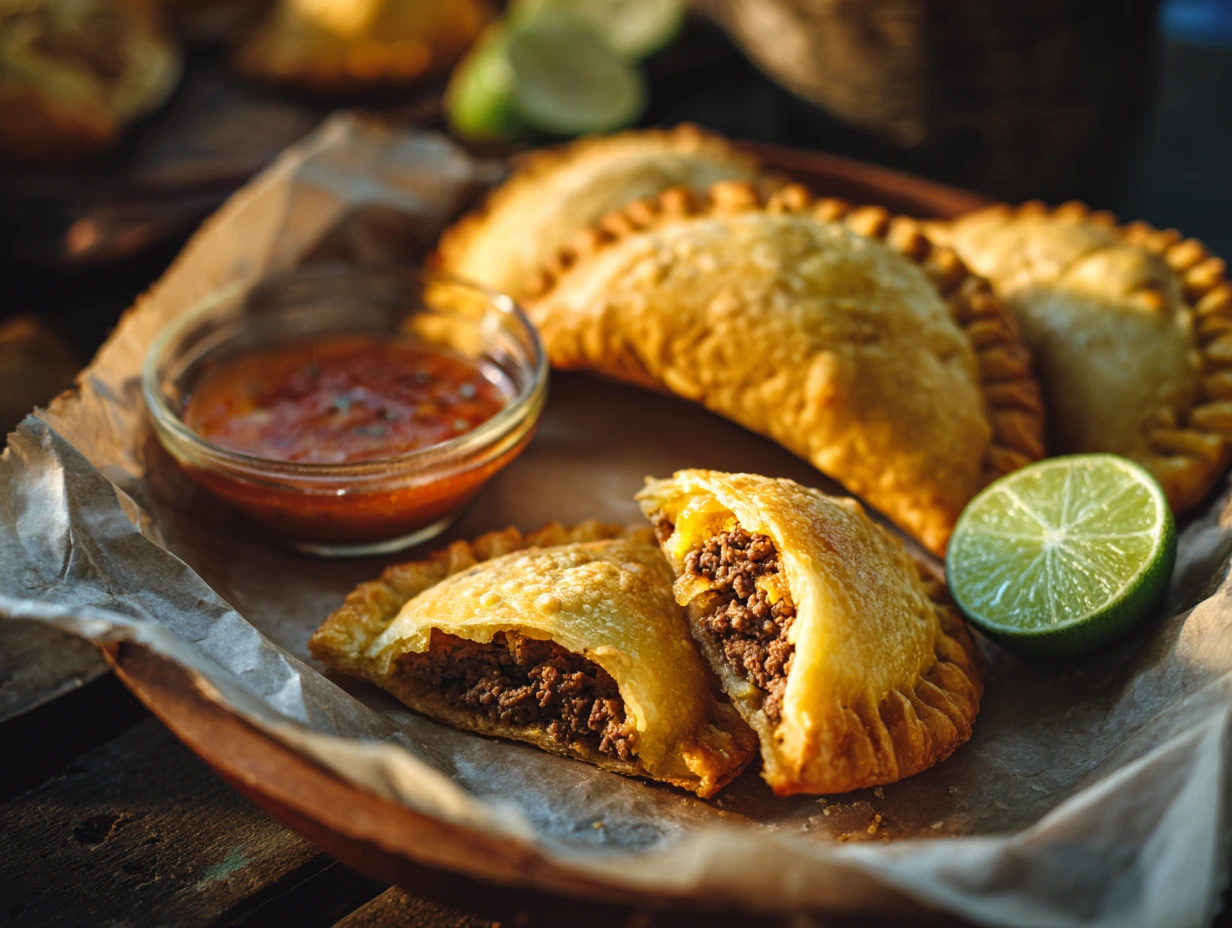
The story
Pastel became closely associated with Japanese-Brazilian vendors in São Paulo, who adapted fried filled pastries for street markets during the twentieth century. Feira stalls made the form nationally familiar. Its appeal lies in an exceptionally crisp, bubbled wrapper around a hot, compact filling. The pastry should be dry and brittle rather than heavy. Eating pastel with sugarcane juice at a street market is a classic Brazilian urban ritual. Fillings vary by region and vendor, but freshness from the fryer is essential.
Ingredients
- Main ingredients
- 300 g pastel pastry or thin spring-roll pastry
- 250 g minced beef or cheese filling
- 1 onionchopped
- 1 tomatochopped
- parsley
- oil for frying
Method
Prepare the ingredients
Prepare the filling or batter so it is seasoned before cooking. Measure everything before you start so the recipe scales cleanly from the dynamic ingredient quantities. Cut vegetables evenly so they soften at the same rate and the final texture is balanced.
Look for: The coating or surface should be crisp, evenly golden and not oily. Tip: Keep the seasoning bright with lime, herbs or chilli at the end rather than making the dish heavy. Avoid: Do not rush the seasoning; small adjustments at the end make the dish taste finished.Build the flavour
Shape, cup or portion the mixture in the traditional style. Work steadily and check texture rather than relying only on the clock.
Look for: The coating or surface should be crisp, evenly golden and not oily. Tip: Keep the seasoning bright with lime, herbs or chilli at the end rather than making the dish heavy. Avoid: Do not rush the seasoning; small adjustments at the end make the dish taste finished.Bake or roast
Fry, bake or simmer gently until the outside is crisp or the broth is glossy. Heat oil to about 180°C / 355°F; if it is too cool the food turns greasy, and if too hot the outside browns before the centre cooks. Preheat the oven to 180°C / 355°F and use the middle shelf unless the recipe needs strong top browning. Keep it at a gentle simmer, around 90°C / 195°F, with only small bubbles breaking the surface.
Look for: The outside should be golden and the centre should be cooked through without looking wet or raw. Tip: Keep the seasoning bright with lime, herbs or chilli at the end rather than making the dish heavy. Avoid: Do not overcrowd the pan because the oil temperature drops and the food absorbs oil.Check the texture
Taste for salt, lime, chilli and herbs at the end. Work steadily and check texture rather than relying only on the clock.
Look for: The coating or surface should be crisp, evenly golden and not oily. Tip: Keep the seasoning bright with lime, herbs or chilli at the end rather than making the dish heavy. Avoid: Do not rush the seasoning; small adjustments at the end make the dish taste finished.Finish and serve
Serve immediately with the classic garnish or sauce. Taste at the end for salt, acidity and richness; traditional versions should feel generous but balanced.
Look for: The coating or surface should be crisp, evenly golden and not oily. Tip: Keep the seasoning bright with lime, herbs or chilli at the end rather than making the dish heavy. Avoid: Do not rush the seasoning; small adjustments at the end make the dish taste finished.
Nutrition
per serving
Estimated nutrition for Pastel de Feira; use as editorial/testing data and refine from exact ingredient weights if needed.