The story
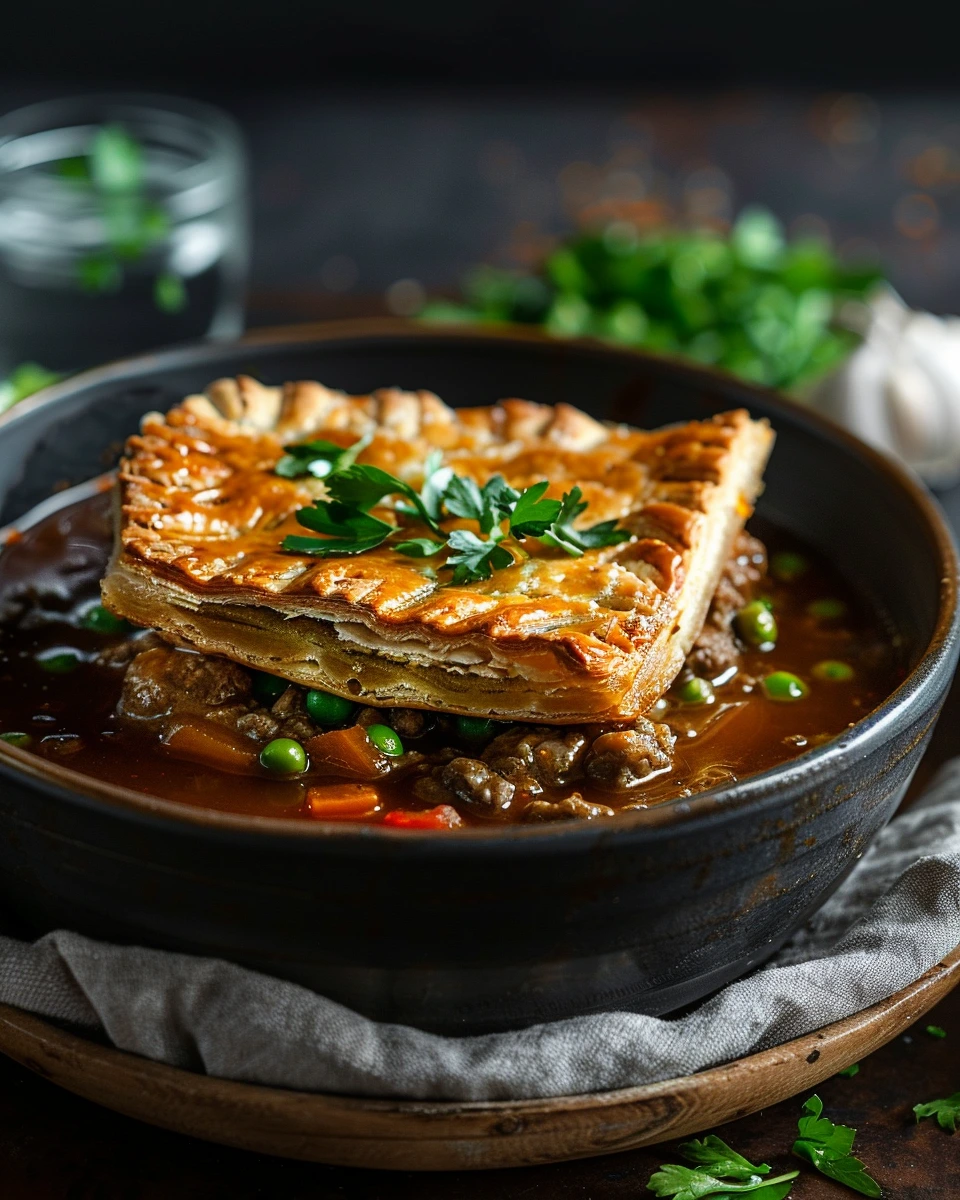
The pie floater is associated above all with Adelaide, where pie carts served hot meat pies in pea soup to late-night workers and revellers from the nineteenth century. It became one of South Australia’s most distinctive street foods. The pleasure comes from the contrast between crisp pastry, rich beef filling and soft, earthy pea soup. Tomato sauce, vinegar or mint sauce adds a sharp final note. Although less common than at its peak, the pie floater remains a strong symbol of Adelaide food identity and working-class night-time eating.
Ingredients
- Main ingredients
- 2 piece Australian meat pies
- 200 g green split peassoaked if possible
- 1 piece oniondiced
- 700 ml chicken stock
- 5 g mintoptional
- 2 tbsp Tomato sauce
- 1 tbsp malt vinegaroptional
Method
Prepare the ingredients
Simmer split peas with onion and stock until soft. Measure everything before you start so the recipe scales cleanly from the dynamic ingredient quantities. Cut vegetables evenly so they soften at the same rate and the final texture is balanced. Keep it at a gentle simmer, around 90°C / 195°F, with only small bubbles breaking the surface.
Look for: The outside should be golden and the centre should be cooked through without looking wet or raw. Tip: Keep the plating relaxed and generous, with a clean sauce or relish to balance richer elements. Avoid: Do not rush the seasoning; small adjustments at the end make the dish taste finished.Build the flavour
Blend or crush into a thick pea soup. Work steadily and check texture rather than relying only on the clock.
Look for: The outside should be golden and the centre should be cooked through without looking wet or raw. Tip: Keep the plating relaxed and generous, with a clean sauce or relish to balance richer elements. Avoid: Do not rush the seasoning; small adjustments at the end make the dish taste finished.Cook the dish
Heat the meat pies until crisp. Work steadily and check texture rather than relying only on the clock.
Look for: The outside should be golden and the centre should be cooked through without looking wet or raw. Tip: Keep the plating relaxed and generous, with a clean sauce or relish to balance richer elements. Avoid: Do not rush the seasoning; small adjustments at the end make the dish taste finished.Check the texture
Ladle pea soup into bowls. Work steadily and check texture rather than relying only on the clock.
Look for: The outside should be golden and the centre should be cooked through without looking wet or raw. Tip: Keep the plating relaxed and generous, with a clean sauce or relish to balance richer elements. Avoid: Do not rush the seasoning; small adjustments at the end make the dish taste finished.Finish the seasoning
Float a pie in each bowl. Work steadily and check texture rather than relying only on the clock.
Look for: The outside should be golden and the centre should be cooked through without looking wet or raw. Tip: Keep the plating relaxed and generous, with a clean sauce or relish to balance richer elements. Avoid: Do not rush the seasoning; small adjustments at the end make the dish taste finished.Finish and serve
Serve with tomato sauce and vinegar. Taste at the end for salt, acidity and richness; traditional versions should feel generous but balanced.
Look for: The outside should be golden and the centre should be cooked through without looking wet or raw. Tip: Keep the plating relaxed and generous, with a clean sauce or relish to balance richer elements. Avoid: Do not rush the seasoning; small adjustments at the end make the dish taste finished.
Nutrition
per serving
Estimated from the upgraded serves-2 metric ingredient list; verify with a nutrition calculator before making health claims.