The story
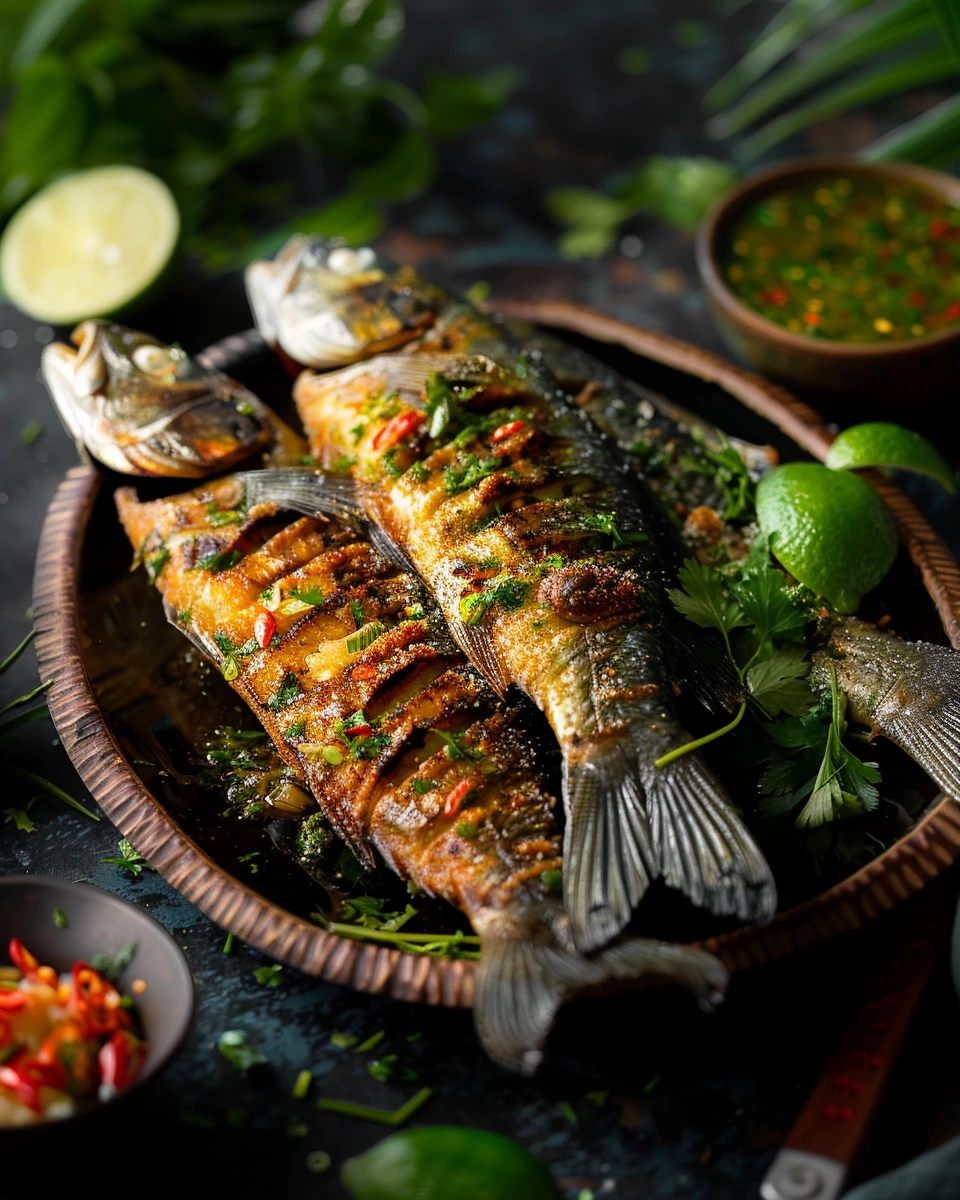
Pla Pao is whole salt-crusted fish grilled over charcoal and served with a sharp herb-and-chilli sauce. Pla Pao belongs to Thailand’s market, home and street-food traditions, where aromatic herbs, balanced seasoning and precise texture are central. The dish developed around the ingredients and cooking methods available in that setting, which is why its defining texture and seasoning remain more important than elaborate presentation. Pla Pao is famous for whole salt-crusted fish grilled over charcoal and served with a sharp herb-and-chilli sauce. The appeal comes from a clear contrast of aroma, texture and seasoning, with each element remaining distinct. Pla Pao belongs to everyday meals as well as restaurant and family cooking. It is usually served with the starches, herbs, salads, pickles or sauces traditional to its region, so the complete plate matters as much as the central component.
Ingredients
- Main ingredients
- 1 piece whole sea bass or tilapiaabout 1 kg · 1 whole sea bass or tilapia, about 1 kg
- 3 piece lemongrass stalks3 lemongrass stalks
- 6 piece makrut lime leaves6 makrut lime leaves
- 150 gram coarse salt150 g coarse salt
- 1 tablespoon flour1 tbsp flour
- 2 tablespoon water2 tbsp water
- 3 piece garlic cloves3 garlic cloves
- 3 piece thai chillies3 Thai chillies
- 2 tablespoon fish sauce2 tbsp fish sauce
- 2 tablespoon lime juice2 tbsp lime juice
- 1 teaspoon palm sugar1 tsp palm sugar
Method
Make a quick stock
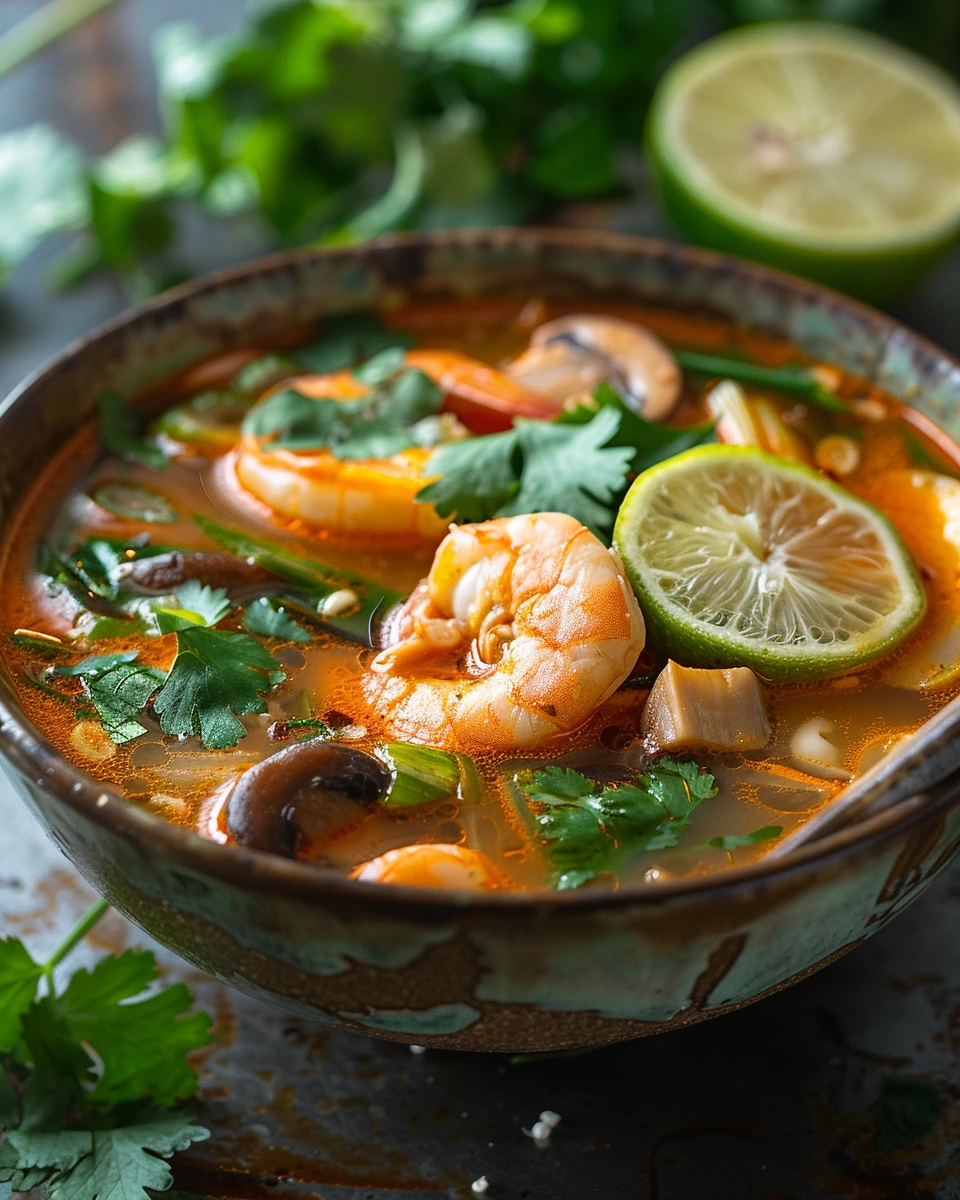
Use shells, bones or aromatics to build a light stock, simmering gently rather than boiling hard. Skim if needed so the broth stays clean.
Look for: The liquid should smell aromatic and look clear. Tip: A short stock is enough for Thai soups; freshness matters more than heaviness. Avoid: Do not crush bitter aromatics into the broth.Infuse aromatics
Add lemongrass, galangal, makrut lime leaf or coriander root and simmer for 5 minutes.
Look for: The broth should smell citrusy and herbal. Tip: Bruising aromatics releases more flavour than chopping everything finely. Avoid: Do not eat large pieces of galangal or lime leaf; they are mainly for fragrance.Cook the main ingredients
Add mushrooms, vegetables and protein in order of cooking time. Seafood needs only a few minutes; chicken should simmer gently until cooked through.
Look for: Seafood should be just opaque and chicken should be tender. Tip: Keep the simmer gentle so the broth stays clear. Avoid: Do not overcook prawns or they become firm.Season off the boil
Add fish sauce, chilli paste or sugar, then turn off the heat before adding lime juice or delicate herbs.
Look for: The flavour should be bright, sour, salty and aromatic. Tip: Seasoning at the end protects the high notes. Avoid: Boiling lime juice can dull its freshness.Taste and adjust
Taste with a spoonful of broth and one piece of the main ingredient. Adjust with lime for sourness, fish sauce for saltiness and chilli for warmth.
Look for: The final soup should feel lively rather than heavy. Tip: Serve with rice if the seasoning is bold. Avoid: Do not chase only heat; balance is the point.Serve immediately
Ladle into warm bowls and finish with coriander, herbs or extra chilli oil where appropriate.
Look for: Herbs should look fresh on top. Tip: Serve while aromatic oils are still vivid. Avoid: Do not leave seafood soups standing for long.
Nutrition
per serving
Estimated from typical Thai recipe portions; verify against exact brands and serving sizes before publishing formal nutrition claims.