The story
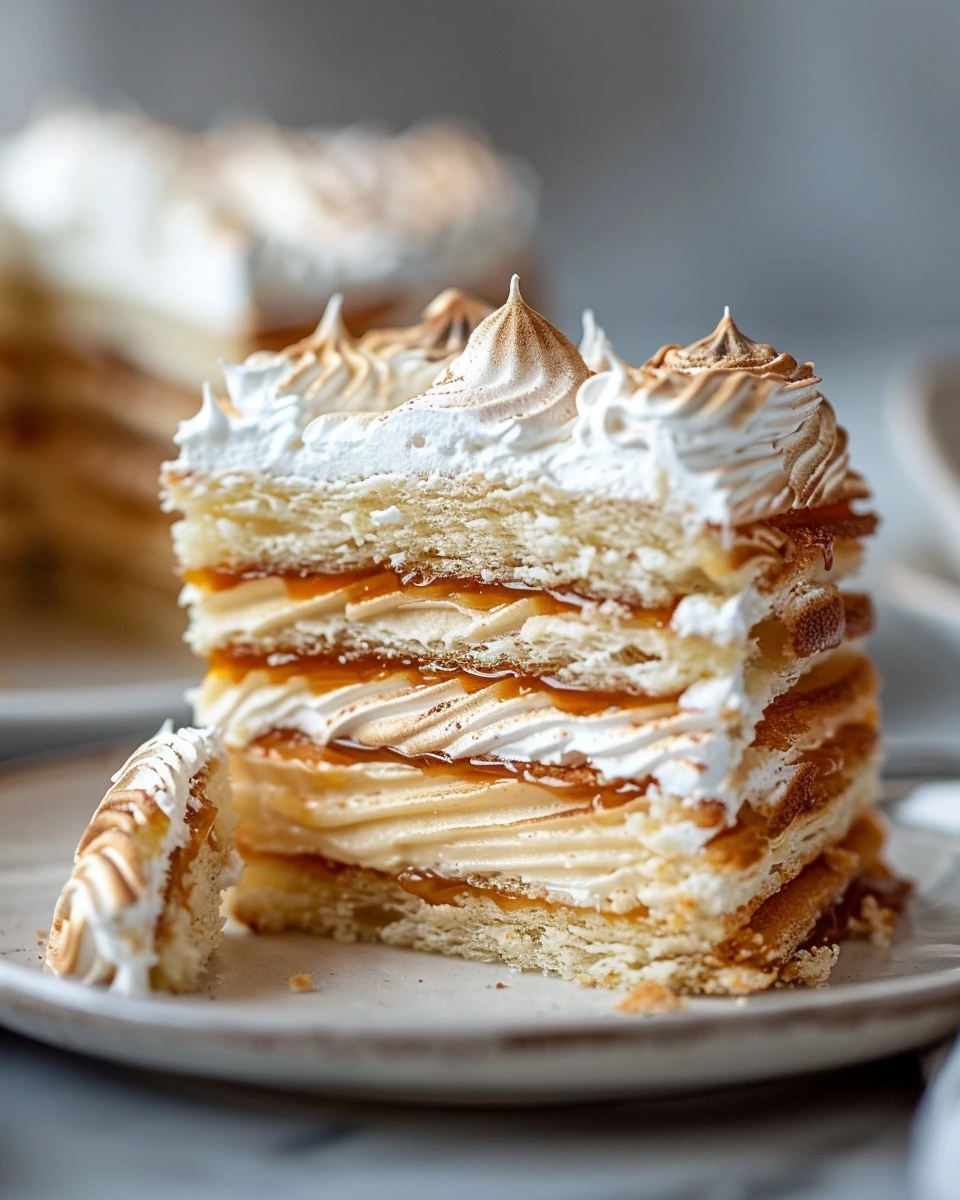
Rogel developed within Argentina’s pastry culture as a celebration cake built from thin, crisp discs and dulce de leche. Its layered construction resembles other European pastries but the quantity of Argentina’s signature milk caramel makes it distinctly local. It is famous for dramatic height and the contrast of brittle pastry, sticky caramel and soft meringue. Clean slices depend on thin even layers and enough resting time for them to settle slightly. Rogel is a popular birthday and celebration cake, displayed in bakeries and made for large family tables. It turns familiar pantry ingredients into something ceremonial.
Ingredients
- Main
- 250 gram flour
- 4 piece egg yolks
- 40 gram butter
- 50 millilitre water
- 300 gram dulce de leche
- 2 piece egg whites
- 125 gram sugar
Method
Prepare the sweet base
Measure ingredients accurately. Soften butter, warm milk, crush biscuits, make caramel or prepare dulce de leche depending on the dessert.
Look for: The base should be organised before heat is applied. Tip: Argentinian desserts often rely on dulce de leche, so use a thick good-quality one. Avoid: Rushing sugar, pastry or custard usually causes grainy texture.Mix or assemble gently
Mix dough, custard, batter or biscuit layers only until smooth and even. Keep pastry chilled where needed.
Look for: Texture should look smooth, thick or neatly layered. Tip: For layered desserts, keep edges tidy for better slices. Avoid: Overmixing dough makes biscuits tough and pastry hard.Cook or chill correctly
Bake, fry, cook in a bain-marie or chill as the recipe requires, using controlled heat rather than rushing.
Look for: Dessert should be set, golden or chilled firm depending on the dish. Tip: Use visual cues: wobble for flan, pale gold for alfajores, crisp layers for rogel. Avoid: High heat can split custard, burn sugar or brown pastry too fast.Cool before finishing
Cool fully before filling with dulce de leche, unmoulding flan, slicing chilled cake or dusting biscuits.
Look for: The structure should hold cleanly when moved. Tip: Patience gives cleaner presentation and better texture. Avoid: Filling while hot melts dulce de leche and softens biscuits.Serve traditionally
Finish with coconut, meringue, extra dulce de leche, cheese and quince, or sugar syrup according to the dessert.
Look for: The final plate should look generous but neat. Tip: Serve small portions because many Argentinian sweets are rich. Avoid: Do not over-sweeten every component; balance matters.
Nutrition
per serving
Estimated from recipe type and ingredient list; review before publishing formal nutritional claims.