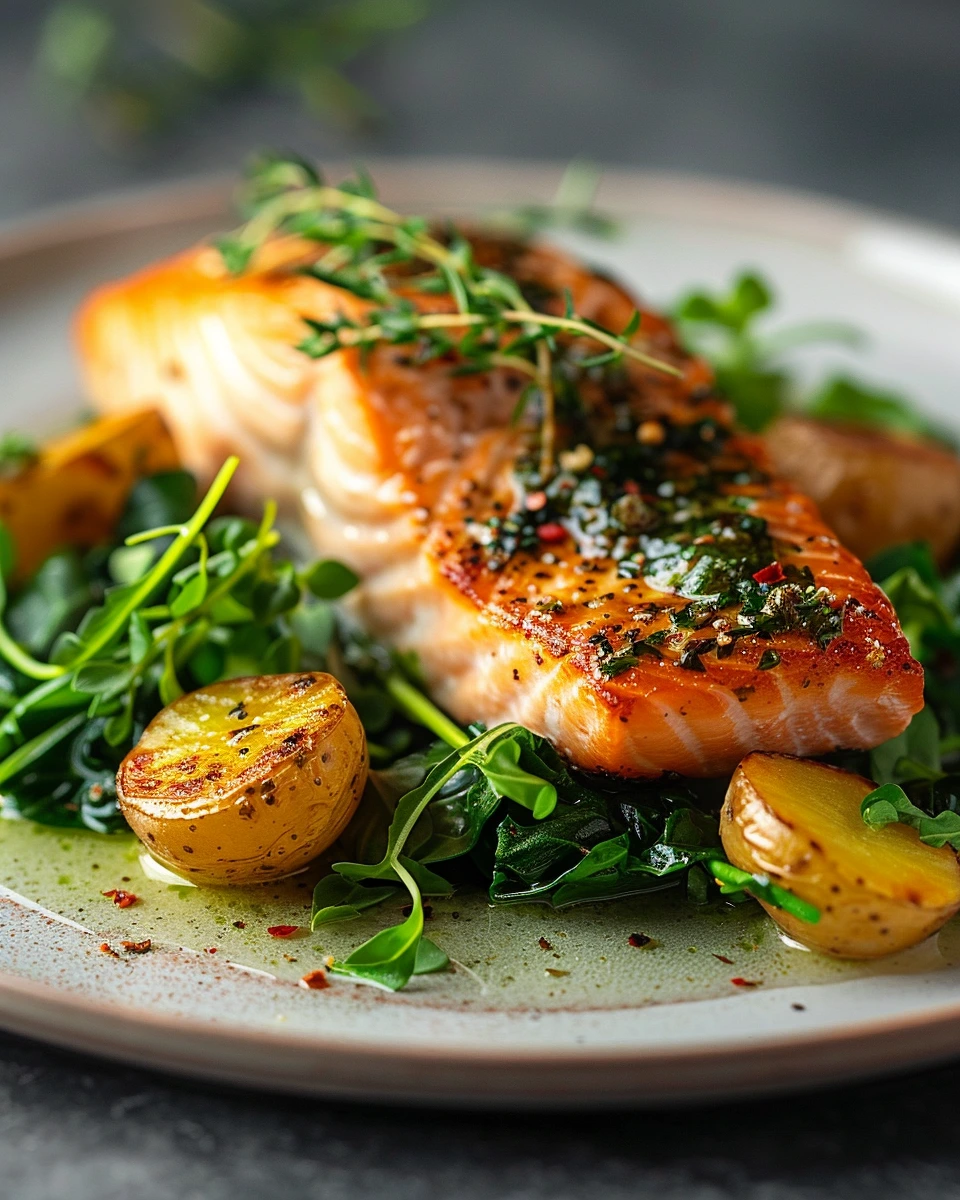
The story
Tasmanian Atlantic salmon is a modern aquaculture product that became nationally prominent from the late twentieth century. Cool southern waters and a strong seafood industry made it a defining state ingredient. Its rich flesh, broad flakes and reliable size make it versatile, but simple cooking best preserves its flavour. Crisp skin and a bright sauce provide contrast. The fish is a regular feature of Australian restaurants, festive meals and home cooking, carrying a clear association with Tasmania’s cool-climate produce.
Ingredients
- Main ingredients
- 360 g Tasmanian salmon fillets
- 350 g new potatoesboiled
- 125 g green beans
- 20 g butter
- 1 lemonzested and juiced
- 8 g dillchopped
- 1 tbsp olive oil
Method
Prepare the ingredients
Boil potatoes until tender and cook green beans. Measure everything before you start so the recipe scales cleanly from the dynamic ingredient quantities. Keep seafood chilled until cooking or serving, and cut vegetables into even bite-sized pieces.
Look for: The outside should be golden and the centre should be cooked through without looking wet or raw. Tip: Keep the plating relaxed and generous, with a clean sauce or relish to balance richer elements. Avoid: Do not overcook seafood; it should stay juicy and just cooked through.Season properly
Season salmon and pan-sear skin-side down until crisp. Work steadily and check texture rather than relying only on the clock.
Look for: The mixture should look even, seasoned and ready for the next stage. Tip: Keep the plating relaxed and generous, with a clean sauce or relish to balance richer elements. Avoid: Do not overcook seafood; it should stay juicy and just cooked through.Finish and serve
Turn briefly to finish cooking. Work steadily and check texture rather than relying only on the clock.
Look for: The mixture should look even, seasoned and ready for the next stage. Tip: Keep the plating relaxed and generous, with a clean sauce or relish to balance richer elements. Avoid: Do not overcook seafood; it should stay juicy and just cooked through.Check the texture
Melt butter with lemon and dill. Work steadily and check texture rather than relying only on the clock.
Look for: The mixture should look even, seasoned and ready for the next stage. Tip: Keep the plating relaxed and generous, with a clean sauce or relish to balance richer elements. Avoid: Do not overcook seafood; it should stay juicy and just cooked through.Finish and serve
Serve salmon with potatoes, greens and herb sauce. Taste at the end for salt, acidity and richness; traditional versions should feel generous but balanced.
Look for: The mixture should look even, seasoned and ready for the next stage. Tip: Keep the plating relaxed and generous, with a clean sauce or relish to balance richer elements. Avoid: Do not overcook seafood; it should stay juicy and just cooked through.
Nutrition
per serving
Estimated from the upgraded serves-2 metric ingredient list; verify with a nutrition calculator before making health claims.