The story
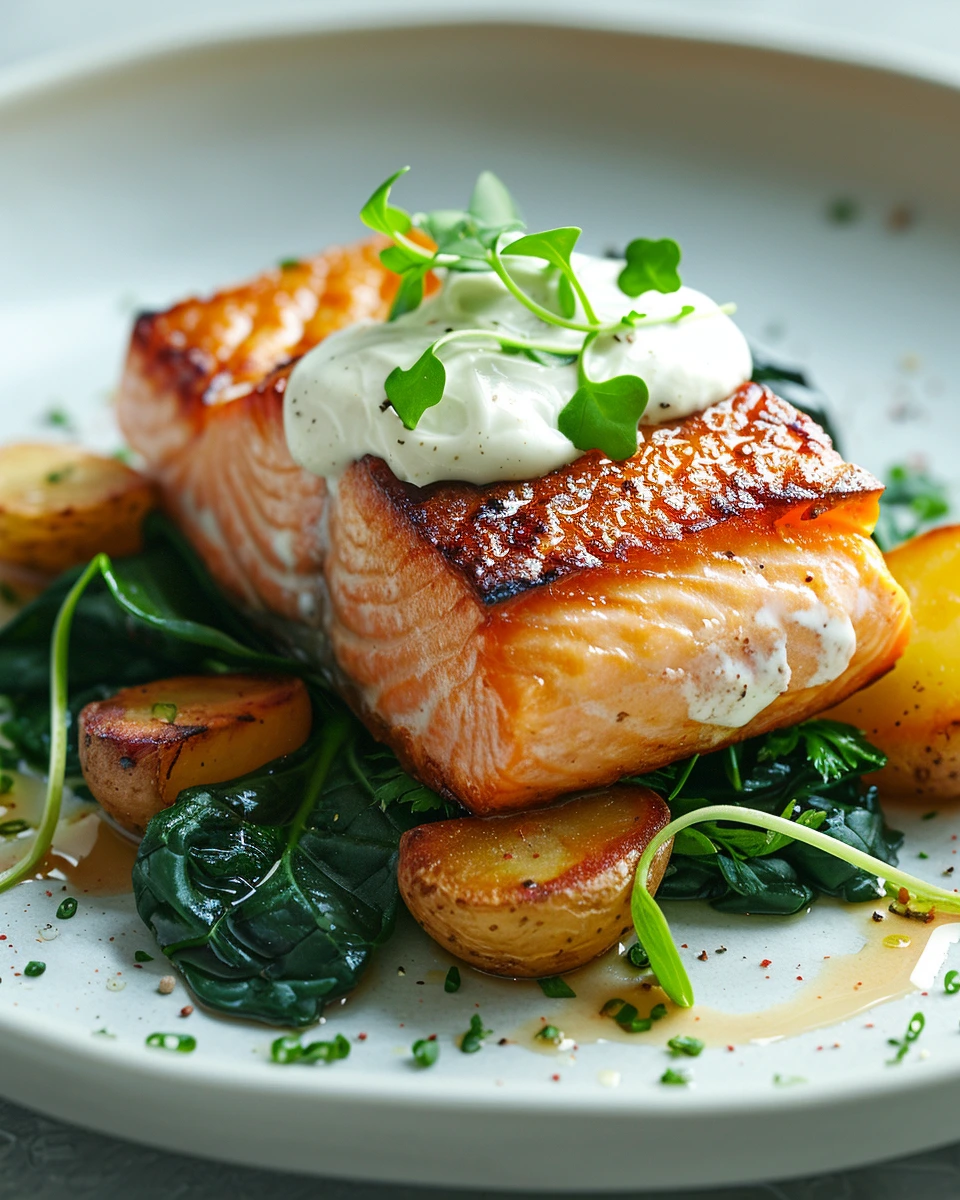
Atlantic salmon farming developed rapidly in Tasmania’s cool waters from the 1980s, making the fish a major modern Australian product. Horseradish cream draws on European accompaniments while suiting the salmon’s richness. The dish balances oily, softly flaking fish with a cold sauce that is creamy, acidic and pungent. Crisp skin supplies the necessary textural contrast. Tasmanian salmon is now common on restaurant menus and festive tables across Australia. It represents contemporary aquaculture more than an old national tradition, and is often paired with cool-climate produce.
Ingredients
- Main ingredients
- 360 g Tasmanian salmon fillets
- 40 g horseradish cream
- 60 g sour cream
- 8 g dillchopped
- 1 lemon
- 350 g new potatoes
- 120 g green salad
Method
Prepare the ingredients
Season salmon fillets. Measure everything before you start so the recipe scales cleanly from the dynamic ingredient quantities. Keep seafood chilled until cooking or serving, and cut vegetables into even bite-sized pieces.
Look for: The outside should be golden and the centre should be cooked through without looking wet or raw. Tip: Keep the plating relaxed and generous, with a clean sauce or relish to balance richer elements. Avoid: Do not overcook seafood; it should stay juicy and just cooked through.Bake or roast
Bake or pan-fry until just cooked. Heat oil to about 180°C / 355°F; if it is too cool the food turns greasy, and if too hot the outside browns before the centre cooks. Preheat the oven to 180°C / 355°F and use the middle shelf unless the recipe needs strong top browning.
Look for: The outside should be golden and the centre should be cooked through without looking wet or raw. Tip: Keep the plating relaxed and generous, with a clean sauce or relish to balance richer elements. Avoid: Do not overcook seafood; it should stay juicy and just cooked through.Cook the dish
Mix sour cream, horseradish, dill and lemon. Work steadily and check texture rather than relying only on the clock.
Look for: The mixture should look even, seasoned and ready for the next stage. Tip: Keep the plating relaxed and generous, with a clean sauce or relish to balance richer elements. Avoid: Do not overcook seafood; it should stay juicy and just cooked through.Bake or roast
Boil or roast potatoes. Preheat the oven to None°C / None°F and use the middle shelf unless the recipe needs strong top browning.
Look for: The outside should be golden and the centre should be cooked through without looking wet or raw. Tip: Keep the plating relaxed and generous, with a clean sauce or relish to balance richer elements. Avoid: Do not overcook seafood; it should stay juicy and just cooked through.Finish the seasoning
Rest the salmon briefly. Work steadily and check texture rather than relying only on the clock.
Look for: The mixture should look even, seasoned and ready for the next stage. Tip: Keep the plating relaxed and generous, with a clean sauce or relish to balance richer elements. Avoid: Do not overcook seafood; it should stay juicy and just cooked through.Finish and serve
Serve with horseradish cream and salad. Taste at the end for salt, acidity and richness; traditional versions should feel generous but balanced.
Look for: The finished plate should look fresh, chilled and neatly dressed rather than wet. Tip: Keep the plating relaxed and generous, with a clean sauce or relish to balance richer elements. Avoid: Do not overcook seafood; it should stay juicy and just cooked through.
Nutrition
per serving
Estimated from the upgraded serves-2 metric ingredient list; verify with a nutrition calculator before making health claims.