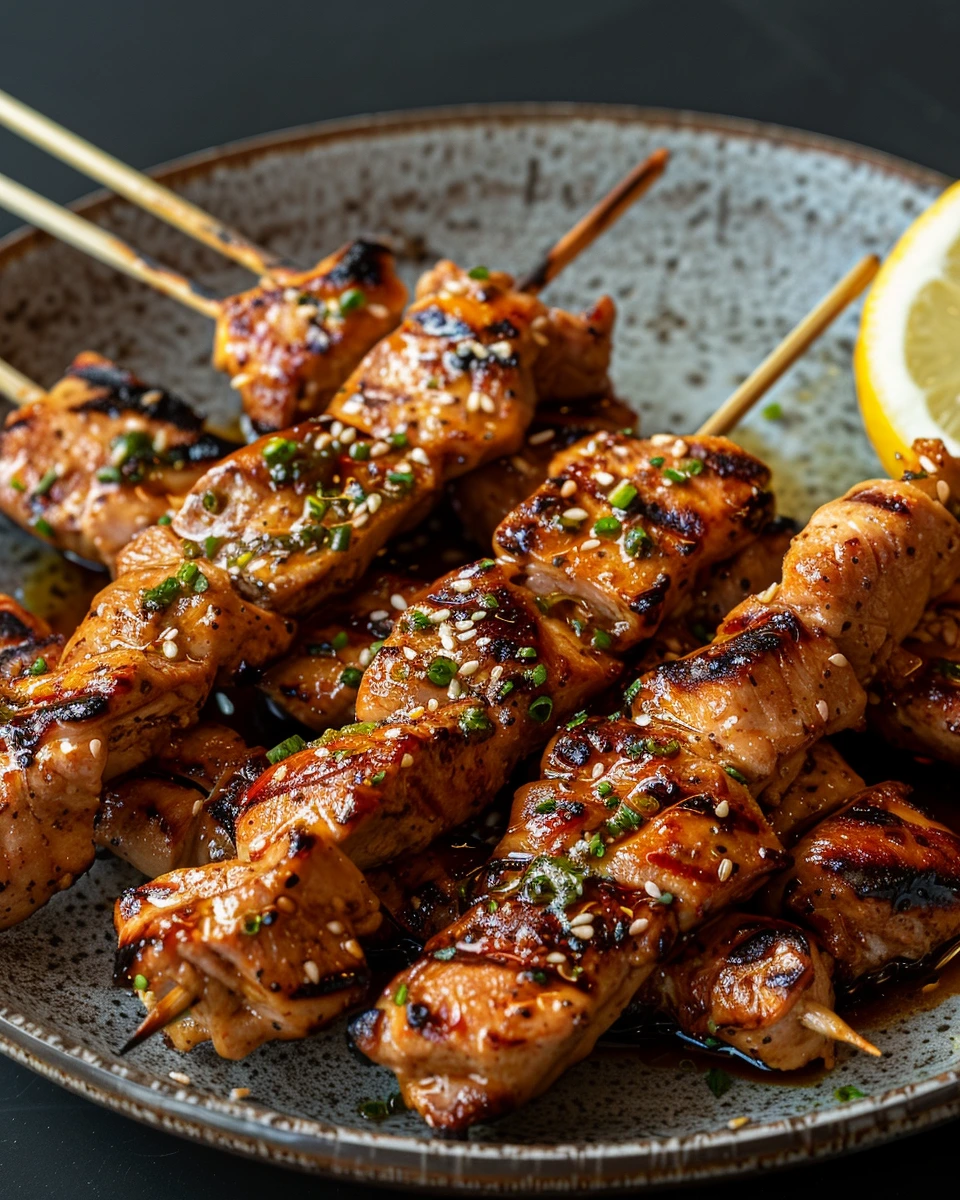
The story
The history of Yakitori is closely tied to Japanese street stalls and izakaya. The recipe developed as a recognisable local preparation rather than a generic example of Japanese cooking. Its individual character comes from chicken pieces, tare or salt and charcoal. Good versions are balanced, accurately seasoned and grilled or roasted with close control of heat. Yakitori is particularly associated with after-work drinking and shared grilling. That setting is central to understanding the dish: it explains when it is eaten, what accompanies it and why it continues to matter within Japanese food culture.
Ingredients
- Main ingredients
- 350 gram chicken thighs
- 4 piece Spring onions
- 6 piece bamboo skewers
- 2 tablespoon soy sauce
- 2 tablespoon mirin
- 1 tablespoon sake
- 0.5 tablespoon sugar
- to taste to taste saltSalt for shio version
Method
Cut and dry the protein
Cut chicken or fish into even pieces, or score skin lightly; pat dry so it browns properly.
Look for: Pieces are even and dry on the surface. Tip: Cut chicken against obvious muscle lines for tenderness. Avoid: Wet protein steams instead of browning.Prepare the glaze or marinade
Mix soy, mirin, sake and sugar, or miso marinade, and balance it before cooking.
Look for: Glaze tastes salty-sweet and glossy. Tip: For Saikyo yaki, wipe off excess miso before grilling. Avoid: Too much sugar burns before the centre cooks.Cook over steady heat
Grill, pan-fry or broil at medium-high heat, around 190–220°C / 375–425°F, until browned and cooked through.
Look for: Surface is browned with light charring. Tip: For skewers, leave small gaps so heat reaches all sides. Avoid: Turning too often prevents caramelisation.Glaze in layers
Brush with sauce near the end, letting each layer thicken before adding the next.
Look for: Glaze is shiny and clings to the surface. Tip: A final quick brush gives the best shine. Avoid: Adding all sauce at the start can burn it.Rest and serve
Rest briefly, slice where needed, and serve with rice, pickles or shredded cabbage.
Look for: Juices stay in the meat and glaze remains glossy. Tip: Serve grilled dishes while the edges are still crisp. Avoid: Cutting immediately dries the protein.
Nutrition
per serving
Estimated nutrition for Yakitori; use as editorial/testing data and refine from exact ingredient weights if needed.