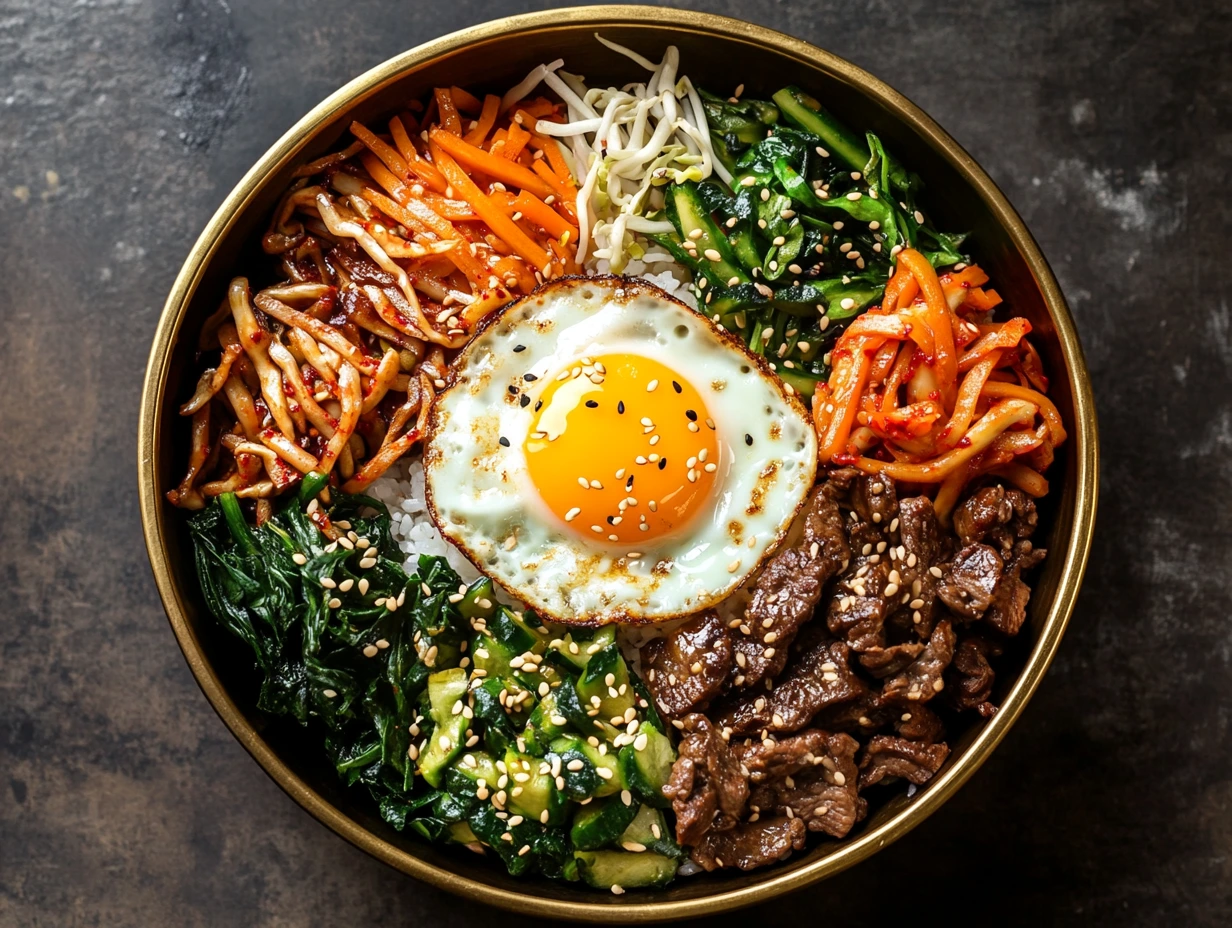
The story
Bibimbap is a Korean main with a clear sense of place. Bibimbap literally means mixed rice. Variants are found across Korea, with Jeonju particularly celebrated for elaborate versions and dolsot bibimbap for the crisp rice crust produced in a hot stone bowl. The recipe below keeps the defining ingredients and technique intact while giving practical metric quantities and enough detail for a home cook to judge texture, seasoning and doneness rather than simply follow a timer.
Ingredients
- 320 g Korean short-grain rice
- 420 ml waterfor rice
- 250 g beef sirloincut into thin strips
- 25 ml soy sauce
- 20 ml sesame oil
- 12 g Garlicgrated
- 10 g sugar
- 200 g spinach
- 200 g bean sprouts
- 150 g carrotjulienned
- 180 g courgettejulienned
- 120 g shiitake mushroomssliced
- 4 piece eggs
- 60 g gochujang
- 15 ml rice vinegar
- 2 tsp toasted sesame seeds
Method
Rinse the rice until the water is
Rinse the rice until the water is almost clear, drain for 10 minutes, then cook with 420 ml water. Rest covered for 10 minutes after cooking so the grains settle without becoming wet.
Look for: the water is almost clear, drain for 10 minutes, then cook with 420 ml water Tip: Season each topping lightly on its own. The finished bowl should taste complete after mixing, not depend on a heavy flood of sauce. Avoid: Cooking all vegetables together muddies flavour and colour; wet blanched greens make the rice soggy; too much gochujang overwhelms the subtler components.Marinate the beef with 15 ml soy
Marinate the beef with 15 ml soy sauce, 5 ml sesame oil, half the garlic and the sugar for 15 minutes. Mix gochujang with the remaining soy sauce, 5 ml sesame oil and rice vinegar to make the bowl sauce.
Blanch the spinach for 30 seconds and
Blanch the spinach for 30 seconds and bean sprouts for 2 minutes in separate batches. Cool, squeeze dry and season each lightly with sesame oil, garlic and salt.
Stir-fry the carrot, courgette and mushrooms separately
Stir-fry the carrot, courgette and mushrooms separately in a lightly oiled pan, seasoning each component as it cooks. Keep the colours and textures distinct rather than combining them into one vegetable mix.
Heat the pan until very hot and
Heat the pan until very hot and sear the marinated beef in a single layer for 2–3 minutes until browned but still juicy. Fry the eggs separately, keeping the yolks soft.
Look for: very hot and sear the marinated beef in a single layer for 2–3 minutes until browned but still juicyDivide hot rice between four wide bowls
Divide hot rice between four wide bowls. Arrange the vegetables and beef in neat sections, place an egg in the centre and spoon over gochujang sauce. Add sesame seeds and instruct diners to mix thoroughly before eating.
Look for: The rice is fluffy, beef browned, vegetables retain colour and the fried egg yolk remains soft enough to enrich the bowl.
Nutrition
per serving
Estimated from the listed ingredients and default serving size. Actual values vary with brands, trimming, absorption and cooking losses.