The story
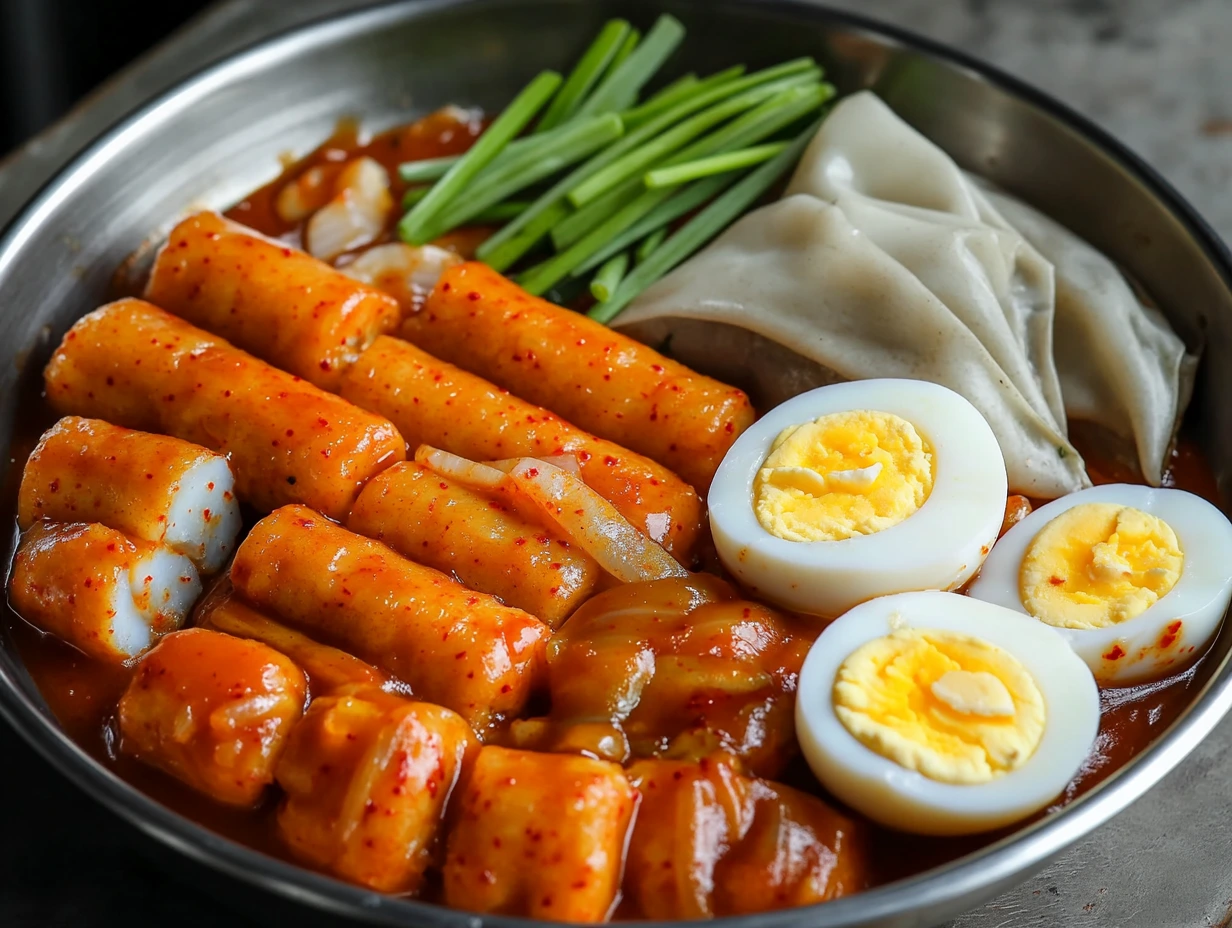
Tteokbokki is a Korean starter with a clear sense of place. Modern tteokbokki grew from older rice-cake preparations into the red, chilli-rich street-food version widely associated with Seoul after the Korean War. It is now one of Korea’s most recognisable snack foods. The recipe below keeps the defining ingredients and technique intact while giving practical metric quantities and enough detail for a home cook to judge texture, seasoning and doneness rather than simply follow a timer.
Ingredients
- 500 g cylindrical Korean rice cakes
- 180 g Korean fish cake sheetscut into strips
- 700 ml anchovy-kelp stock
- 55 g gochujang
- 2 tsp gochugaru
- 15 ml soy sauce
- 20 g sugar
- 8 g Garlicfinely grated
- 80 g Spring onionscut into 5 cm lengths
- 2 piece boiled eggspeeled
- 1 tsp toasted sesame seeds
Method
If the rice cakes are refrigerated and
If the rice cakes are refrigerated and firm, soak them in warm water for 10 minutes, then drain. Fresh soft rice cakes can go straight into the pan.
Tip: Keep the pan wide rather than deep so the sauce reduces quickly and coats the rice cakes instead of turning soupy. Avoid: Boiling too violently can split the rice cakes; too little liquid prevents the starch from cooking out; too much sugar makes the sauce cloying.Bring the anchovy-kelp stock to a simmer
Bring the anchovy-kelp stock to a simmer in a wide saucepan. Whisk in gochujang, gochugaru, soy sauce, sugar and garlic until the paste is fully dispersed.
Look for: the paste is fully dispersedAdd the rice cakes and simmer briskly
Add the rice cakes and simmer briskly for 6–8 minutes, stirring often with a wooden spoon. The starch released from the rice cakes should start thickening the sauce.
Add the fish cake strips and spring
Add the fish cake strips and spring onions. Continue simmering for another 4–5 minutes, turning the rice cakes so they cook evenly and do not stick to the pan.
Add the boiled eggs for the final
Add the boiled eggs for the final 2 minutes to warm them and coat them in sauce. If the sauce becomes too tight before the rice cakes are tender, loosen it with a splash of hot water.
Serve as soon as the sauce is
Serve as soon as the sauce is thick, glossy and clings to each rice cake. Scatter with sesame seeds and spoon plenty of sauce around the eggs.
Look for: A rice cake should bend and bite cleanly without a hard chalky centre, and the sauce should leave a clear glossy trail on the spoon.
Nutrition
per serving
Estimated from the listed ingredients and default serving size. Actual values vary with brands, trimming, absorption and cooking losses.