The story
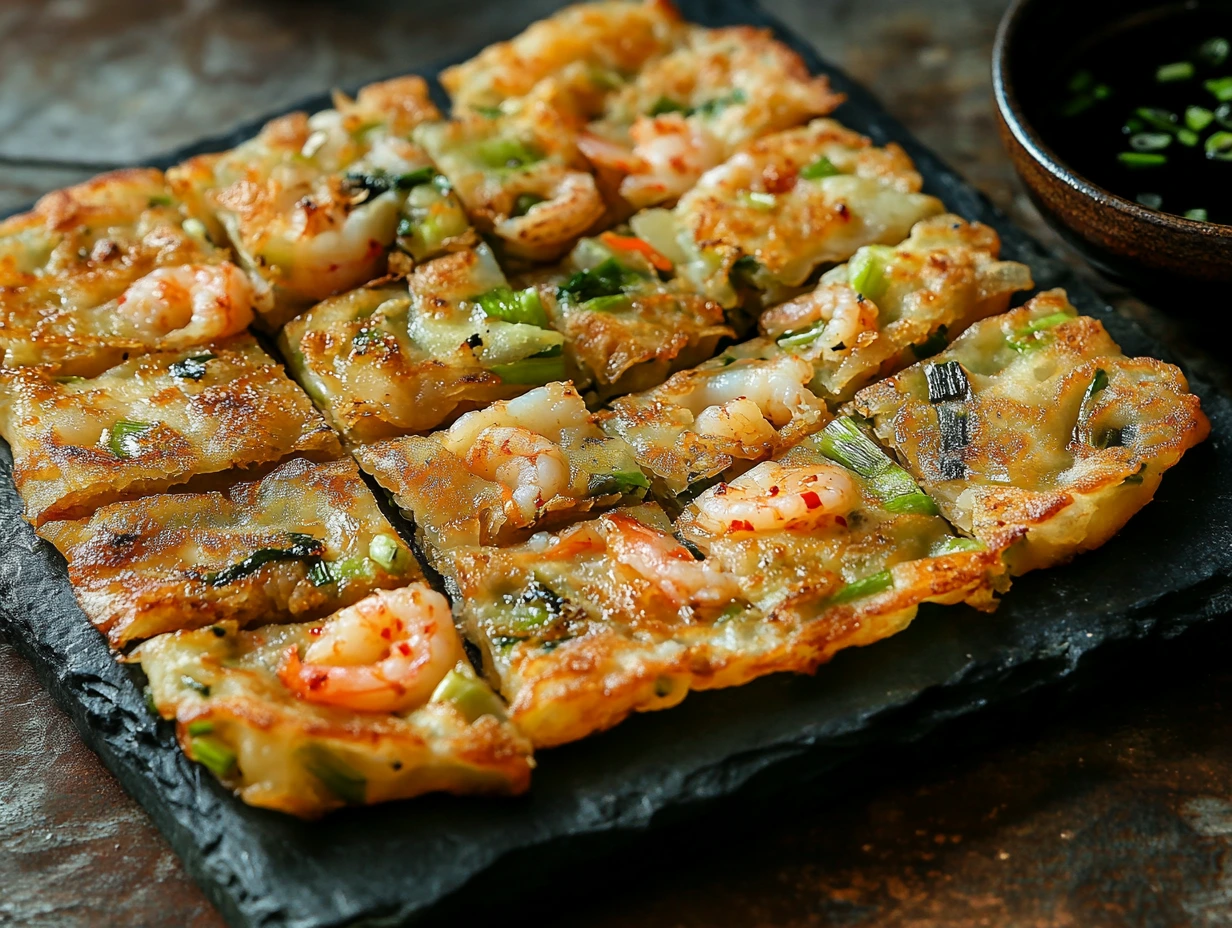
Haemul Pajeon is a Korean starter with a clear sense of place. Pajeon belongs to Korea’s broad family of jeon, pan-fried battered dishes eaten at home, in markets and with drinks. Seafood versions are especially associated with coastal cooking and are famously paired with makgeolli on rainy days. The recipe below keeps the defining ingredients and technique intact while giving practical metric quantities and enough detail for a home cook to judge texture, seasoning and doneness rather than simply follow a timer.
Ingredients
- 160 g plain flour
- 40 g rice flour
- 240 ml cold water
- 1 piece egg
- 180 g Spring onionstrimmed into 12 cm lengths
- 120 g raw prawnspeeled and chopped
- 100 g squidcleaned and thinly sliced
- 45 ml neutral cooking oil
- 30 ml soy saucefor dipping
- 20 ml rice vinegarfor dipping
- 1 tsp gochugarufor dipping
- 1 tsp toasted sesame seedsfor dipping
Method
Whisk the plain flour and rice flour
Whisk the plain flour and rice flour with the cold water until only small lumps remain; do not beat it smooth because overworking develops gluten and makes the pancake bready. Beat in the egg just before cooking.
Look for: only small lumps remain; do not beat it smooth because overworking develops gluten and makes the pancake bready Tip: Use very cold water and a generous film of oil. A slightly ragged, deeply browned edge is desirable; pale pajeon usually means the pan was not hot enough. Avoid: Using warm water, making a thick batter, overcrowding the seafood or flipping before the base is properly browned will leave the pancake heavy and prone to tearing.Lay the spring onions in a single
Lay the spring onions in a single loose layer in a well-heated 24–26 cm frying pan with 1 tablespoon of oil. Cook for about 1 minute so they begin to soften and smell sweet.
Scatter the prawns and squid evenly over
Scatter the prawns and squid evenly over the onions, then pour over just enough batter to bind everything together. Tilt the pan so the batter reaches the edges without drowning the filling.
Cook over medium-high heat for 4–5 minutes,
Cook over medium-high heat for 4–5 minutes, loosening the edges and adding a little more oil around the rim. The underside should be a deep mottled gold and feel firm enough to turn.
Flip decisively using a wide spatula or
Flip decisively using a wide spatula or an upturned plate. Add another teaspoon of oil and cook the second side for 3–4 minutes, pressing lightly so the seafood makes good contact with the pan.
Mix the soy sauce, rice vinegar, gochugaru
Mix the soy sauce, rice vinegar, gochugaru and sesame seeds. Rest the pancake for 1 minute, cut into squares and serve immediately with the dipping sauce.
Look for: The seafood is opaque and just cooked, the spring onions have softened, and both surfaces are crisp enough that a lifted wedge holds its shape.
Nutrition
per serving
Estimated from the listed ingredients and default serving size. Actual values vary with brands, trimming, absorption and cooking losses.