The story
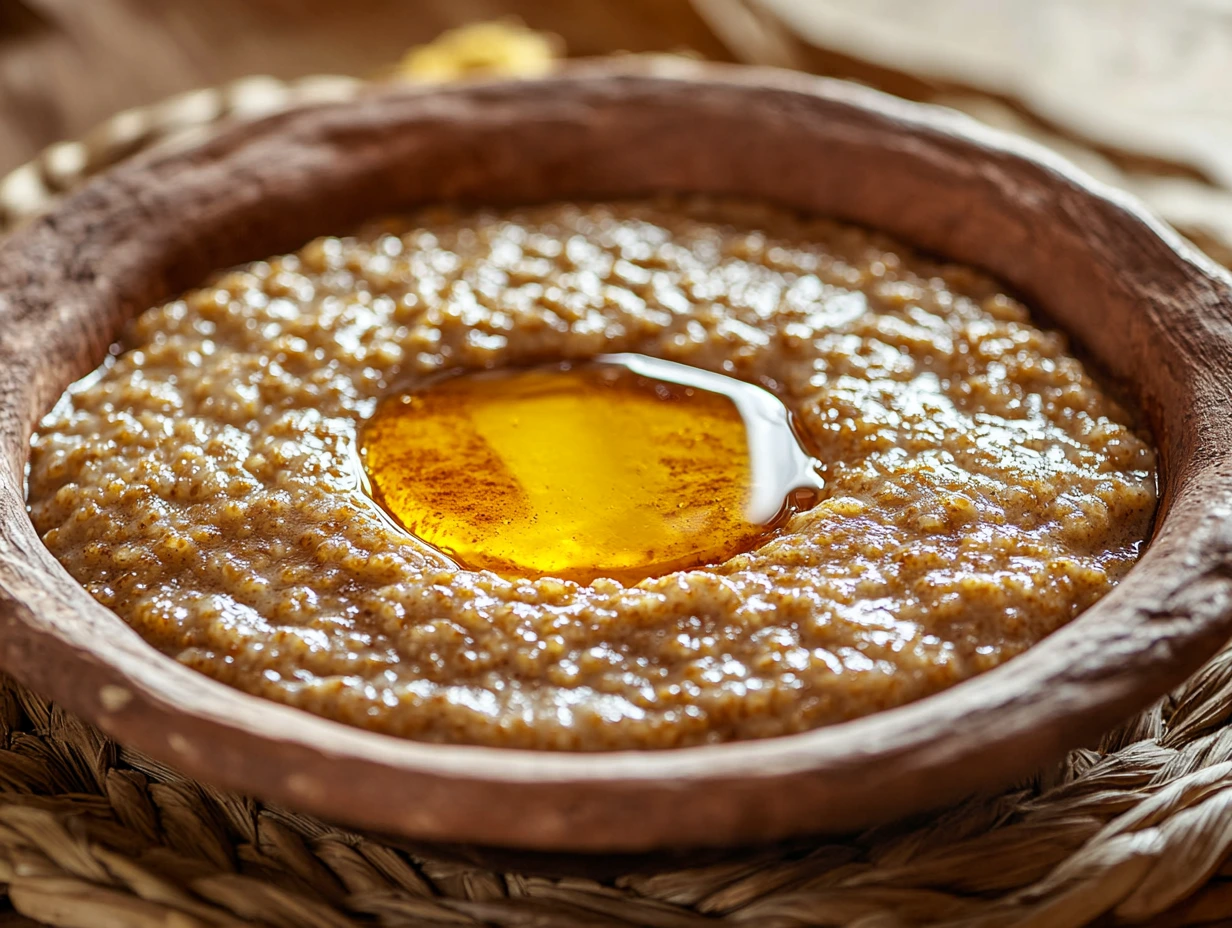
Genfo is a dense Ethiopian and Eritrean porridge traditionally made from grain flour such as barley or wheat and mixed directly into boiling water until smooth and elastic. It is commonly associated with breakfast and nourishing home food, and the centre is often hollowed to hold spiced butter and chilli; honey can be used as a sweeter variation. The previous coconut-milk, rice-flour and mango version did not reflect the dish. This correction restores roasted barley flour, water and vigorous stirring as the core technique, with niter kibbeh and honey served in the centre.
Ingredients
- Main
- 320 g roasted barley flourbarley flour lightly toasted in a dry pan if roasted flour is unavailable
- 750 ml water
- 1 tsp fine salt
- 60 g niter kibbehmelted
- 60 g honeyadd more at the table if desired
- 1 tsp berbereoptional; serve separately for a savoury-hot contrast
Method
Bring the water to a boil
Bring the water and salt to a full boil in a heavy saucepan. Reduce to a strong simmer.
Look for: The water should be actively simmering before flour is added. Tip: Use a sturdy wooden spoon; the mixture becomes very thick. Avoid: Starting with lukewarm water encourages lumps and a gluey texture.Add the barley flour gradually
Rain the roasted barley flour into the simmering water with one hand while stirring continuously with the other. Keep stirring until all the flour is incorporated.
Look for: The mixture will move from a loose paste to a very thick dough-like porridge. Tip: If a few lumps form, press them firmly against the side of the pan while the mixture is still loose enough to work. Avoid: Do not tip all the flour in at once or dry pockets will become difficult to remove.Beat until smooth
Lower the heat and beat the genfo vigorously for 8–10 minutes, turning and pressing the mixture so it cooks evenly and becomes smooth.
Look for: The genfo should pull from the sides of the pot in a cohesive mass and lose any raw flour taste. Tip: A splash of boiling water can loosen genfo that becomes too stiff before the flour has cooked through. Avoid: Do not stop stirring for long; the base can scorch quickly once thick.Shape the serving well
Transfer the hot genfo to a wide bowl. Wet the back of a spoon and shape it into a mound, then make a deep well in the centre.
Look for: The porridge should hold the well cleanly without slumping. Tip: Work while hot because the surface firms as it cools. Avoid: Do not thin the genfo until pourable; its dense shape is part of the dish.Add butter and honey
Mix the melted niter kibbeh and honey, then pour into the central well. Serve berbere separately or stir a small pinch into part of the butter for diners who want the traditional hot-savoury contrast.
Look for: The glossy butter-honey mixture should pool in the centre rather than disappear into watery porridge. Tip: For a more traditional savoury version, reduce or omit the honey and use berbere or mitmita in the butter. Avoid: Do not sweeten the entire pot heavily; keeping the honey in the centre allows each diner to control the balance.Serve hot
Serve immediately. Diners can pull pieces of genfo from the edge through the butter-honey centre.
Look for: Genfo is best hot, dense and smooth, with the centre still fluid. Tip: Warm bowls help the butter remain liquid during serving. Avoid: Do not let it sit uncovered for long or the surface will form a skin.
Nutrition
per serving
Estimated from the ingredient list and serving count; review before publishing formal nutritional claims.