The story
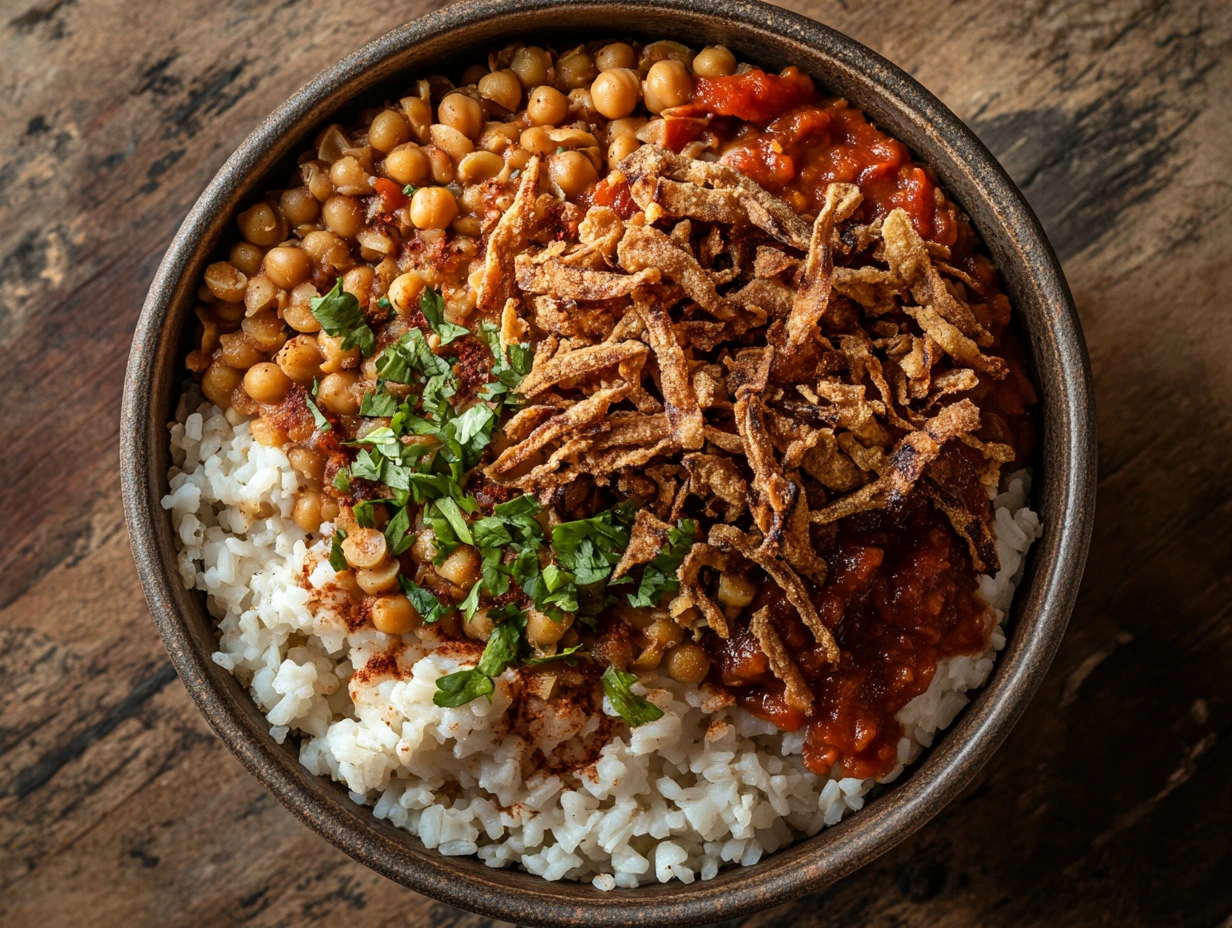
Koshari took shape in nineteenth- and early twentieth-century Egypt as rice, lentils and pasta from different culinary currents came together in an inexpensive urban meal. It became closely associated with Cairo's workers and specialist koshari shops. The dish is famous for abundance and contrast: soft lentils, separate rice, pasta and chickpeas meet spicy tomato sauce, sharp daqqa and crackling onions. Each diner can adjust heat and acidity. Koshari is one of Egypt's most democratic foods, eaten by students, office workers and families. Dedicated restaurants serve little else, and the dish offers a filling meat-free meal at modest cost.
Ingredients
- Crisp onions
- 320 g onionsthinly sliced · 320 g onions, thinly sliced
- 30 g plain flourfor dusting · 30 g plain flour, for dusting
- Frying
- 500 ml neutral oilfor onions · 500 ml neutral oil, for onions
- Grains
- 220 g short-grain ricerinsed until water runs mostly clear · 220 g short-grain rice, rinsed until water runs mostly clear
- 160 g brown lentilsrinsed · 160 g brown lentils, rinsed
- Pasta
- 140 g small macaronior ditalini · 140 g small macaroni, or ditalini
- Sauce
- 400 ml tomato passata400 ml tomato passata
- 18 g garlic clovesminced · 18 g garlic cloves, minced
- 35 ml white vinegar35 ml white vinegar
- 8 g ground cumin8 g ground cumin
- 3 g dried chilli flakesoptional · 3 g dried chilli flakes, optional
- Seasoning
- 10 g fine sea salt10 g fine sea salt
- Topping
- 180 g cooked chickpeasdrained · 180 g cooked chickpeas, drained
Method
Cook the lentils
Simmer lentils in salted water for 18 to 22 minutes until tender but not bursting. Drain and keep warm.
Look for: Texture, aroma and colour should match the dish: tender where simmered, crisp where fried, glossy where sauced and bright where finished with herbs or lemon. Tip: Taste with the normal accompaniment, such as bread, rice, salad or sauce, because Egyptian dishes are designed as complete plates. Avoid: Do not rush the heat stage or rely only on time; check doneness, texture and seasoning before moving on.Cook the rice
Cook rice with 360 ml water and a pinch of salt over low heat for 12 minutes, then rest covered for 10 minutes. Fluff gently so the grains stay separate.
Look for: Texture, aroma and colour should match the dish: tender where simmered, crisp where fried, glossy where sauced and bright where finished with herbs or lemon. Tip: Taste with the normal accompaniment, such as bread, rice, salad or sauce, because Egyptian dishes are designed as complete plates. Avoid: Do not rush the heat stage or rely only on time; check doneness, texture and seasoning before moving on.Fry the onions
Toss sliced onions with flour and a little salt. Fry at 170°C / 338°F in batches until deep golden and crisp, 5 to 7 minutes. Drain on a rack and save 2 tablespoons of the onion oil.
Look for: Texture, aroma and colour should match the dish: tender where simmered, crisp where fried, glossy where sauced and bright where finished with herbs or lemon. Tip: Taste with the normal accompaniment, such as bread, rice, salad or sauce, because Egyptian dishes are designed as complete plates. Avoid: Do not rush the heat stage or rely only on time; check doneness, texture and seasoning before moving on.Make the tomato sauce
Cook garlic in the saved onion oil for 30 seconds, add cumin, passata, vinegar, chilli and salt, then simmer 12 to 15 minutes until glossy and sharp.
Look for: Texture, aroma and colour should match the dish: tender where simmered, crisp where fried, glossy where sauced and bright where finished with herbs or lemon. Tip: Taste with the normal accompaniment, such as bread, rice, salad or sauce, because Egyptian dishes are designed as complete plates. Avoid: Do not rush the heat stage or rely only on time; check doneness, texture and seasoning before moving on.Cook the pasta and chickpeas
Boil the pasta until just tender. Warm chickpeas in a spoonful of tomato sauce or hot water so they do not cool the dish.
Look for: Texture, aroma and colour should match the dish: tender where simmered, crisp where fried, glossy where sauced and bright where finished with herbs or lemon. Tip: Taste with the normal accompaniment, such as bread, rice, salad or sauce, because Egyptian dishes are designed as complete plates. Avoid: Do not rush the heat stage or rely only on time; check doneness, texture and seasoning before moving on.Assemble in layers
Layer rice, lentils and pasta, spoon over tomato sauce, add chickpeas and finish with crisp onions. Serve extra vinegar-garlic sauce on the side if you like it punchy.
Look for: Texture, aroma and colour should match the dish: tender where simmered, crisp where fried, glossy where sauced and bright where finished with herbs or lemon. Tip: Taste with the normal accompaniment, such as bread, rice, salad or sauce, because Egyptian dishes are designed as complete plates. Avoid: Do not rush the heat stage or rely only on time; check doneness, texture and seasoning before moving on.
Nutrition
per serving
Estimated from the upgraded Egyptian recipe for Koshari; verify with your preferred nutrition calculator before making formal nutritional claims.