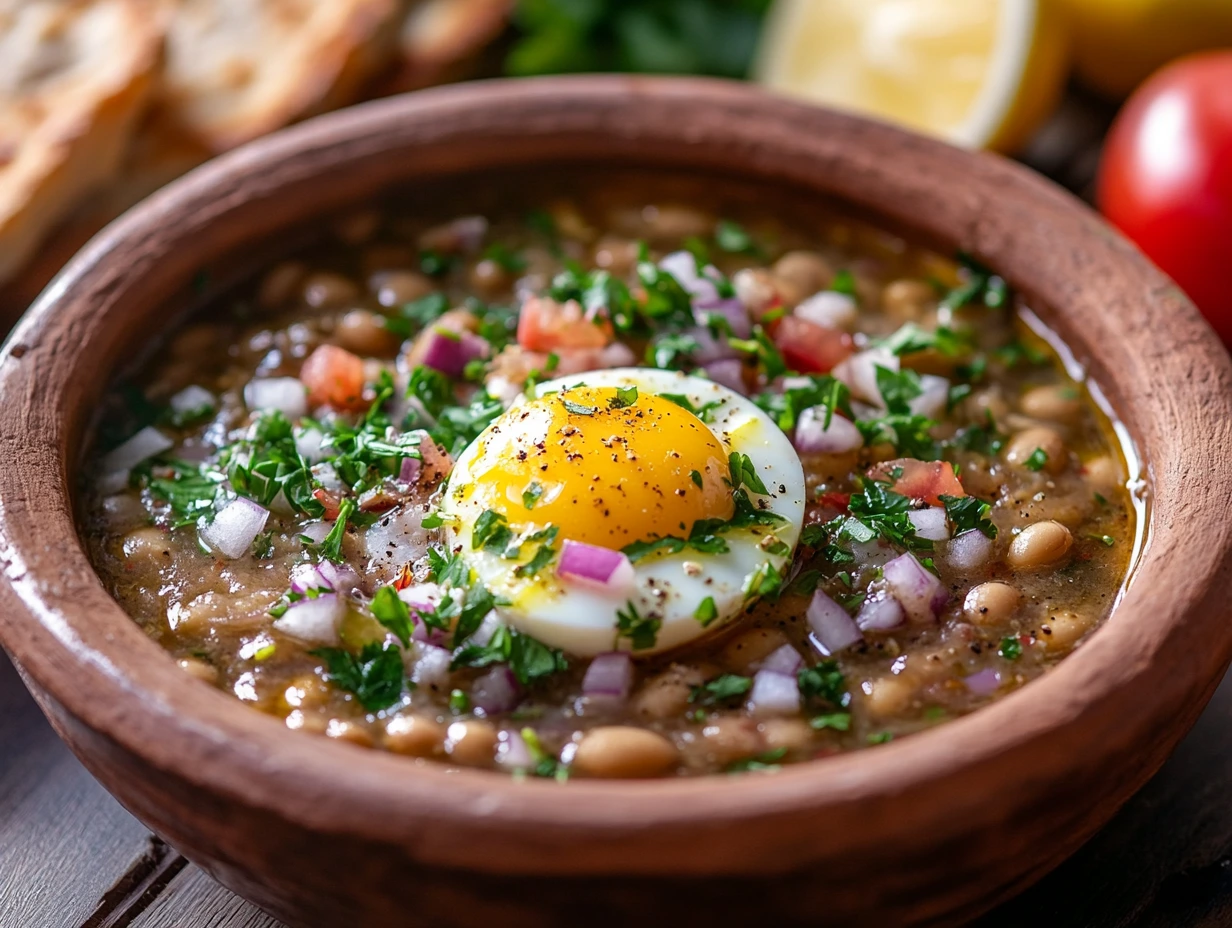
The story
Fava beans have been eaten in Egypt since antiquity, and ful medames developed into one of the country's most enduring everyday foods. Traditionally cooked overnight in a narrow-necked pot, it was ready for workers and families at the start of the day. The dish is famous for turning humble beans into a deeply satisfying meal through texture and condiments. Some beans are mashed to thicken the bowl, while lemon, cumin and chilli keep the flavour lively. Ful is eaten at home, from street carts and in restaurants, particularly at breakfast and during Ramadan. It crosses class and regional boundaries and is often called Egypt's national dish.
Ingredients
- Base
- 12 g garlic clovescrushed to a paste · 12 g garlic cloves, crushed to a paste
- 6 g ground cuminfreshly ground if possible · 6 g ground cumin, freshly ground if possible
- Finish
- 30 ml lemon juiceplus wedges to serve · 30 ml lemon juice, plus wedges to serve
- 45 ml extra virgin olive oilfor finishing · 45 ml extra virgin olive oil, for finishing
- 20 g flat-leaf parsleyfinely chopped · 20 g flat-leaf parsley, finely chopped
- Garnish
- 160 g tomatofinely diced · 160 g tomato, finely diced
- Main
- 500 g cooked fava beansdrained, or use slow-cooked dried beans · 500 g cooked fava beans, drained, or use slow-cooked dried beans
- 180 ml cooking liquid or waterwarm · 180 ml cooking liquid or water, warm
- Seasoning
- to taste to taste fine sea saltadd gradually · fine sea salt, add gradually
Method
Warm the beans
Put the cooked fava beans and warm cooking liquid in a saucepan over low heat. Simmer gently for 12 to 15 minutes, crushing roughly one third of the beans against the side of the pan so the bowl becomes creamy but still textured.
Look for: Texture, aroma and colour should match the dish: tender where simmered, crisp where fried, glossy where sauced and bright where finished with herbs or lemon. Tip: Taste with the normal accompaniment, such as bread, rice, salad or sauce, because Egyptian dishes are designed as complete plates. Avoid: Do not rush the heat stage or rely only on time; check doneness, texture and seasoning before moving on.Season the base
Stir in crushed garlic, cumin and a pinch of salt. Cook for 3 minutes on a low simmer so the garlic loses its raw edge without browning.
Look for: Texture, aroma and colour should match the dish: tender where simmered, crisp where fried, glossy where sauced and bright where finished with herbs or lemon. Tip: Taste with the normal accompaniment, such as bread, rice, salad or sauce, because Egyptian dishes are designed as complete plates. Avoid: Do not rush the heat stage or rely only on time; check doneness, texture and seasoning before moving on.Adjust the texture
If the ful looks dry, add a spoonful of hot water at a time. It should be spoonable, not soupy, with some beans whole and some broken down.
Look for: Texture, aroma and colour should match the dish: tender where simmered, crisp where fried, glossy where sauced and bright where finished with herbs or lemon. Tip: Taste with the normal accompaniment, such as bread, rice, salad or sauce, because Egyptian dishes are designed as complete plates. Avoid: Do not rush the heat stage or rely only on time; check doneness, texture and seasoning before moving on.Finish with acid and oil
Take the pan off the heat, stir through lemon juice and half the olive oil, then taste again with a little bean on bread. Add more salt only after the lemon has gone in.
Look for: Texture, aroma and colour should match the dish: tender where simmered, crisp where fried, glossy where sauced and bright where finished with herbs or lemon. Tip: Taste with the normal accompaniment, such as bread, rice, salad or sauce, because Egyptian dishes are designed as complete plates. Avoid: Do not rush the heat stage or rely only on time; check doneness, texture and seasoning before moving on.Serve Egyptian-style
Spoon into a shallow bowl, make a small well, add the remaining olive oil, diced tomato and parsley, and serve hot with baladi bread, pickles and extra lemon.
Look for: Texture, aroma and colour should match the dish: tender where simmered, crisp where fried, glossy where sauced and bright where finished with herbs or lemon. Tip: Taste with the normal accompaniment, such as bread, rice, salad or sauce, because Egyptian dishes are designed as complete plates. Avoid: Do not rush the heat stage or rely only on time; check doneness, texture and seasoning before moving on.
Nutrition
per serving
Estimated from the upgraded Egyptian recipe for Ful Medames; verify with your preferred nutrition calculator before making formal nutritional claims.