The story
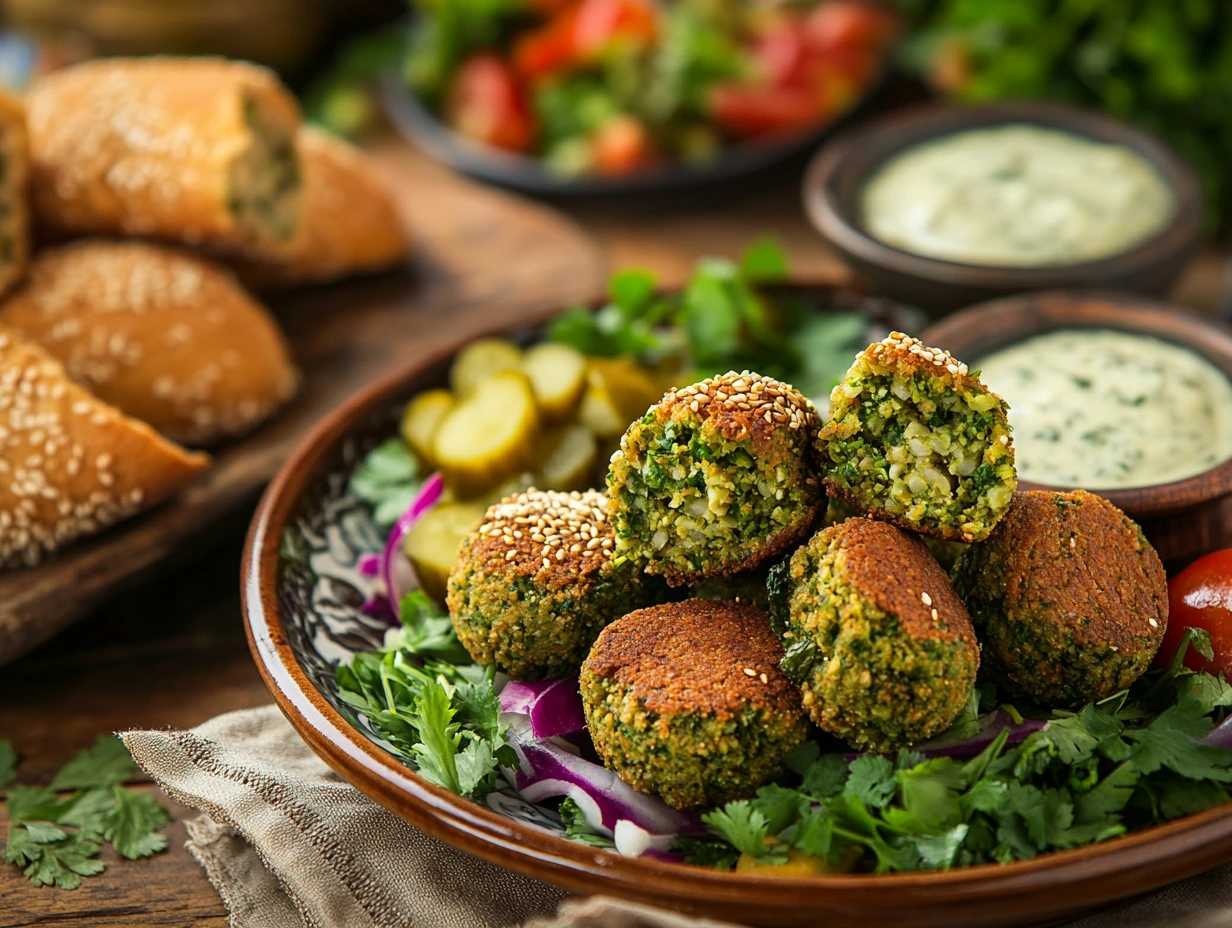
Egypt's version of falafel is made principally from split fava beans rather than chickpeas. The preparation is especially associated with Cairo and the Nile Valley, where beans and abundant herbs made an inexpensive, flavourful street food. Taameya are distinguished by their vivid green interior, airy texture and generous seasoning with parsley, coriander, dill, garlic and leek. Sesame seeds create a nutty crust. They are eaten for breakfast, in sandwiches, as part of mezze and during everyday street meals. Together with ful, taameya forms one of Egypt's most familiar breakfast combinations.
Ingredients
- Base
- 70 g spring onionsroughly chopped · 70 g spring onions, roughly chopped
- 40 g fresh corianderstems included · 40 g fresh coriander, stems included
- 35 g fresh parsleystems included · 35 g fresh parsley, stems included
- 18 g garlic clovespeeled · 18 g garlic cloves, peeled
- Coating
- 35 g sesame seedsfor the outside · 35 g sesame seeds, for the outside
- Frying
- 700 ml neutral oilfor deep frying · 700 ml neutral oil, for deep frying
- Main
- 300 g dried split fava beanssoaked overnight and drained · 300 g dried split fava beans, soaked overnight and drained
- Mix
- 4 g bicarbonate of sodaadded just before frying · 4 g bicarbonate of soda, added just before frying
- Seasoning
- 8 g ground cumin8 g ground cumin
- 8 g ground coriander8 g ground coriander
- 8 g fine sea salt8 g fine sea salt
Method
Soak and drain
Soak the split fava beans overnight, then drain very well. Pat them dry with kitchen paper; wet beans make a loose paste and can spit in the oil.
Look for: Texture, aroma and colour should match the dish: tender where simmered, crisp where fried, glossy where sauced and bright where finished with herbs or lemon. Tip: Taste with the normal accompaniment, such as bread, rice, salad or sauce, because Egyptian dishes are designed as complete plates. Avoid: Do not rush the heat stage or rely only on time; check doneness, texture and seasoning before moving on.Grind the green paste
Pulse the beans, spring onions, herbs, garlic, cumin, coriander and salt in a food processor until fine and green. Stop before it becomes a smooth hummus; the paste should hold together with tiny grainy pieces.
Look for: Texture, aroma and colour should match the dish: tender where simmered, crisp where fried, glossy where sauced and bright where finished with herbs or lemon. Tip: Taste with the normal accompaniment, such as bread, rice, salad or sauce, because Egyptian dishes are designed as complete plates. Avoid: Do not rush the heat stage or rely only on time; check doneness, texture and seasoning before moving on.Rest the mixture
Chill the paste for 20 minutes. Stir in bicarbonate of soda only when you are ready to fry so it keeps the taameya light.
Look for: Texture, aroma and colour should match the dish: tender where simmered, crisp where fried, glossy where sauced and bright where finished with herbs or lemon. Tip: Taste with the normal accompaniment, such as bread, rice, salad or sauce, because Egyptian dishes are designed as complete plates. Avoid: Do not rush the heat stage or rely only on time; check doneness, texture and seasoning before moving on.Shape and coat
With damp hands, shape small discs about 5 cm wide and 1.5 cm thick. Press sesame seeds onto one side so they cling without burying the green paste.
Look for: Texture, aroma and colour should match the dish: tender where simmered, crisp where fried, glossy where sauced and bright where finished with herbs or lemon. Tip: Taste with the normal accompaniment, such as bread, rice, salad or sauce, because Egyptian dishes are designed as complete plates. Avoid: Do not rush the heat stage or rely only on time; check doneness, texture and seasoning before moving on.Fry at the right heat
Heat oil to 175°C / 347°F. Fry in small batches for 3 to 4 minutes, turning once, until deep golden outside and vivid green inside.
Look for: Texture, aroma and colour should match the dish: tender where simmered, crisp where fried, glossy where sauced and bright where finished with herbs or lemon. Tip: Taste with the normal accompaniment, such as bread, rice, salad or sauce, because Egyptian dishes are designed as complete plates. Avoid: Do not rush the heat stage or rely only on time; check doneness, texture and seasoning before moving on.Drain and serve
Drain on a rack, not a covered plate. Serve immediately with tahini sauce, salad, pickles and warm bread.
Look for: Texture, aroma and colour should match the dish: tender where simmered, crisp where fried, glossy where sauced and bright where finished with herbs or lemon. Tip: Taste with the normal accompaniment, such as bread, rice, salad or sauce, because Egyptian dishes are designed as complete plates. Avoid: Do not rush the heat stage or rely only on time; check doneness, texture and seasoning before moving on.
Nutrition
per serving
Estimated from the upgraded Egyptian recipe for Taameya; verify with your preferred nutrition calculator before making formal nutritional claims.