The story
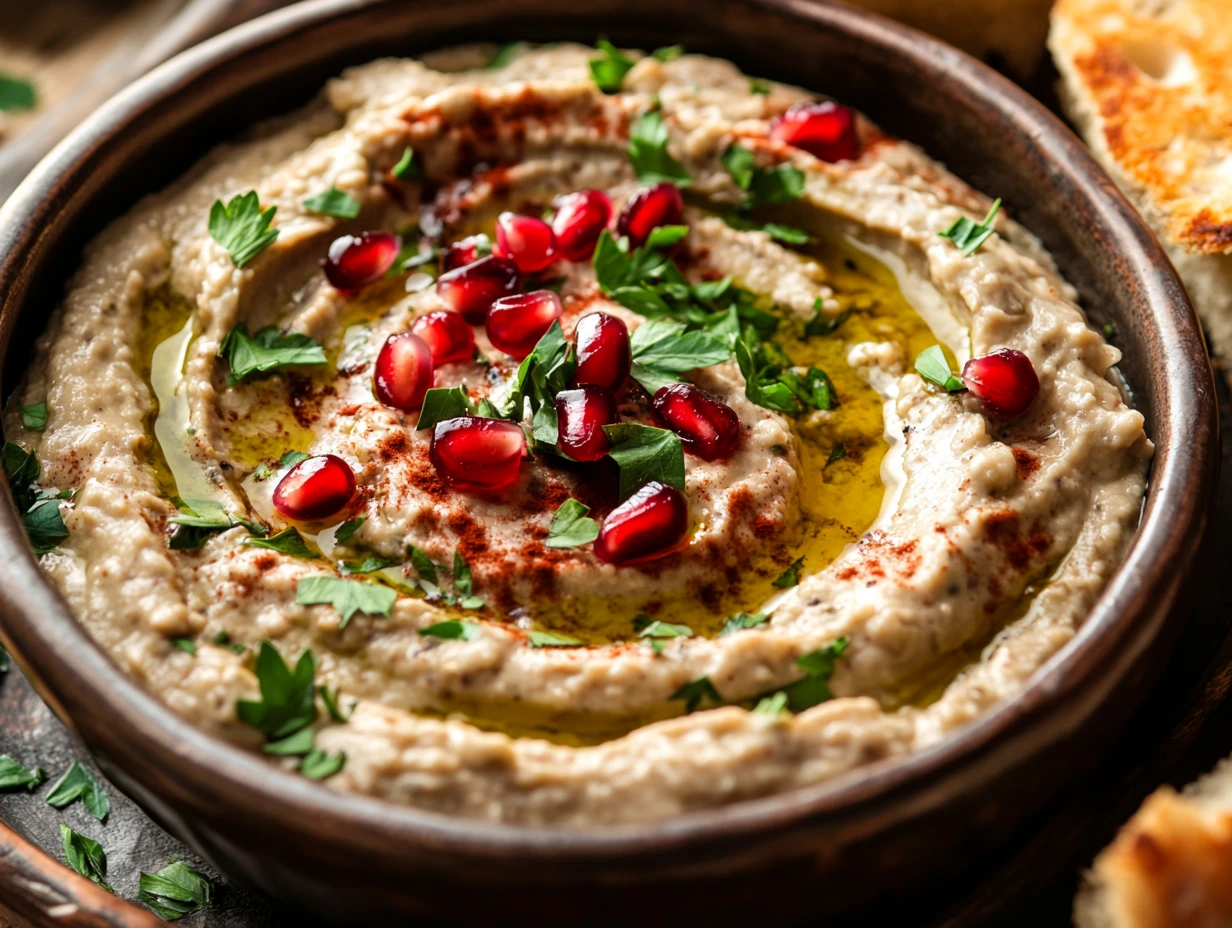
Charred aubergine dips are found across the eastern Mediterranean and Middle East. In Egypt, baba ghanoush is part of the broad mezze tradition and is commonly made with tahini, linking roasted vegetables to Egypt's long sesame culture. Its character depends on real smoke from blackened aubergine skin. The flesh should remain textured rather than completely puréed, with tahini adding body and lemon preventing heaviness. It is served with baladi bread, pickles and salads at family tables and grill restaurants. The dip is both an appetiser and a cooling companion to grilled meat.
Ingredients
- Base
- 80 g tahinistirred before measuring · 80 g tahini, stirred before measuring
- 35 ml lemon juicefresh · 35 ml lemon juice, fresh
- 10 g garlic clovescrushed · 10 g garlic cloves, crushed
- Finish
- 30 ml extra virgin olive oilplus extra to serve · 30 ml extra virgin olive oil, plus extra to serve
- 15 g flat-leaf parsleyfinely chopped · 15 g flat-leaf parsley, finely chopped
- Garnish
- 40 g pomegranate seedsoptional · 40 g pomegranate seeds, optional
- Main
- 650 g aubergines2 large, left whole for charring · 650 g aubergines, 2 large, left whole for charring
- Seasoning
- 4 g ground cumin4 g ground cumin
- to taste to taste fine sea saltfine sea salt
Method
Char the aubergines
Place whole aubergines directly over a gas flame, under a hot grill, or on a barbecue. Turn every few minutes until the skin is blackened and the flesh has collapsed, usually 12 to 18 minutes.
Look for: Texture, aroma and colour should match the dish: tender where simmered, crisp where fried, glossy where sauced and bright where finished with herbs or lemon. Tip: Taste with the normal accompaniment, such as bread, rice, salad or sauce, because Egyptian dishes are designed as complete plates. Avoid: Do not rush the heat stage or rely only on time; check doneness, texture and seasoning before moving on.Steam and peel
Put the charred aubergines in a bowl, cover for 10 minutes, then peel away the burnt skin. Keep a little smoky skin if you like a stronger flavour, but remove any hard black flakes.
Look for: Texture, aroma and colour should match the dish: tender where simmered, crisp where fried, glossy where sauced and bright where finished with herbs or lemon. Tip: Taste with the normal accompaniment, such as bread, rice, salad or sauce, because Egyptian dishes are designed as complete plates. Avoid: Do not rush the heat stage or rely only on time; check doneness, texture and seasoning before moving on.Drain the flesh
Set the soft flesh in a sieve for 10 minutes. This stops the dip becoming watery and concentrates the smoke.
Look for: Texture, aroma and colour should match the dish: tender where simmered, crisp where fried, glossy where sauced and bright where finished with herbs or lemon. Tip: Taste with the normal accompaniment, such as bread, rice, salad or sauce, because Egyptian dishes are designed as complete plates. Avoid: Do not rush the heat stage or rely only on time; check doneness, texture and seasoning before moving on.Mix by hand
Chop the aubergine with a knife, then stir in tahini, lemon, garlic, cumin and salt. Avoid over-blending; Egyptian-style baba ghanoush should have body, not baby-food smoothness.
Look for: Texture, aroma and colour should match the dish: tender where simmered, crisp where fried, glossy where sauced and bright where finished with herbs or lemon. Tip: Taste with the normal accompaniment, such as bread, rice, salad or sauce, because Egyptian dishes are designed as complete plates. Avoid: Do not rush the heat stage or rely only on time; check doneness, texture and seasoning before moving on.Finish and serve
Spoon into a shallow dish, ripple the surface with a spoon, drizzle with olive oil and finish with parsley and pomegranate if using.
Look for: Texture, aroma and colour should match the dish: tender where simmered, crisp where fried, glossy where sauced and bright where finished with herbs or lemon. Tip: Taste with the normal accompaniment, such as bread, rice, salad or sauce, because Egyptian dishes are designed as complete plates. Avoid: Do not rush the heat stage or rely only on time; check doneness, texture and seasoning before moving on.
Nutrition
per serving
Estimated from the upgraded Egyptian recipe for Baba Ghanoush; verify with your preferred nutrition calculator before making formal nutritional claims.