The story
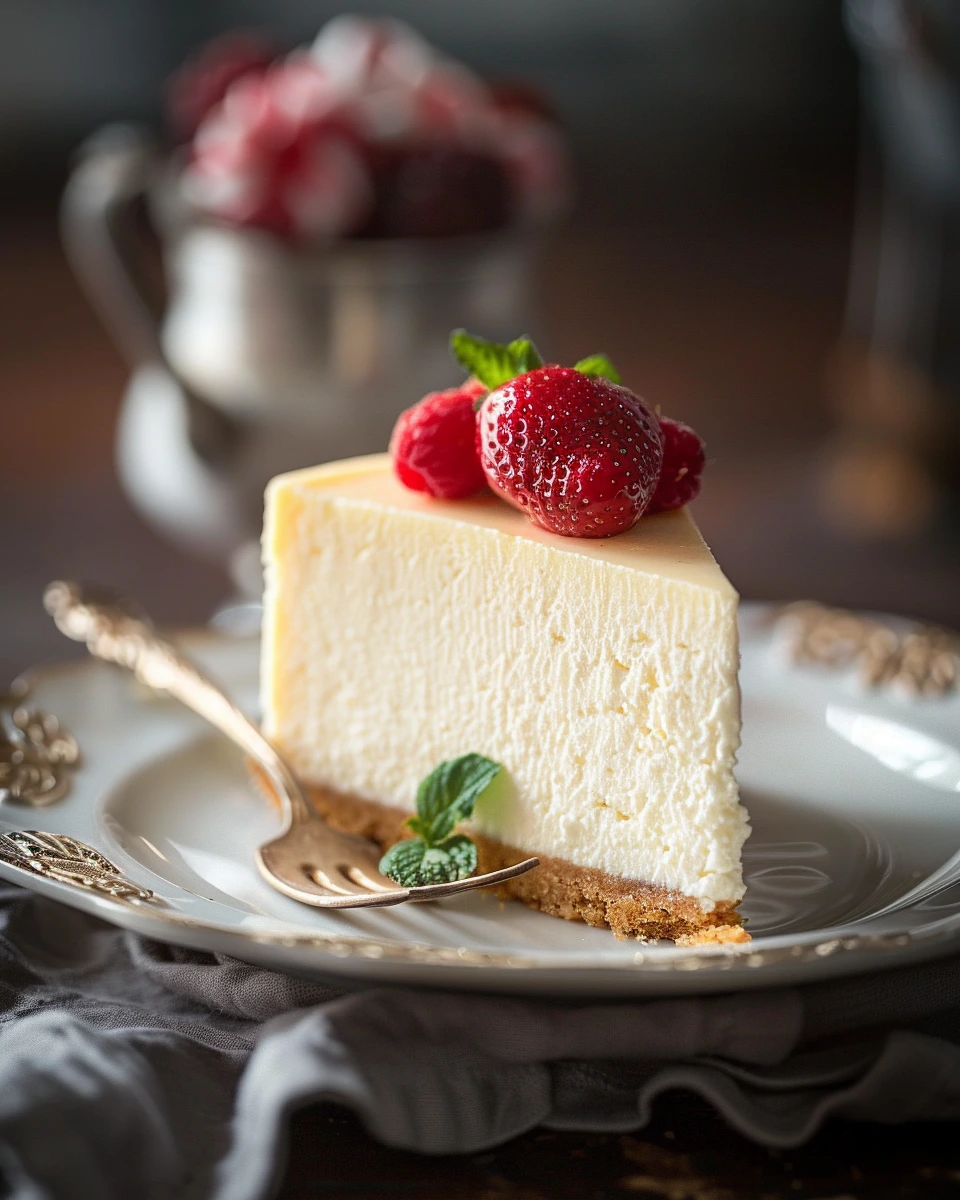
Cheesecakes have ancient and European precedents, but New York cheesecake took shape after commercial cream cheese became available in the United States in the late nineteenth century. Jewish-American bakers and restaurateurs helped establish the dense cream-cheese style in New York during the early twentieth century, with restaurants such as Lindy’s becoming famous for it. It is distinguished by a substantial, smooth filling rather than a light mousse-like texture. Cream cheese provides body and tang, eggs set the cake and sour cream or heavy cream refines the texture. Slow, even baking and gradual cooling reduce cracks and keep the centre creamy. New York cheesecake is a classic delicatessen, steakhouse and bakery dessert, sold by the slice and often served plain. Fruit topping is optional rather than essential. Its generous richness and clean appearance mirror the city’s tradition of large, confidently simple restaurant desserts.
Ingredients
- Base
- 110 gram digestive biscuitscrushed
- Dairy
- 45 gram buttermelted
- 400 gram cream cheeseroom temperature
- 90 gram sour cream
- Protein
- 2 piece piece eggsroom temperature
- Sweetener or fruit
- 110 gram caster sugar
- 1 teaspoon vanilla extract
- 0.5 teaspoon lemon zest
Method
Make the base
Press biscuit crumbs and melted butter into a springform tin and bake at 175 C / 350 F for 10 minutes.
Look for: The base should be lightly toasted and compact. Tip: A flat-bottomed glass makes an even base. Avoid: Do not leave loose crumbs around the edge.Mix the filling
Beat cream cheese until smooth, then add sugar, eggs one at a time, sour cream, vanilla and lemon zest.
Look for: The batter should be smooth with no lumps. Tip: Room-temperature ingredients are crucial. Avoid: Do not beat hard after adding eggs; too much air causes cracks.Bake low
Bake at 160 C / 320 F for 60-70 minutes until edges are set and centre wobbles.
Look for: The centre should tremble like set custard. Tip: A low oven gives the dense New York texture. Avoid: Do not bake until completely firm.Cool slowly
Turn oven off, crack the door and cool for 1 hour, then chill overnight.
Look for: The top should settle without dramatic cracking. Tip: Slow cooling is the best crack prevention. Avoid: Do not move straight from hot oven to fridge.
Nutrition
per serving
Estimated from the upgraded serves-2 metric ingredient list; verify with a calculator before making health claims.