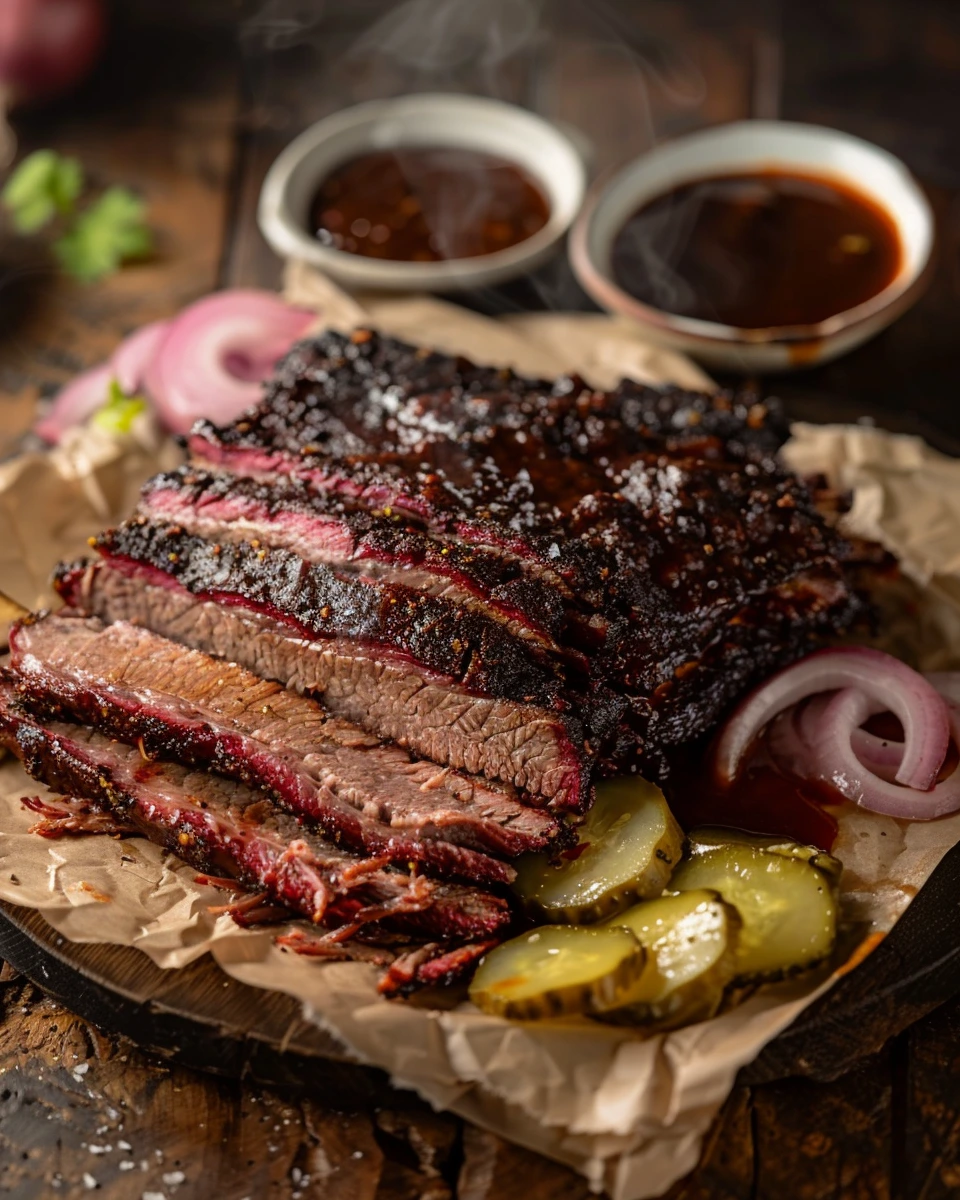
The story
Central Texas brisket developed from the meeting of cattle ranching, commercial meat markets and the smoking traditions of German and Czech immigrants. Butchers cooked tougher unsold cuts over wood and sold them by weight, creating the market-style barbecue still associated with towns such as Lockhart and Taylor. Brisket became the defining cut of Texas barbecue during the twentieth century. Its reputation rests on three textures: dark seasoned bark, rendered fat and meat tender enough to bend without crumbling. Smoke should season rather than overwhelm the beef. Many Central Texas pitmasters use little more than salt, coarse black pepper, oak smoke and patient temperature control. Brisket is served sliced on butcher paper with pickles, onions, white bread and simple sides. Long queues at barbecue restaurants and overnight tending of pits have become part of the ritual. Different Texas regions favour different woods, sauces and cuts, but brisket remains a central symbol of the state’s food identity.
Ingredients
- Other
- as needed Oak wood smoke
- as needed Pickles and white bread
- Protein
- 1.5 gram beef brisket
- Seasoning
- 1.5 tablespoon salt
- 1.5 tablespoon black pepper
- 0.5 tablespoon paprikaoptionaloptional
Method
Trim and season
Trim hard fat from the brisket but leave about 6 mm of fat cap. Season heavily with equal parts coarse salt and cracked black pepper.
Look for: The meat should be evenly coated with a coarse black crust of seasoning. Tip: Slice off thin corners so they do not burn before the centre cooks. Avoid: Do not trim all the fat away; it protects the meat during the long smoke.Smoke low and steady
Set the smoker to 110-120 C / 230-250 F. Smoke fat-side up or towards the heat until a dark bark forms, usually 5-7 hours.
Look for: The bark should be dark, dry and firmly set. Tip: Post oak is classic for Central Texas brisket. Avoid: Do not keep opening the smoker; temperature swings slow the cook.Wrap and finish
Wrap in butcher paper when the bark is set. Continue cooking until the thickest part feels probe-tender, around 93-96 C internal.
Look for: A probe should slide in with little resistance. Tip: Paper protects the bark better than foil. Avoid: Do not cook only by time; brisket is done by feel.Rest and slice
Rest wrapped for at least 1 hour. Slice flat pencil-thick across the grain and point slightly thicker.
Look for: Slices should bend without falling apart. Tip: Turn the brisket as the grain changes between flat and point. Avoid: Do not slice with the grain or the meat will seem tough.