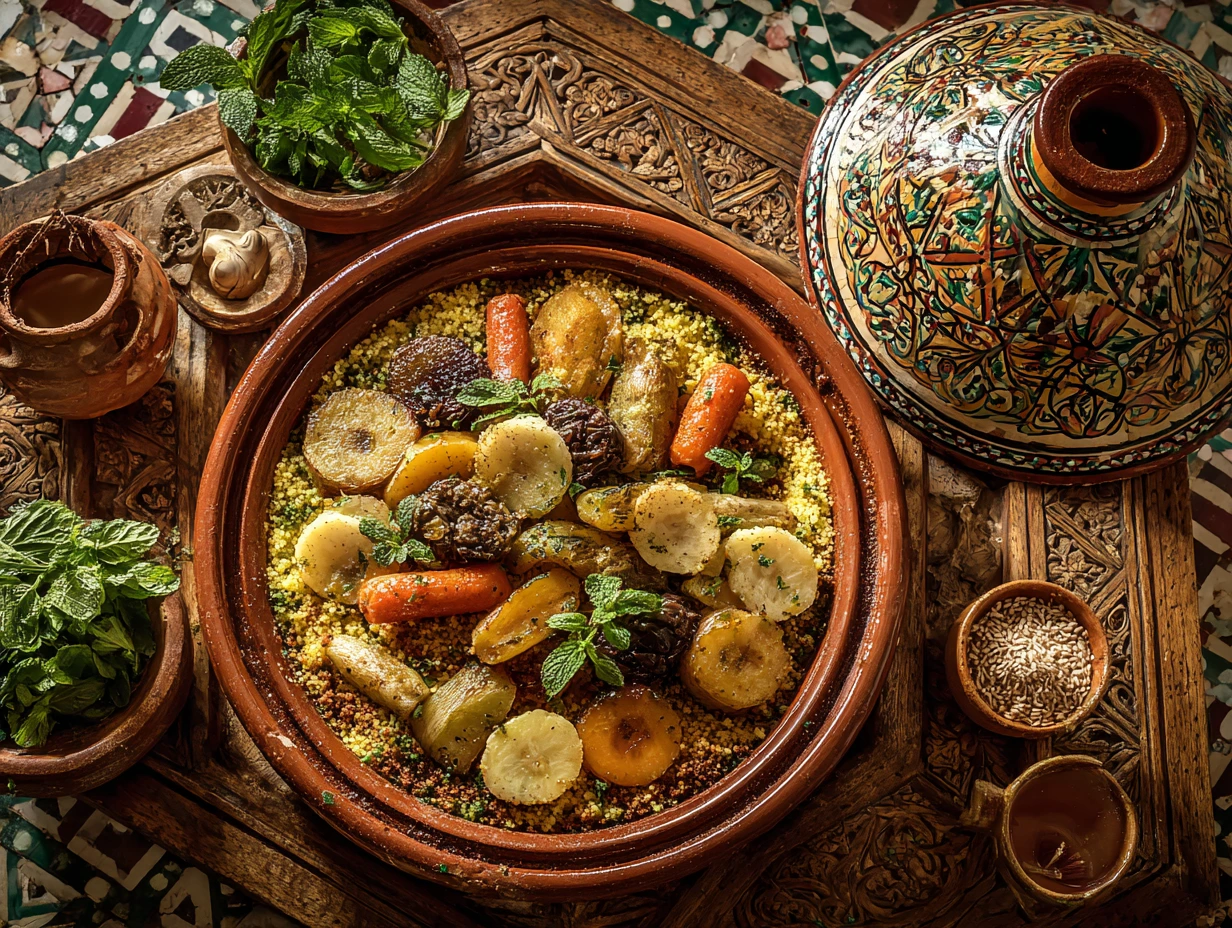
The story
Associated with northern Moroccan sweet-savoury couscous traditions, Couscous Tfaya developed through practical cooking, local produce and the social occasion on which it was served. Its defining character comes from steamed couscous topped with chicken, caramelised onions, raisins, cinnamon and chickpeas. Success depends on controlling seasoning, moisture and texture so the principal ingredient remains clear. The dish remains visible through family lunches, Friday couscous, Ramadan tables, weddings and ceremonial hospitality. Those occasions have kept its techniques and expected accompaniments familiar across generations.
Ingredients
- Main
- 83.33 gram couscous500g couscous
- 200.0 gram chicken pieces1.2kg chicken pieces
- 0.67 piece onions, thinly sliced4 onions, thinly sliced
- 33.33 gram cooked chickpeas200g cooked chickpeas
- 20.0 gram raisins120g raisins
- 0.83 teaspoon ginger1 tsp ginger
- 0.83 teaspoon turmeric1 tsp turmeric
- 0.83 teaspoon cinnamon1 tsp cinnamon
- pinch saffronpinch saffron
- 6.67 gram butter40g butter
- 7.5 millilitre olive oil45ml olive oil
- 3.33 gram honey20g honey
- salt and peppersalt and pepper
Method
Steam the couscous
Moisten couscous with water and oil, rub grains apart and steam for 20 minutes.
Look for: The dish should look traditional, properly cooked and balanced, with sauce reduced rather than watery. Tip: Use a tagine, heavy casserole, couscoussier, griddle or wide pan where noted, and adjust salt, lemon, spice and texture at the end. Avoid: Avoid rushing the heat; Moroccan cooking depends on patient reduction, gentle braising, careful steaming and final tasting.Cook the chicken
Cook chicken with half the onions, chickpeas, ginger, turmeric, saffron, salt, pepper and water for 50–60 minutes.
Look for: The dish should look traditional, properly cooked and balanced, with sauce reduced rather than watery. Tip: Use a tagine, heavy casserole, couscoussier, griddle or wide pan where noted, and adjust salt, lemon, spice and texture at the end. Avoid: Avoid rushing the heat; Moroccan cooking depends on patient reduction, gentle braising, careful steaming and final tasting.Make tfaya
Cook remaining onions slowly with butter, raisins, cinnamon and honey for 30–40 minutes until soft and caramel-coloured.
Look for: The dish should look traditional, properly cooked and balanced, with sauce reduced rather than watery. Tip: Use a tagine, heavy casserole, couscoussier, griddle or wide pan where noted, and adjust salt, lemon, spice and texture at the end. Avoid: Avoid rushing the heat; Moroccan cooking depends on patient reduction, gentle braising, careful steaming and final tasting.Steam again
Steam couscous twice more, fluffing with water and a little butter between steaming.
Look for: The dish should look traditional, properly cooked and balanced, with sauce reduced rather than watery. Tip: Use a tagine, heavy casserole, couscoussier, griddle or wide pan where noted, and adjust salt, lemon, spice and texture at the end. Avoid: Avoid rushing the heat; Moroccan cooking depends on patient reduction, gentle braising, careful steaming and final tasting.Serve
Serve couscous mounded, ladle broth around, arrange chicken and chickpeas, then crown with tfaya.
Look for: The dish should look traditional, properly cooked and balanced, with sauce reduced rather than watery. Tip: Use a tagine, heavy casserole, couscoussier, griddle or wide pan where noted, and adjust salt, lemon, spice and texture at the end. Avoid: Avoid rushing the heat; Moroccan cooking depends on patient reduction, gentle braising, careful steaming and final tasting.
Nutrition
per serving
Estimated from the structured traditional Moroccan ingredient list. Validate before making formal health claims.