The story
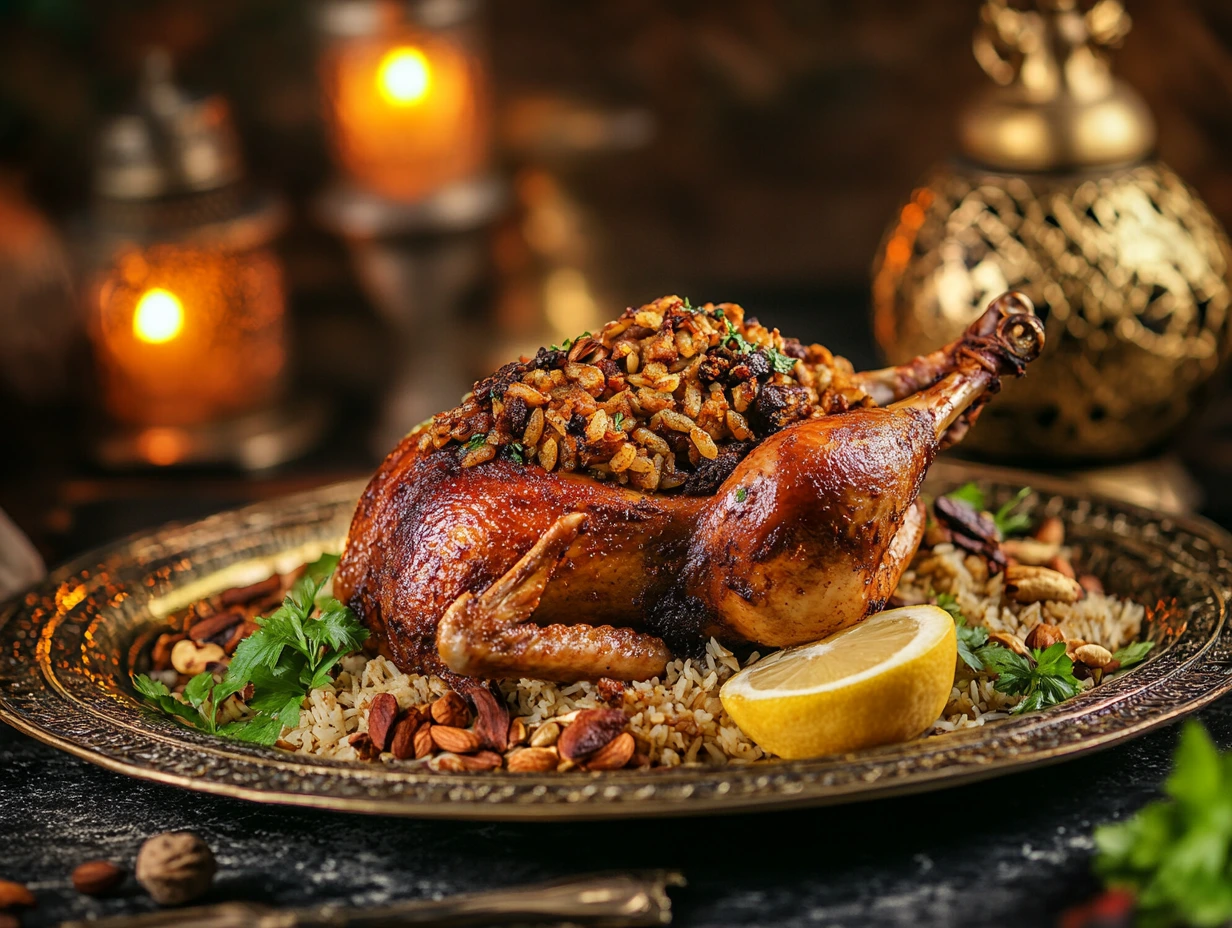
Pigeon has been raised in Egyptian dovecotes for centuries and became a prestigious yet deeply traditional food. Stuffing the birds with rice or cracked green wheat turns a small bird into a complete, celebratory dish. It is prized for rich dark meat and grain that absorbs the pigeon juices from within. Careful stuffing is essential: too much filling expands and splits the bird, while proper roasting leaves crisp skin and moist meat. Hamam mahshi is served at weddings, feasts and specialist restaurants, particularly in rural areas and old-city dining rooms. Offering pigeon is a sign of generosity.
Ingredients
- Birds
- 2 piece pigeons or small poussincleaned; poussin is easier to source · 2 piece pigeons or small poussin, cleaned; poussin is easier to source
- Finish
- 20 ml lemon juice20 ml lemon juice
- Seasoning
- 2 g ground cinnamon2 g ground cinnamon
- 3 g ground allspice3 g ground allspice
- 2 g black pepper2 g black pepper
- 9 g fine sea salt9 g fine sea salt
- Stuffing
- 180 g freekehrinsed · 180 g freekeh, rinsed
- 140 g onionfinely diced · 140 g onion, finely diced
- 45 g ghee45 g ghee
- 500 ml chicken stockhot · 500 ml chicken stock, hot
Method
Prepare the stuffing
Rinse freekeh well. Cook onion in 20 g ghee for 6 minutes until soft, then stir in freekeh, cinnamon, allspice, pepper and salt.
Look for: Texture, aroma and colour should match the dish: tender where simmered, crisp where fried, glossy where sauced and bright where finished with herbs or lemon. Tip: Taste with the normal accompaniment, such as bread, rice, salad or sauce, because Egyptian dishes are designed as complete plates. Avoid: Do not rush the heat stage or rely only on time; check doneness, texture and seasoning before moving on.Part-cook the freekeh
Add 300 ml hot stock and simmer for 12 minutes until partly tender but not fully cooked. Cool the stuffing before filling the birds.
Look for: Texture, aroma and colour should match the dish: tender where simmered, crisp where fried, glossy where sauced and bright where finished with herbs or lemon. Tip: Taste with the normal accompaniment, such as bread, rice, salad or sauce, because Egyptian dishes are designed as complete plates. Avoid: Do not rush the heat stage or rely only on time; check doneness, texture and seasoning before moving on.Stuff loosely
Pat the birds dry. Fill the cavities only three quarters full because freekeh expands. Tie the legs with kitchen string.
Look for: Texture, aroma and colour should match the dish: tender where simmered, crisp where fried, glossy where sauced and bright where finished with herbs or lemon. Tip: Taste with the normal accompaniment, such as bread, rice, salad or sauce, because Egyptian dishes are designed as complete plates. Avoid: Do not rush the heat stage or rely only on time; check doneness, texture and seasoning before moving on.Poach gently
Lower the stuffed birds into simmering stock and poach gently for 25 to 30 minutes. Do not boil hard or the skin may tear.
Look for: Texture, aroma and colour should match the dish: tender where simmered, crisp where fried, glossy where sauced and bright where finished with herbs or lemon. Tip: Taste with the normal accompaniment, such as bread, rice, salad or sauce, because Egyptian dishes are designed as complete plates. Avoid: Do not rush the heat stage or rely only on time; check doneness, texture and seasoning before moving on.Brown the outside
Brush with remaining ghee and roast at 220°C / 428°F for 12 to 15 minutes, or pan-brown carefully, until the skin is golden.
Look for: Texture, aroma and colour should match the dish: tender where simmered, crisp where fried, glossy where sauced and bright where finished with herbs or lemon. Tip: Taste with the normal accompaniment, such as bread, rice, salad or sauce, because Egyptian dishes are designed as complete plates. Avoid: Do not rush the heat stage or rely only on time; check doneness, texture and seasoning before moving on.Rest and serve
Rest for 8 minutes before serving with lemon and salad. The stuffing should be hot, moist and separate, not packed hard.
Look for: Texture, aroma and colour should match the dish: tender where simmered, crisp where fried, glossy where sauced and bright where finished with herbs or lemon. Tip: Taste with the normal accompaniment, such as bread, rice, salad or sauce, because Egyptian dishes are designed as complete plates. Avoid: Do not rush the heat stage or rely only on time; check doneness, texture and seasoning before moving on.
Nutrition
per serving
Estimated from the upgraded Egyptian recipe for Hamam Mahshi; verify with your preferred nutrition calculator before making formal nutritional claims.