The story
Kimchi Jjigae is a Korean main with a clear sense of place. Jjigae is a central category of Korean home cooking, and kimchi jjigae is particularly tied to the practical use of older, sour kimchi that has fermented beyond the ideal point for eating raw. The recipe below keeps the defining ingredients and technique intact while giving practical metric quantities and enough detail for a home cook to judge texture, seasoning and doneness rather than simply follow a timer.
Ingredients
- 450 g well-fermented napa cabbage kimchicut into bite-sized pieces, juice reserved
- 300 g pork bellycut into 2 cm pieces
- 300 g firm tofusliced
- 120 g onionsliced
- 60 g Spring onionssliced
- 2 tsp gochugaru
- 20 g gochujang
- 15 ml soy sauce
- 10 g Garlicgrated
- 800 ml anchovy-kelp stock
- 120 ml kimchi juice
Method
Put the pork belly in a heavy
Put the pork belly in a heavy saucepan over medium heat and cook for 4–5 minutes until some fat renders and the edges begin to colour.
Look for: some fat renders and the edges begin to colour Tip: If your kimchi is not sour enough, add a teaspoon of rice vinegar at the end rather than increasing chilli paste. Avoid: Using fresh mild kimchi makes a weak stew; adding too much gochujang can make it sweet and pasty; seasoning before tasting the kimchi can oversalt the pot.Add the kimchi and onion
Add the kimchi and onion. Fry in the pork fat for another 5 minutes; cooking the kimchi before adding stock rounds out its acidity and deepens the stew.
Stir in gochugaru, gochujang, soy sauce and
Stir in gochugaru, gochujang, soy sauce and garlic, then immediately add the stock and reserved kimchi juice so the chilli does not scorch.
Bring to a boil, then lower to
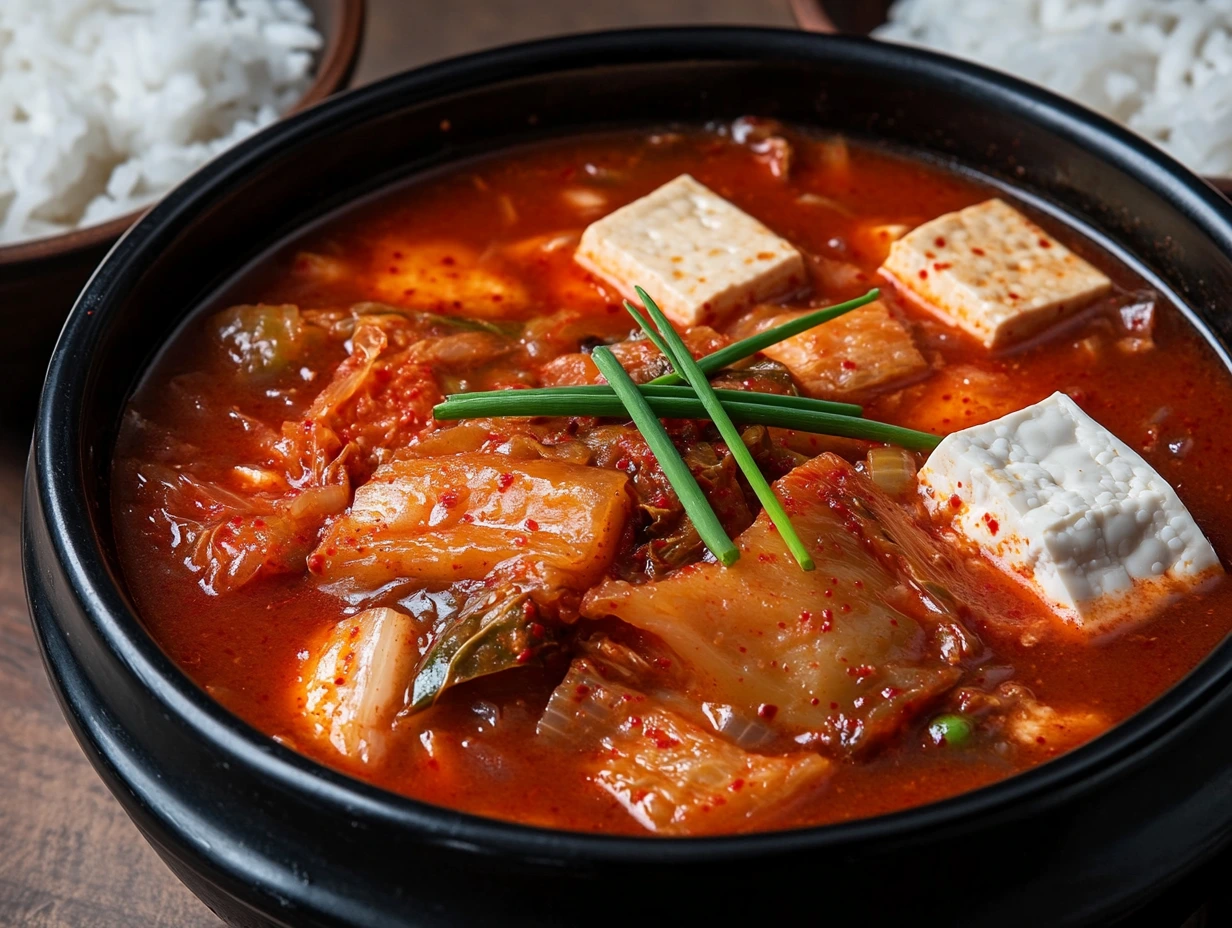
Bring to a boil, then lower to a steady simmer and cook uncovered for 20 minutes. The broth should turn orange-red and the kimchi stems should become tender.
Lay the tofu slices over the top
Lay the tofu slices over the top and simmer for another 7–8 minutes without aggressive stirring, which can break the tofu into the broth.
Taste before adding salt
Taste before adding salt; mature kimchi varies greatly in salinity. Add the spring onions, simmer for 1 minute and serve bubbling hot with plain rice.
Look for: The kimchi is tender, pork easily bites through and the broth tastes integrated rather than like separate chilli paste and water.
Nutrition
per serving
Estimated from the listed ingredients and default serving size. Actual values vary with brands, trimming, absorption and cooking losses.