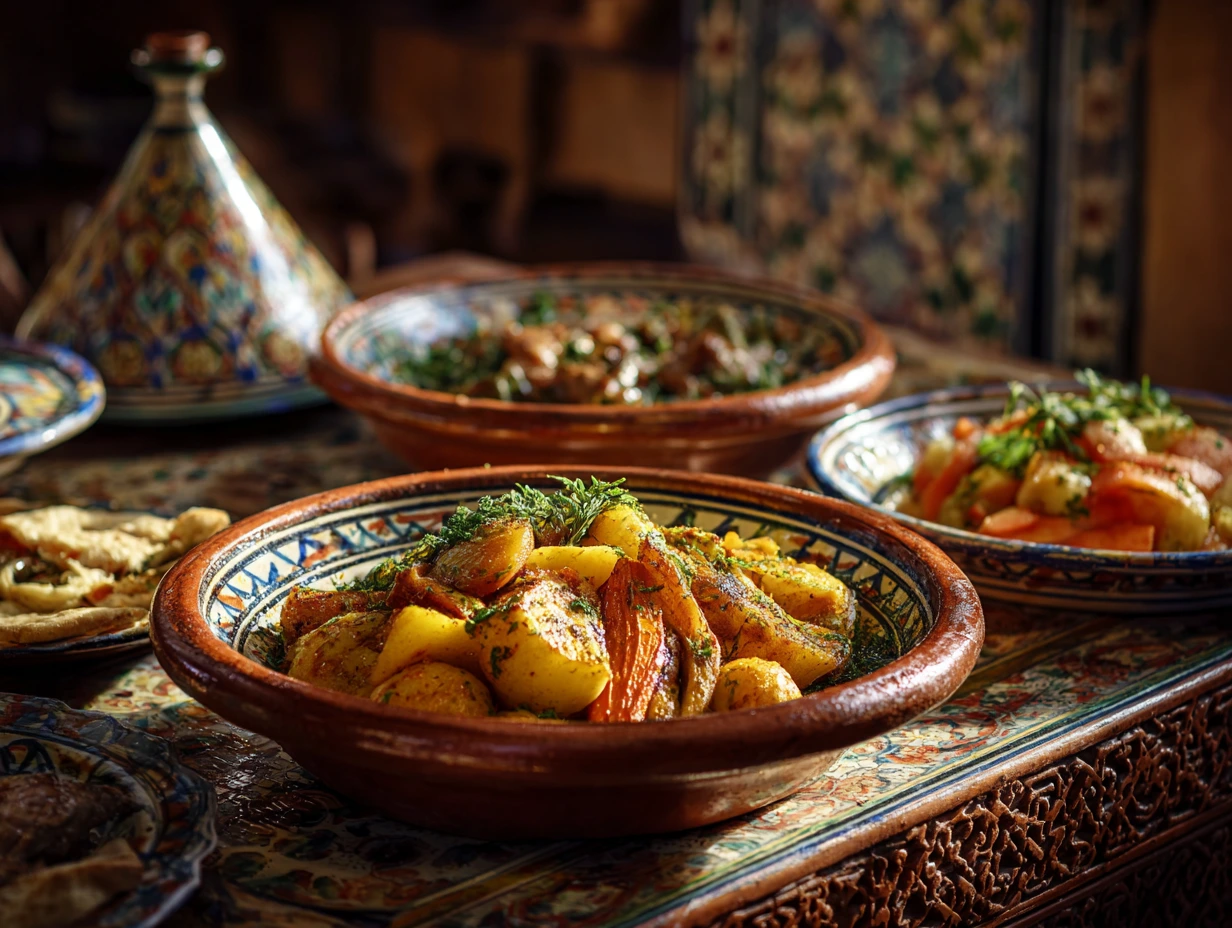
The story
Associated with ceremonial whole-lamb roasting across Morocco and the wider Maghreb, Mechoui developed through practical cooking, local produce and the social occasion on which it was served. Its defining character comes from slow-roasted Moroccan lamb shoulder rubbed with smen or butter, cumin, garlic and salt until meltingly tender. Success depends on controlling seasoning, moisture and texture so the principal ingredient remains clear. The dish remains visible through family lunches, Friday couscous, Ramadan tables, weddings and ceremonial hospitality. Those occasions have kept its techniques and expected accompaniments familiar across generations.
Ingredients
- Main
- 312.5 gram lamb shoulder on the bone2.5kg lamb shoulder on the bone
- 10.0 gram smen or butter80g smen or butter
- 0.5 piece arlic cloves, crushed4 garlic cloves, crushed
- 1.25 teaspoon ground cumin2 tsp ground cumin
- 0.62 teaspoon paprika1 tsp paprika
- 0.62 teaspoon salt1 tsp salt
- 0.62 teaspoon black pepper1 tsp black pepper
- 31.25 millilitre water250ml water
Method
Prepare the lamb
Trim excess surface fat but leave enough to baste the meat. Score deep slashes into the lamb shoulder.
Look for: The dish should look traditional, properly cooked and balanced, with sauce reduced rather than watery. Tip: Use a tagine, heavy casserole, couscoussier, griddle or wide pan where noted, and adjust salt, lemon, spice and texture at the end. Avoid: Avoid rushing the heat; Moroccan cooking depends on patient reduction, gentle braising, careful steaming and final tasting.Rub with spice butter
Mix smen or butter with garlic, cumin, paprika, salt and pepper. Rub all over the lamb and into the cuts.
Look for: The dish should look traditional, properly cooked and balanced, with sauce reduced rather than watery. Tip: Use a tagine, heavy casserole, couscoussier, griddle or wide pan where noted, and adjust salt, lemon, spice and texture at the end. Avoid: Avoid rushing the heat; Moroccan cooking depends on patient reduction, gentle braising, careful steaming and final tasting.Slow roast
Place in a roasting tray with water. Cover tightly with foil and roast at 150°C for 3.5 hours.
Look for: The dish should look traditional, properly cooked and balanced, with sauce reduced rather than watery. Tip: Use a tagine, heavy casserole, couscoussier, griddle or wide pan where noted, and adjust salt, lemon, spice and texture at the end. Avoid: Avoid rushing the heat; Moroccan cooking depends on patient reduction, gentle braising, careful steaming and final tasting.Brown the outside
Uncover, baste with pan juices and raise oven to 220°C for 20–30 minutes until the outside is browned.
Look for: The dish should look traditional, properly cooked and balanced, with sauce reduced rather than watery. Tip: Use a tagine, heavy casserole, couscoussier, griddle or wide pan where noted, and adjust salt, lemon, spice and texture at the end. Avoid: Avoid rushing the heat; Moroccan cooking depends on patient reduction, gentle braising, careful steaming and final tasting.Rest and serve
Rest 20 minutes. Serve in large pieces with cumin and salt for dipping.
Look for: The dish should look traditional, properly cooked and balanced, with sauce reduced rather than watery. Tip: Use a tagine, heavy casserole, couscoussier, griddle or wide pan where noted, and adjust salt, lemon, spice and texture at the end. Avoid: Avoid rushing the heat; Moroccan cooking depends on patient reduction, gentle braising, careful steaming and final tasting.
Nutrition
per serving
Estimated from the structured traditional Moroccan ingredient list. Validate before making formal health claims.