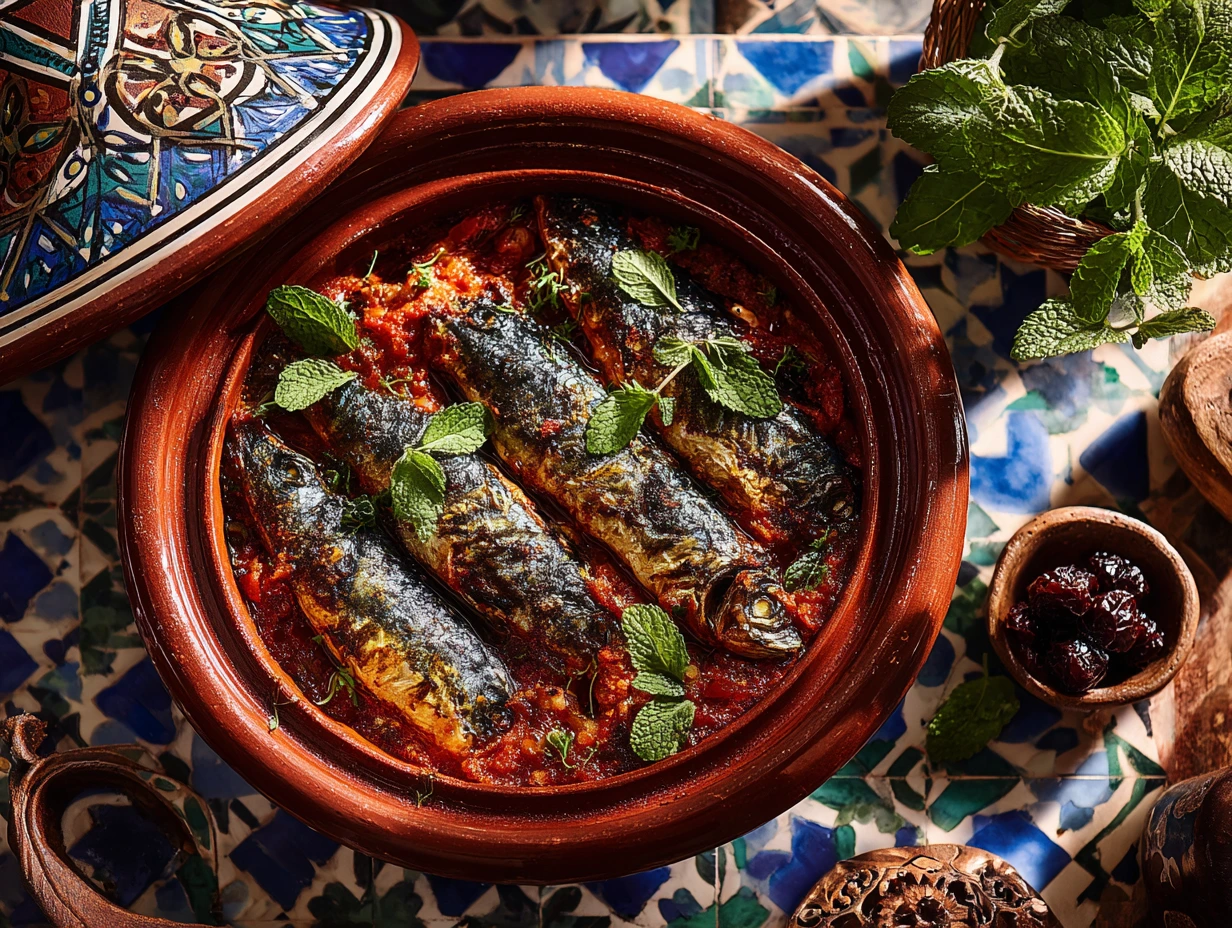
The story
Moroccan Stuffed Sardines emerged from Atlantic coastal cooking, especially around Casablanca, Safi and Essaouira. The recipe has endured because its method gives familiar ingredients a clear identity that survives from home cooking to modern restaurants. What makes the dish memorable is butterflied sardines filled with chermoula, lightly floured and fried until crisp. Careful preparation preserves the contrast between its rich, fresh, crisp, tender or aromatic elements. Its cultural place is strongest in family lunches, Friday couscous, Ramadan tables, weddings and ceremonial hospitality. Serving it in that setting connects the recipe to everyday hospitality, celebration and regional identity.
Ingredients
- Main
- 4.0 piece sardines, butterflied16 sardines, butterflied
- 7.5 gram coriander30g coriander
- 5.0 gram parsley20g parsley
- 1.0 piece arlic cloves4 garlic cloves
- 1.25 teaspoon cumin1 tsp cumin
- 1.25 teaspoon paprika1 tsp paprika
- /2 tsp chilli1/2 tsp chilli
- 7.5 millilitre lemon juice30ml lemon juice
- 15.0 gram flour60g flour
- oil for fryingoil for frying
- salt and peppersalt and pepper
Method
Prepare sardines
Ask for sardines butterflied or remove heads and bones yourself, keeping two fillets joined if possible.
Look for: The dish should look traditional, properly cooked and balanced, with sauce reduced rather than watery. Tip: Use a tagine, heavy casserole, couscoussier, griddle or wide pan where noted, and adjust salt, lemon, spice and texture at the end. Avoid: Avoid rushing the heat; Moroccan cooking depends on patient reduction, gentle braising, careful steaming and final tasting.Make chermoula
Chop herbs and garlic, then mix with cumin, paprika, chilli, lemon juice, salt and pepper.
Look for: The dish should look traditional, properly cooked and balanced, with sauce reduced rather than watery. Tip: Use a tagine, heavy casserole, couscoussier, griddle or wide pan where noted, and adjust salt, lemon, spice and texture at the end. Avoid: Avoid rushing the heat; Moroccan cooking depends on patient reduction, gentle braising, careful steaming and final tasting.Stuff
Spread chermoula on one sardine and sandwich with another, skin side out.
Look for: The dish should look traditional, properly cooked and balanced, with sauce reduced rather than watery. Tip: Use a tagine, heavy casserole, couscoussier, griddle or wide pan where noted, and adjust salt, lemon, spice and texture at the end. Avoid: Avoid rushing the heat; Moroccan cooking depends on patient reduction, gentle braising, careful steaming and final tasting.Flour
Dust lightly in flour, shaking off excess so the coating stays thin.
Look for: The dish should look traditional, properly cooked and balanced, with sauce reduced rather than watery. Tip: Use a tagine, heavy casserole, couscoussier, griddle or wide pan where noted, and adjust salt, lemon, spice and texture at the end. Avoid: Avoid rushing the heat; Moroccan cooking depends on patient reduction, gentle braising, careful steaming and final tasting.Fry
Shallow-fry in hot oil for 2–3 minutes per side until crisp and cooked. Drain and serve with lemon.
Look for: The dish should look traditional, properly cooked and balanced, with sauce reduced rather than watery. Tip: Use a tagine, heavy casserole, couscoussier, griddle or wide pan where noted, and adjust salt, lemon, spice and texture at the end. Avoid: Avoid rushing the heat; Moroccan cooking depends on patient reduction, gentle braising, careful steaming and final tasting.
Nutrition
per serving
Estimated from the structured traditional Moroccan ingredient list. Validate before making formal health claims.