The story
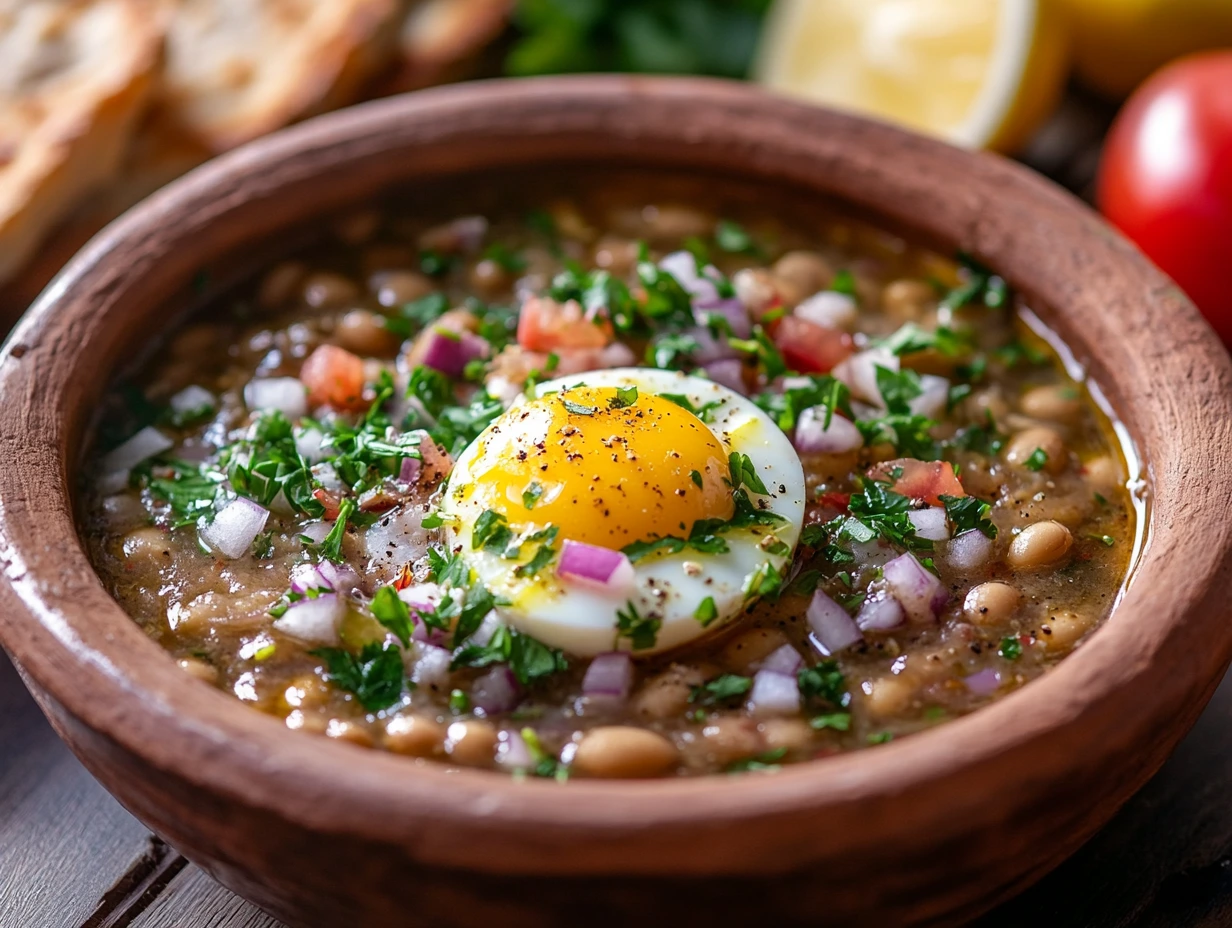
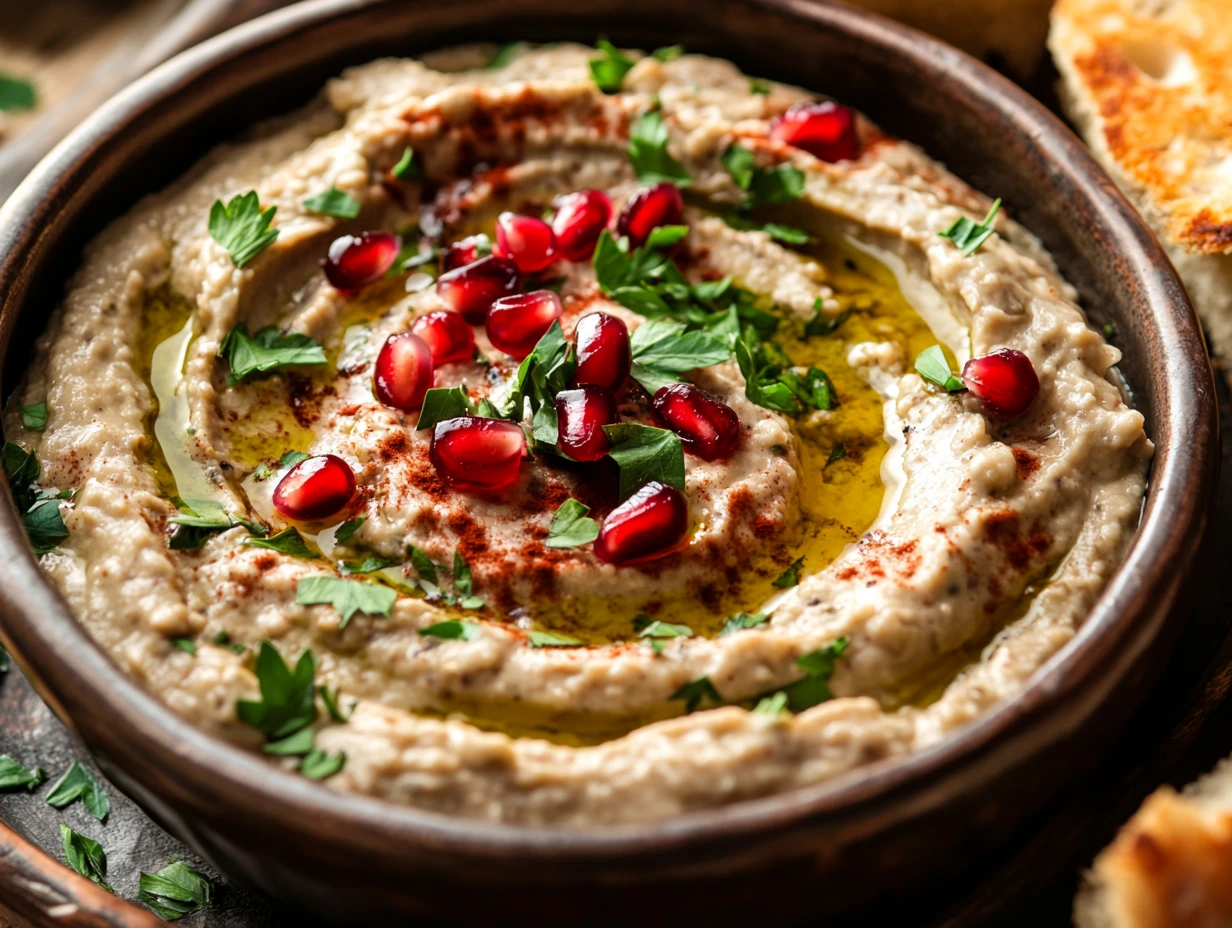
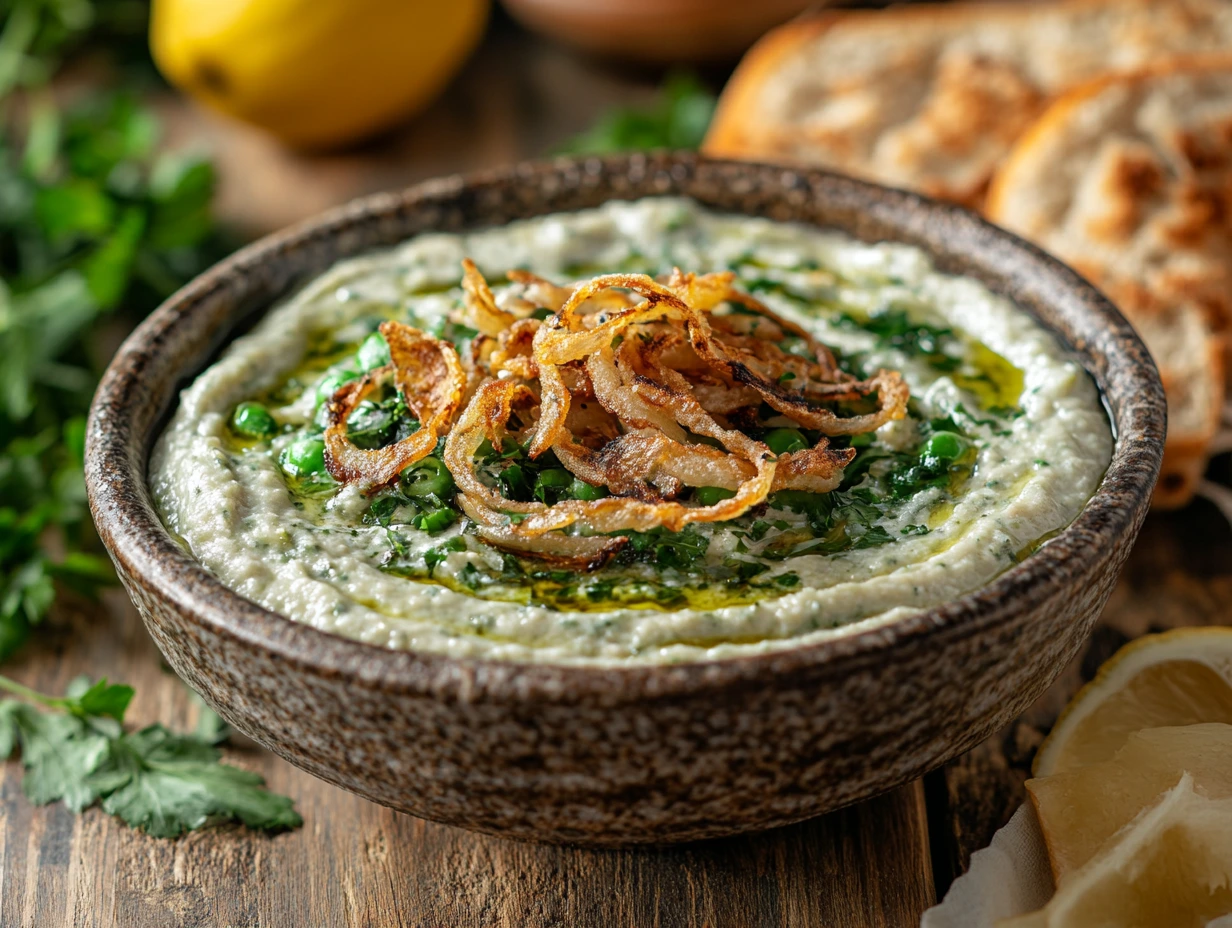
Besara is an old Egyptian preparation rooted in the country's dependence on fava beans. It is especially associated with rural and Coptic cooking, where an inexpensive, meat-free dish could provide substantial nourishment. Unlike ful, besara is blended smooth with abundant herbs, producing a green colour and fresh aroma. Fried onions on top add sweetness and crispness to the dense purée. It is eaten with bread as a breakfast, light meal or fasting dish. Its modest ingredients make it an important expression of everyday Egyptian food rather than restaurant luxury.
Ingredients
- Base
- 180 g onionsliced · 180 g onion, sliced
- 18 g garlic clovescrushed · 18 g garlic cloves, crushed
- Cooking
- 45 ml olive oil45 ml olive oil
- Herbs
- 45 g fresh corianderchopped · 45 g fresh coriander, chopped
- 35 g fresh parsleychopped · 35 g fresh parsley, chopped
- 25 g fresh dillchopped · 25 g fresh dill, chopped
- Liquid
- 850 ml vegetable stock850 ml vegetable stock
- Main
- 260 g dried split fava beanssoaked for 6 hours · 260 g dried split fava beans, soaked for 6 hours
- Seasoning
- 7 g ground cumin7 g ground cumin
- 9 g fine sea salt9 g fine sea salt
Method
Start the beans
Drain soaked split fava beans and put them in a saucepan with stock. Simmer gently for 35 to 45 minutes until very soft.
Look for: Texture, aroma and colour should match the dish: tender where simmered, crisp where fried, glossy where sauced and bright where finished with herbs or lemon. Tip: Taste with the normal accompaniment, such as bread, rice, salad or sauce, because Egyptian dishes are designed as complete plates. Avoid: Do not rush the heat stage or rely only on time; check doneness, texture and seasoning before moving on.Cook the aromatics
In a separate pan, cook onion in olive oil for 12 minutes until soft and golden. Add garlic and cumin for 1 minute.
Look for: Texture, aroma and colour should match the dish: tender where simmered, crisp where fried, glossy where sauced and bright where finished with herbs or lemon. Tip: Taste with the normal accompaniment, such as bread, rice, salad or sauce, because Egyptian dishes are designed as complete plates. Avoid: Do not rush the heat stage or rely only on time; check doneness, texture and seasoning before moving on.Add herbs
Stir the herbs into the beans with the onion mixture. Cook for 5 minutes only so the herbs stay green and fragrant.
Look for: Texture, aroma and colour should match the dish: tender where simmered, crisp where fried, glossy where sauced and bright where finished with herbs or lemon. Tip: Taste with the normal accompaniment, such as bread, rice, salad or sauce, because Egyptian dishes are designed as complete plates. Avoid: Do not rush the heat stage or rely only on time; check doneness, texture and seasoning before moving on.Blend the besara
Blend until thick and smooth, adding small splashes of hot water if needed. It should be thicker than soup but softer than hummus.
Look for: Texture, aroma and colour should match the dish: tender where simmered, crisp where fried, glossy where sauced and bright where finished with herbs or lemon. Tip: Taste with the normal accompaniment, such as bread, rice, salad or sauce, because Egyptian dishes are designed as complete plates. Avoid: Do not rush the heat stage or rely only on time; check doneness, texture and seasoning before moving on.Fry the topping
For a classic finish, fry extra sliced onion in oil until crisp and brown. Drain well.
Look for: Texture, aroma and colour should match the dish: tender where simmered, crisp where fried, glossy where sauced and bright where finished with herbs or lemon. Tip: Taste with the normal accompaniment, such as bread, rice, salad or sauce, because Egyptian dishes are designed as complete plates. Avoid: Do not rush the heat stage or rely only on time; check doneness, texture and seasoning before moving on.Serve warm or room temperature
Spoon into bowls, drizzle with oil and top with crisp onions. Serve with bread, radishes or salad.
Look for: Texture, aroma and colour should match the dish: tender where simmered, crisp where fried, glossy where sauced and bright where finished with herbs or lemon. Tip: Taste with the normal accompaniment, such as bread, rice, salad or sauce, because Egyptian dishes are designed as complete plates. Avoid: Do not rush the heat stage or rely only on time; check doneness, texture and seasoning before moving on.
Nutrition
per serving
Estimated from the upgraded Egyptian recipe for Besara; verify with your preferred nutrition calculator before making formal nutritional claims.