The story
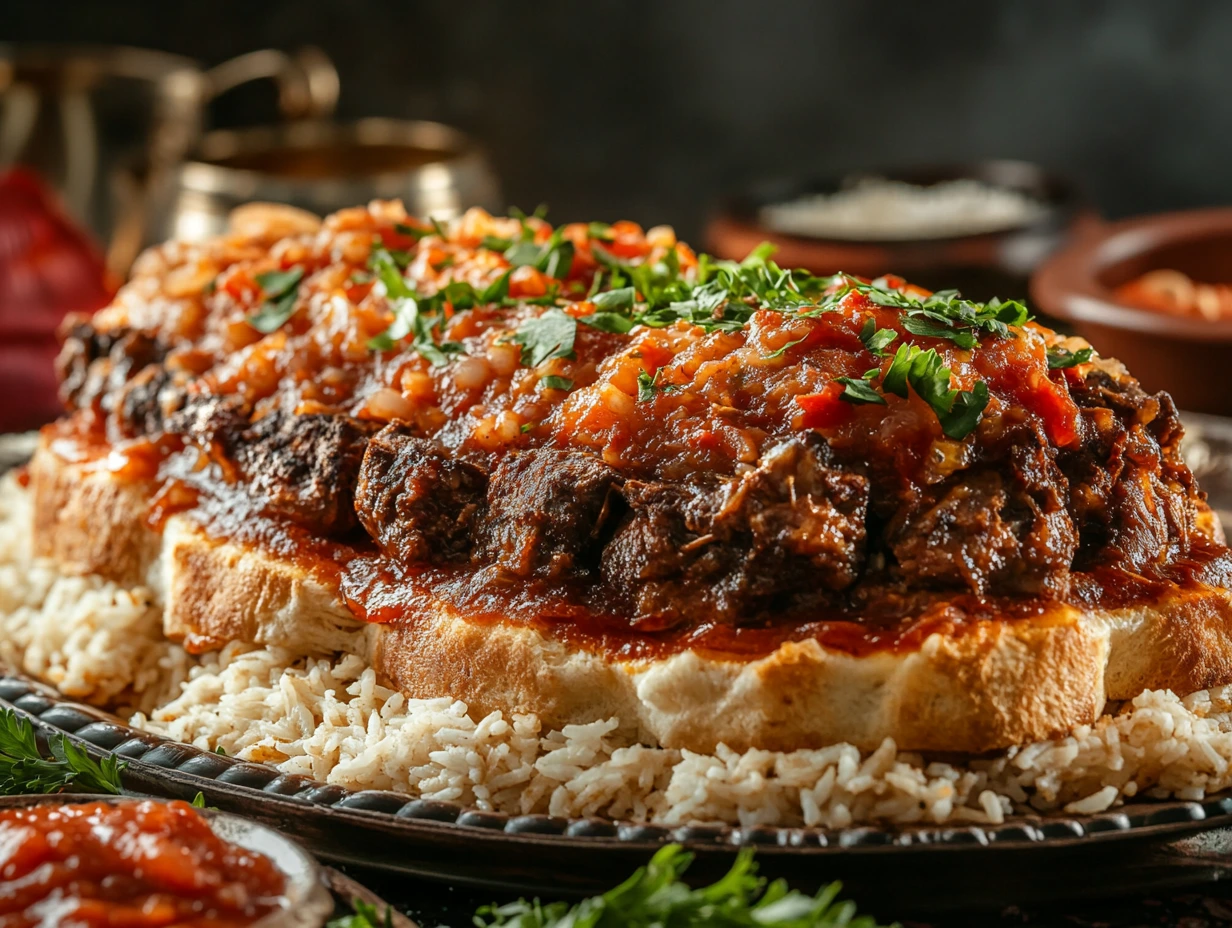
Fattah belongs to an ancient family of dishes built by breaking bread and soaking it with broth. In Egypt it developed into a festive composition of baladi bread, rice and meat, sharpened with garlic and vinegar. The pleasure comes from contrasting layers: some bread remains crisp, some absorbs broth, rice provides softness, and slow-cooked meat adds richness. The vinegar-garlic sauce prevents the plate becoming heavy. It is strongly associated with Eid al-Adha, when sacrificial meat is shared, and with major family celebrations. The dish signals abundance and communal eating.
Ingredients
- Bread
- 180 g flatbreadcut into squares · 180 g flatbread, cut into squares
- Cooking
- 55 g gheedivided · 55 g ghee, divided
- Meat
- 700 g lamb shoulder or beef shincut into large chunks · 700 g lamb shoulder or beef shin, cut into large chunks
- Rice
- 260 g short-grain ricerinsed · 260 g short-grain rice, rinsed
- Sauce
- 30 g garlic clovescrushed · 30 g garlic cloves, crushed
- 60 ml white vinegar60 ml white vinegar
- 300 ml tomato passata300 ml tomato passata
- Seasoning
- 10 g fine sea salt10 g fine sea salt
- Stock
- 850 ml meat stockfrom cooking the meat · 850 ml meat stock, from cooking the meat
- 1 piece bay leaf1 piece bay leaf
Method
Cook the meat
Simmer lamb or beef with bay leaf and salt for 75 to 100 minutes until tender. Skim the stock and keep it hot.
Look for: Texture, aroma and colour should match the dish: tender where simmered, crisp where fried, glossy where sauced and bright where finished with herbs or lemon. Tip: Taste with the normal accompaniment, such as bread, rice, salad or sauce, because Egyptian dishes are designed as complete plates. Avoid: Do not rush the heat stage or rely only on time; check doneness, texture and seasoning before moving on.Toast the bread
Toss flatbread squares with 15 g melted ghee and bake at 190°C / 374°F for 8 to 10 minutes until crisp and golden.
Look for: Texture, aroma and colour should match the dish: tender where simmered, crisp where fried, glossy where sauced and bright where finished with herbs or lemon. Tip: Taste with the normal accompaniment, such as bread, rice, salad or sauce, because Egyptian dishes are designed as complete plates. Avoid: Do not rush the heat stage or rely only on time; check doneness, texture and seasoning before moving on.Cook the rice
Cook rice with 420 ml hot stock and a pinch of salt for 14 minutes, then rest covered for 10 minutes.
Look for: Texture, aroma and colour should match the dish: tender where simmered, crisp where fried, glossy where sauced and bright where finished with herbs or lemon. Tip: Taste with the normal accompaniment, such as bread, rice, salad or sauce, because Egyptian dishes are designed as complete plates. Avoid: Do not rush the heat stage or rely only on time; check doneness, texture and seasoning before moving on.Make garlic vinegar sauce
Fry crushed garlic in 25 g ghee until pale gold, add vinegar carefully, then add tomato passata and simmer 10 minutes. It should taste sharp, garlicky and savoury.
Look for: Texture, aroma and colour should match the dish: tender where simmered, crisp where fried, glossy where sauced and bright where finished with herbs or lemon. Tip: Taste with the normal accompaniment, such as bread, rice, salad or sauce, because Egyptian dishes are designed as complete plates. Avoid: Do not rush the heat stage or rely only on time; check doneness, texture and seasoning before moving on.Layer the dish
Put toasted bread in a serving dish and moisten with hot stock. Add rice, spoon over sauce and arrange tender meat on top.
Look for: Texture, aroma and colour should match the dish: tender where simmered, crisp where fried, glossy where sauced and bright where finished with herbs or lemon. Tip: Taste with the normal accompaniment, such as bread, rice, salad or sauce, because Egyptian dishes are designed as complete plates. Avoid: Do not rush the heat stage or rely only on time; check doneness, texture and seasoning before moving on.Serve immediately
Serve while the bread is partly crisp and partly soaked. Do not assemble too early or the bread will collapse completely.
Look for: Texture, aroma and colour should match the dish: tender where simmered, crisp where fried, glossy where sauced and bright where finished with herbs or lemon. Tip: Taste with the normal accompaniment, such as bread, rice, salad or sauce, because Egyptian dishes are designed as complete plates. Avoid: Do not rush the heat stage or rely only on time; check doneness, texture and seasoning before moving on.
Nutrition
per serving
Estimated from the upgraded Egyptian recipe for Fattah; verify with your preferred nutrition calculator before making formal nutritional claims.