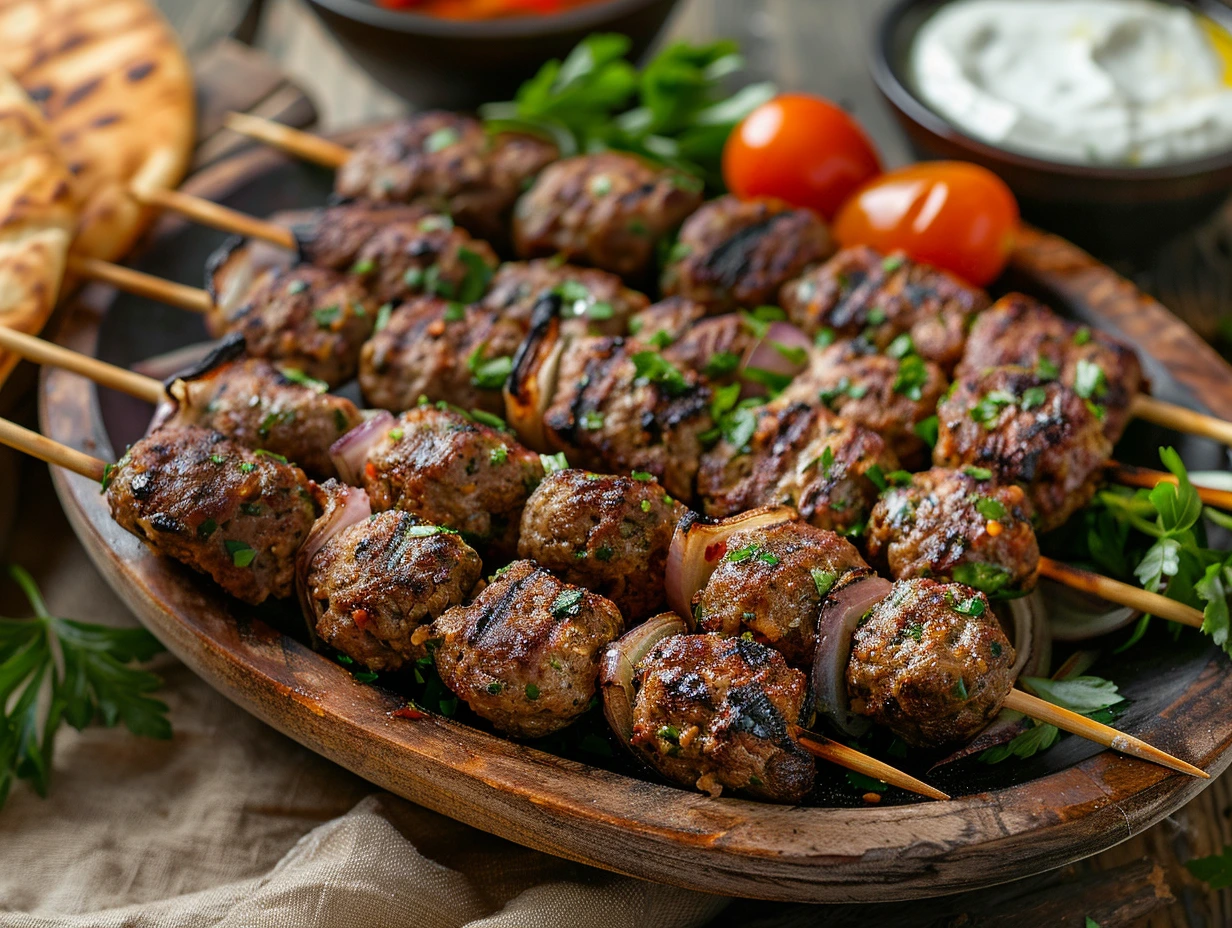
The story
Kofta belongs to a broad Middle Eastern family of minced-meat dishes. Egyptian grill houses developed a straightforward version shaped around flat skewers and cooked over charcoal, often alongside kebab and bread. The meat should be juicy and cohesive without a dense sausage texture. Charcoal browning, grated onion and balanced spice give more character than excessive heat. Kofta is central to mixed grills, family barbecues and celebratory restaurant meals. It is usually eaten with baladi bread, tahini, salad and pickles.
Ingredients
- Base
- 140 g oniongrated and squeezed dry · 140 g onion, grated and squeezed dry
- 35 g fresh parsleyfinely chopped · 35 g fresh parsley, finely chopped
- 12 g garlic clovesminced · 12 g garlic cloves, minced
- Cooking
- 25 ml neutral oilfor brushing · 25 ml neutral oil, for brushing
- Meat
- 450 g minced beef15 to 20 percent fat if possible · 450 g minced beef, 15 to 20 percent fat if possible
- 250 g minced lambor more beef · 250 g minced lamb, or more beef
- Seasoning
- 7 g ground cumin7 g ground cumin
- 4 g ground allspice4 g ground allspice
- 3 g black pepper3 g black pepper
- 10 g fine sea salt10 g fine sea salt
Method
Prepare the onion
Grate the onion, then squeeze out excess liquid through a clean cloth. This keeps the kofta juicy without making it fall apart.
Look for: Texture, aroma and colour should match the dish: tender where simmered, crisp where fried, glossy where sauced and bright where finished with herbs or lemon. Tip: Taste with the normal accompaniment, such as bread, rice, salad or sauce, because Egyptian dishes are designed as complete plates. Avoid: Do not rush the heat stage or rely only on time; check doneness, texture and seasoning before moving on.Mix the meat
Combine beef, lamb, onion, parsley, garlic, spices and salt. Mix firmly for 2 minutes until tacky; this helps the meat cling to skewers.
Look for: Texture, aroma and colour should match the dish: tender where simmered, crisp where fried, glossy where sauced and bright where finished with herbs or lemon. Tip: Taste with the normal accompaniment, such as bread, rice, salad or sauce, because Egyptian dishes are designed as complete plates. Avoid: Do not rush the heat stage or rely only on time; check doneness, texture and seasoning before moving on.Shape the kofta
With wet hands, shape the mixture into long ovals around flat skewers or into thick fingers. Chill for 20 minutes before cooking.
Look for: Texture, aroma and colour should match the dish: tender where simmered, crisp where fried, glossy where sauced and bright where finished with herbs or lemon. Tip: Taste with the normal accompaniment, such as bread, rice, salad or sauce, because Egyptian dishes are designed as complete plates. Avoid: Do not rush the heat stage or rely only on time; check doneness, texture and seasoning before moving on.Heat the grill
Heat a charcoal grill, griddle or oven grill to high, around 220°C / 428°F at the cooking surface. Brush the kofta lightly with oil.
Look for: Texture, aroma and colour should match the dish: tender where simmered, crisp where fried, glossy where sauced and bright where finished with herbs or lemon. Tip: Taste with the normal accompaniment, such as bread, rice, salad or sauce, because Egyptian dishes are designed as complete plates. Avoid: Do not rush the heat stage or rely only on time; check doneness, texture and seasoning before moving on.Cook quickly
Grill for 3 to 4 minutes per side until browned outside and cooked through. Avoid pressing them down or you will lose juices.
Look for: Texture, aroma and colour should match the dish: tender where simmered, crisp where fried, glossy where sauced and bright where finished with herbs or lemon. Tip: Taste with the normal accompaniment, such as bread, rice, salad or sauce, because Egyptian dishes are designed as complete plates. Avoid: Do not rush the heat stage or rely only on time; check doneness, texture and seasoning before moving on.Rest and serve
Rest for 4 minutes, then serve with bread, tahini, salad and pickles. The inside should be juicy, not crumbly.
Look for: Texture, aroma and colour should match the dish: tender where simmered, crisp where fried, glossy where sauced and bright where finished with herbs or lemon. Tip: Taste with the normal accompaniment, such as bread, rice, salad or sauce, because Egyptian dishes are designed as complete plates. Avoid: Do not rush the heat stage or rely only on time; check doneness, texture and seasoning before moving on.
Nutrition
per serving
Estimated from the upgraded Egyptian recipe for Egyptian Kofta; verify with your preferred nutrition calculator before making formal nutritional claims.