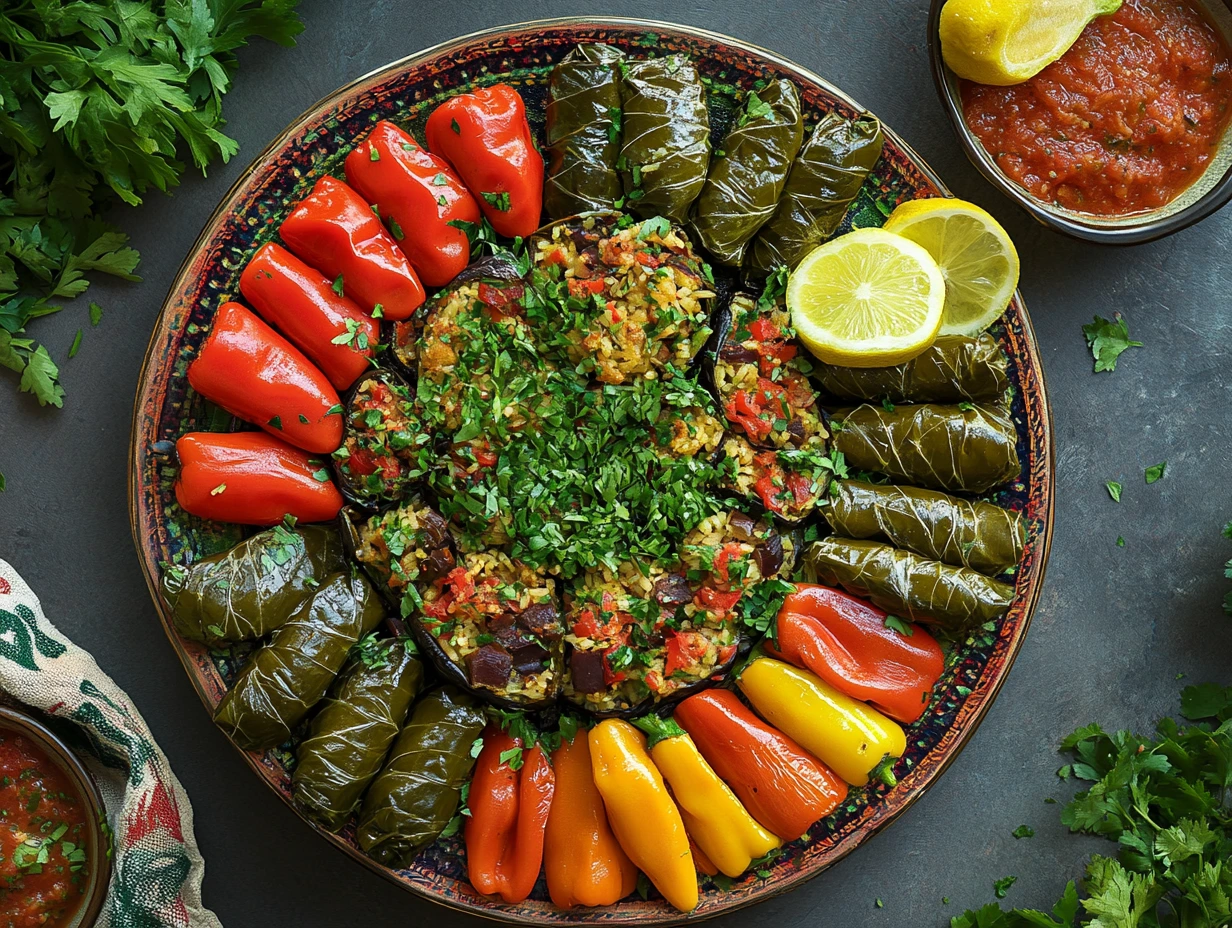
The story
Stuffed vegetables are widespread across the former Ottoman world, and Egyptian mahshi developed a particularly herbaceous rice filling. Cabbage, vine leaves, courgettes, aubergines and peppers are all used according to season. The filling is fragrant with dill, parsley and coriander and absorbs tomato and vegetable juices as it cooks. Good mahshi is tightly rolled or neatly packed but remains tender enough to eat with a spoon. Mahshi is labour-intensive family food often made communally for gatherings, Ramadan and celebrations. Large trays display care and hospitality.
Ingredients
- Cooking liquid
- 500 ml vegetable stockhot · 500 ml vegetable stock, hot
- Filling
- 240 g short-grain ricerinsed · 240 g short-grain rice, rinsed
- 250 ml tomato passata250 ml tomato passata
- 140 g onionfinely diced · 140 g onion, finely diced
- 45 ml olive oil45 ml olive oil
- Herbs
- 25 g fresh dillchopped · 25 g fresh dill, chopped
- 25 g fresh parsleychopped · 25 g fresh parsley, chopped
- 20 g fresh corianderchopped · 20 g fresh coriander, chopped
- Seasoning
- 6 g ground cumin6 g ground cumin
- 10 g fine sea salt10 g fine sea salt
- Vegetables
- 700 g courgettessmall, cored · 700 g courgettes, small, cored
Method
Prepare the vegetables
Trim courgettes and core them carefully with a corer or small knife, leaving the walls about 5 mm thick. Do not pierce the bottom.
Look for: Texture, aroma and colour should match the dish: tender where simmered, crisp where fried, glossy where sauced and bright where finished with herbs or lemon. Tip: Taste with the normal accompaniment, such as bread, rice, salad or sauce, because Egyptian dishes are designed as complete plates. Avoid: Do not rush the heat stage or rely only on time; check doneness, texture and seasoning before moving on.Mix the filling
Combine rinsed rice, passata, onion, herbs, cumin, olive oil and salt. The rice goes in raw so it can absorb flavour inside the vegetables.
Look for: Texture, aroma and colour should match the dish: tender where simmered, crisp where fried, glossy where sauced and bright where finished with herbs or lemon. Tip: Taste with the normal accompaniment, such as bread, rice, salad or sauce, because Egyptian dishes are designed as complete plates. Avoid: Do not rush the heat stage or rely only on time; check doneness, texture and seasoning before moving on.Stuff loosely
Fill each courgette only three quarters full. Tap gently to settle the rice but do not pack tightly or the vegetables may split.
Look for: Texture, aroma and colour should match the dish: tender where simmered, crisp where fried, glossy where sauced and bright where finished with herbs or lemon. Tip: Taste with the normal accompaniment, such as bread, rice, salad or sauce, because Egyptian dishes are designed as complete plates. Avoid: Do not rush the heat stage or rely only on time; check doneness, texture and seasoning before moving on.Arrange and simmer
Lay stuffed vegetables snugly in a wide pot. Add hot stock until it comes about halfway up the vegetables, cover and simmer gently for 40 to 50 minutes.
Look for: Texture, aroma and colour should match the dish: tender where simmered, crisp where fried, glossy where sauced and bright where finished with herbs or lemon. Tip: Taste with the normal accompaniment, such as bread, rice, salad or sauce, because Egyptian dishes are designed as complete plates. Avoid: Do not rush the heat stage or rely only on time; check doneness, texture and seasoning before moving on.Check doneness
Test one courgette: the rice should be tender and the vegetable soft but still holding shape. Add small splashes of stock if the pot dries out.
Look for: Texture, aroma and colour should match the dish: tender where simmered, crisp where fried, glossy where sauced and bright where finished with herbs or lemon. Tip: Taste with the normal accompaniment, such as bread, rice, salad or sauce, because Egyptian dishes are designed as complete plates. Avoid: Do not rush the heat stage or rely only on time; check doneness, texture and seasoning before moving on.Rest before serving
Rest covered for 10 minutes so the filling settles. Serve warm with lemon, yoghurt or salad.
Look for: Texture, aroma and colour should match the dish: tender where simmered, crisp where fried, glossy where sauced and bright where finished with herbs or lemon. Tip: Taste with the normal accompaniment, such as bread, rice, salad or sauce, because Egyptian dishes are designed as complete plates. Avoid: Do not rush the heat stage or rely only on time; check doneness, texture and seasoning before moving on.
Nutrition
per serving
Estimated from the upgraded Egyptian recipe for Mahshi; verify with your preferred nutrition calculator before making formal nutritional claims.